A science journalism portal built around continuous coverage, editorial writing and rigorous reporting.
Atualização: aguardando feed

Cosmos Week scientific news portal

Últimas publicações
Cobertura recente organizada para leitura rápida, sem perder contexto editorial.
Ver arquivo completo
Clinical trial results support use of weekly extended-release buprenorphine for treatment of opioid use disorder during pregnancy
Biologia

Clinical trial results support use of weekly extended-release buprenorphine for treatment of opioid use disorder during pregnancy

That matters because biology becomes more informative when an observed effect begins to look like a mechanism rather than an isolated pattern.

22 Apr 20264 min readNIH News Releases
Chronic inflammation leaves long-lasting impression on gut stem cells, increasing colorectal cancer risk
Biologia

Chronic inflammation leaves long-lasting impression on gut stem cells, increasing colorectal cancer risk

NIH-funded animal study finds heritable memories of damage persisted in cells months after inflammation ceased.

22 Apr 20264 min readNIH News Releases
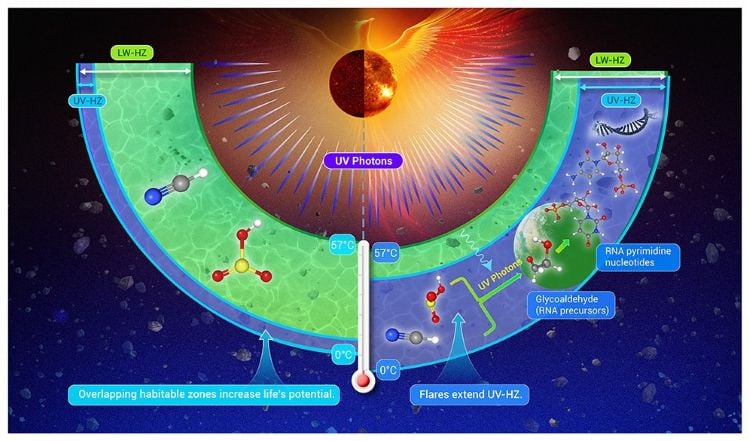
Stellar Flares May Expand Habitable Zones Around Small Stars
Exoplanetas

Stellar Flares May Expand Habitable Zones Around Small Stars

The search for life beyond Earth has traditionally focused on exoplanets orbiting Sun-like stars, which is a G-type star.

22 Apr 20264 min readUniverse Today
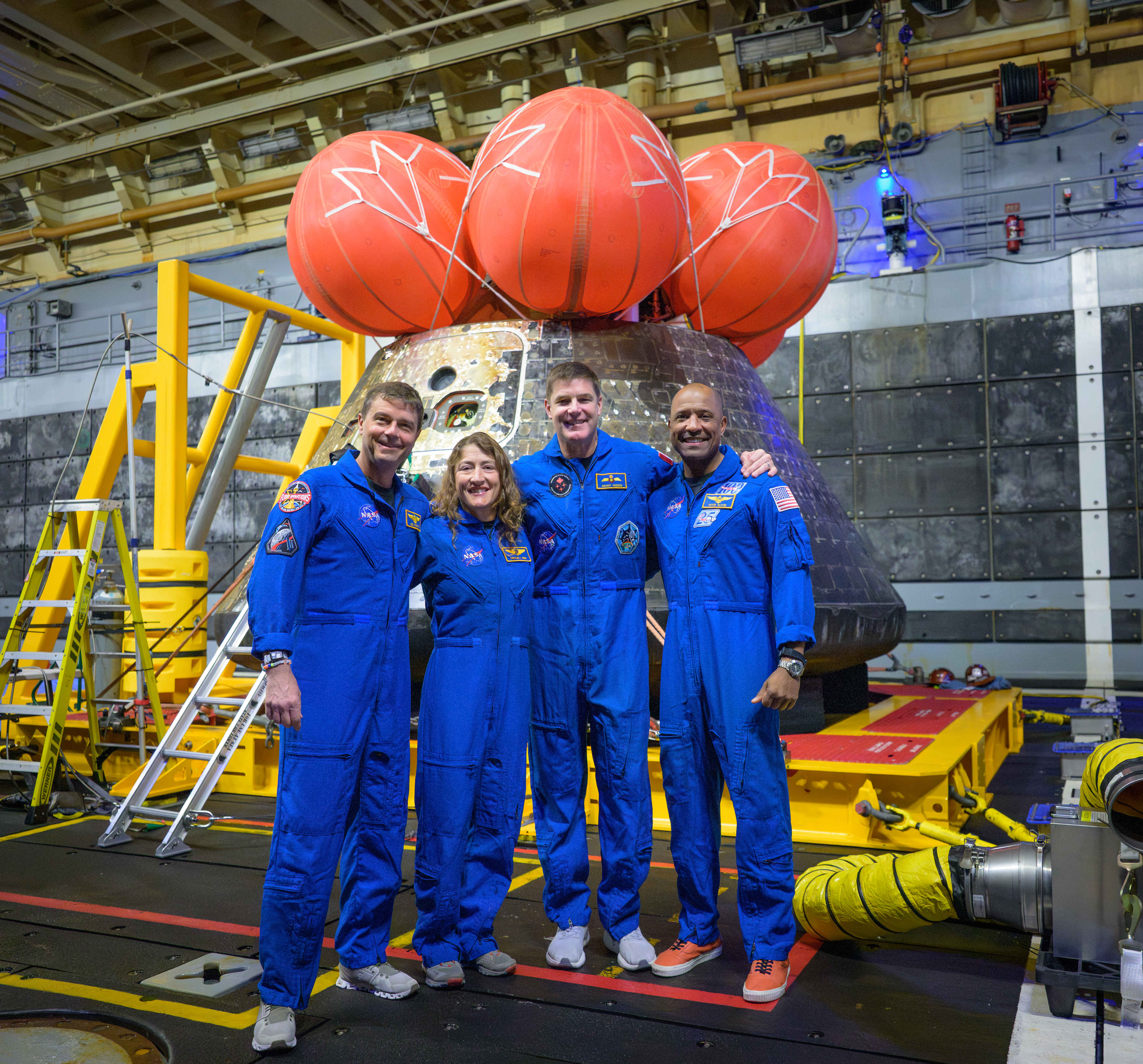
What Are Ames’ Contributions to Artemis II?
AstronomiaTop story

What Are Ames’ Contributions to Artemis II?

NASA successfully sent four astronauts around the Moon for the first time in more than 50 years, setting the stage for future lunar landing missions.

21 Apr 20264 min readNASA News Releases
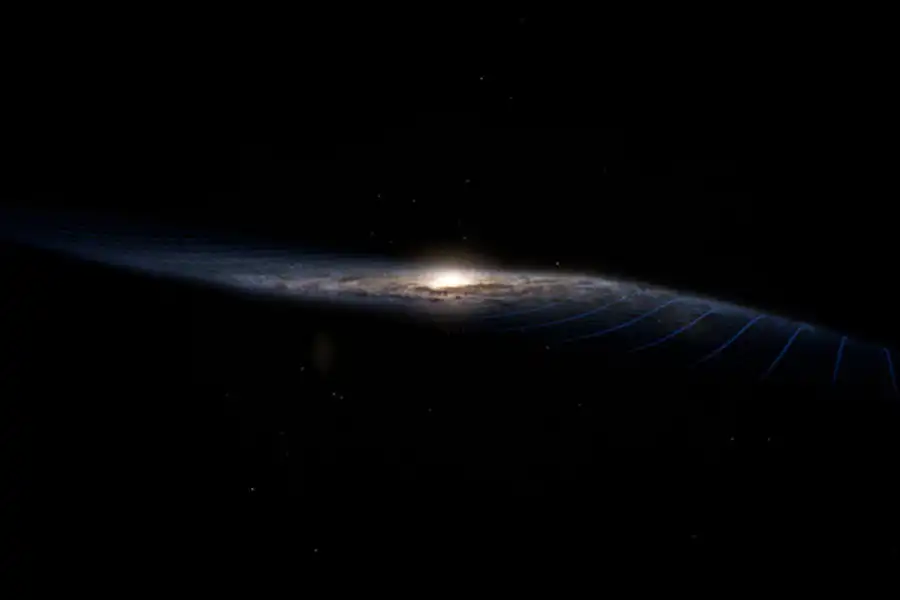
Astronomers Find the Edge of the Milky Way
Astronomia

Astronomers Find the Edge of the Milky Way

Astronomers have located the edge of the Milky Way’s star-forming disk for the first time, showing that star formation is focused within 40, 000 light-years of our…

21 Apr 20264 min readSky & Telescope
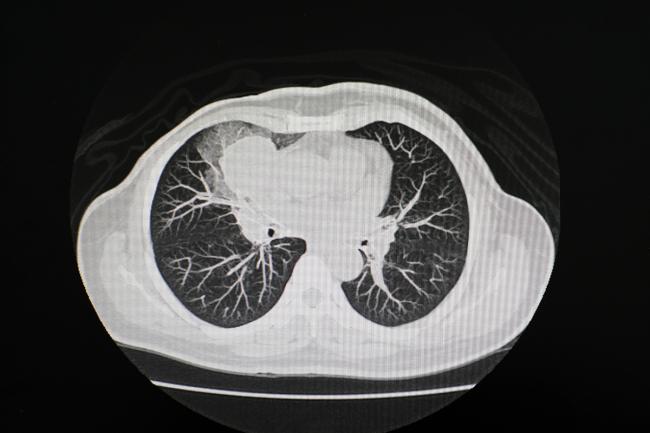
Automated CT scan analysis could fast-track clinical assessments
BiologiaTop story

Automated CT scan analysis could fast-track clinical assessments

NIH-funded research suggests AI-powered tool could streamline diagnoses and unveil early markers for chronic disease.

21 Apr 20264 min readNIH News Releases
All stories
Continuous listing for the current selection.
Biologia
Clinical trial results support use of weekly extended-release buprenorphine for treatment of opioid use disorder during pregnancy
Biologia
Chronic inflammation leaves long-lasting impression on gut stem cells, increasing colorectal cancer risk
Exoplanetas
Stellar Flares May Expand Habitable Zones Around Small Stars
Astronomia
What Are Ames’ Contributions to Artemis II?
Astronomia
Astronomers Find the Edge of the Milky Way
Biologia
Automated CT scan analysis could fast-track clinical assessments
Física
Behold, the Solar System in All its X-ray Glory
Ciências da Terra
NASA on Track for Future Missions with Initial Artemis II Assessments
Astronomia
NASA Rolls Out Artemis III Moon Rocket Core Stage
Astronomia
The Vera C. Rubin Observatory has Discovered 11, 000 New Asteroids, and It's Barely Even Started!
Ciências da Terra
Sulfur-rich Mercury magmas behave differently than Earth's do
Astrofísica
Theoretical models of supernova chemistry overhauled after X-ray data from Perseus Cluster reveal key discrepancies
Física
Generalized optical meta-spanners empower arbitrary light paths for multitasking optical manipulation
Ciências da Terra
Warmer streams may be draining river food webs by sending more carbon into the air
Biologia
Antioxidant glutathione discovered to play a key role in proper protein folding
Biologia
Two bacteria join forces to turn chemical signals into electricity, opening up low-cost sensing options
Química
Mining waste product could help store carbon emissions, study suggests
Física
Volunteers Discover Rare Space Weather Events Using Their Ears
Institutional

Cosmos Week as a science news portal, not an automatic mirror of institutional releases

Cosmos Week organizes science coverage through a clear editorial structure, clean routes, crawlable institutional pages and visible source distinctions.

Editorial mission

Cover science with information hierarchy, context and visible distinctions among institutional announcements, peer-reviewed papers, science reporting and preprints.

Discovery architecture

Home, archive and persistent topics work as real entry points for navigation and indexing.

Bilingual structure

Portuguese and English routes carry consistent canonical and hreflang signals.

Coverage scope

Astronomy, astrophysics, cosmology, physics and frontier research remain the portal’s main editorial axis.

Method

Editorial standards visible inside each story, not buried in generic promises

In this phase, Cosmos Week starts treating each article page as a full editorial page: breadcrumb trail, institutional byline, source origin, evidence level, coverage framing and related reading.

How to read a Cosmos Week story

  • Editorial header: the top of the page identifies topic, language, coverage type and evidential strength.
  • Breadcrumbs: the route makes the story’s place in the publication explicit for readers, search engines and context.
  • Editorial signature: the piece is institutionally owned by Cosmos Week even when it is built from an external source.
  • Original source: the origin is explicit and accessible instead of pretending to be primary reporting where it is not.
  • Story tools: copy-link and native sharing support clean circulation of the canonical URL.
  • Related reading: each story can point readers toward adjacent coverage by field, source type or framing.

What actually strengthens credibility

  • Coverage type: clear distinction among institutional releases, peer-reviewed papers, preprints and science journalism.
  • Evidence level: readers immediately see whether they are looking at an announcement, a consolidated result or a provisional claim.
  • Editorial context: the publication explains how a source should be read instead of merely repeating promotional enthusiasm.
  • Bilingual consistency: PT and EN versions follow the same structural model and the same trust signals.

Evidence scale used across the site

Institutional updateUseful for announcements, schedules, missions, operations and first disclosure. Not a replacement for external validation.
Journalistic coverageOften valuable for synthesis and context, but the ideal next step is still the cited paper, technical release or primary document.
Peer-reviewed evidencePublished result with editorial screening and peer review. Stronger footing, still open to criticism and replication.
Preliminary resultPreprint or material without formal peer review. Useful for frontier monitoring, not for certainty language.

Editorial commitments

  • Do not present institutional promotion as if it were independent confirmation.
  • Do not treat preprints as established truth just because the subject is flashy.
  • Do not hide origin, date, canonical route or publication context.
  • Do not sacrifice reading comfort for decorative excess.
  • Do not flatten the hierarchy between hypothesis, signal, evidence and consensus.

Corrections, transparency and updates

When a text changes, the page should expose publication date and update date. Credibility does not come from looking infallible. It comes from leaving a visible trail, which is maddeningly basic and still rare enough to be useful.

Why this matters for UX

Readers do not arrive at a science story wanting only “what happened.” They also need to know where it came from, how sturdy it is, what belongs to Cosmos Week’s framing and what remains unsettled. The new structure reduces cognitive friction and improves trust without flattening the prose.

Operational summary of this phase: stronger editorial template, trust signals exposed inside the article itself, clearer sharing tools and direct linkage between each story and the publication’s editorial standards.

Search