Spectro-polarimetry of HAbitable Planet Earth (SHAPE) on Chandrayaan-3: Instrument characteristics, calibration and onboard performance
The orbiter of the Chandrayaan-3 mission of the Indian Space Research Organisation carries an experimental payload called SHAPE.
Key points
- Focus: The orbiter of the Chandrayaan-3 mission of the Indian Space Research Organisation carries an experimental payload called SHAPE
- Editorial reading: provisional result, not yet formally peer reviewed.
The orbiter of the Chandrayaan-3 mission of the Indian Space Research Organisation carries an experimental payload called SHAPE. The new analysis still awaits peer review, but it already lays out the central claim clearly.
It matters because exoplanet science has moved beyond the era of simple discovery into a period of comparative characterization. With more than five thousand confirmed planets known, the scientifically productive questions now concern atmospheric composition, internal structure, orbital history and the statistical properties of populations rather than the existence of individual worlds. A new detection or spectral measurement is most valuable when it adds a well-constrained data point to those comparative frameworks, not when it stands alone as an anecdote. The orbiter of the Chandrayaan-3 mission of the Indian Space Research Organisation (ISRO) carries an experimental payload called SHAPE (Spectro-polarimetry of HAbitable Planet. This payload makes disc-integrated observations of Earth as an exoplanet, from the Moon as well as from the high altitude Earth orbit.
The instrument consists of an Acousto-Optic Tunable Filter (AOTF) based near-infrared spectro-polarimeter making the measurements in the two orthogonally polarized directions. The laboratory characterization of the flight model of the instrument included a relative measurement of the response of the two channels of the instrument.
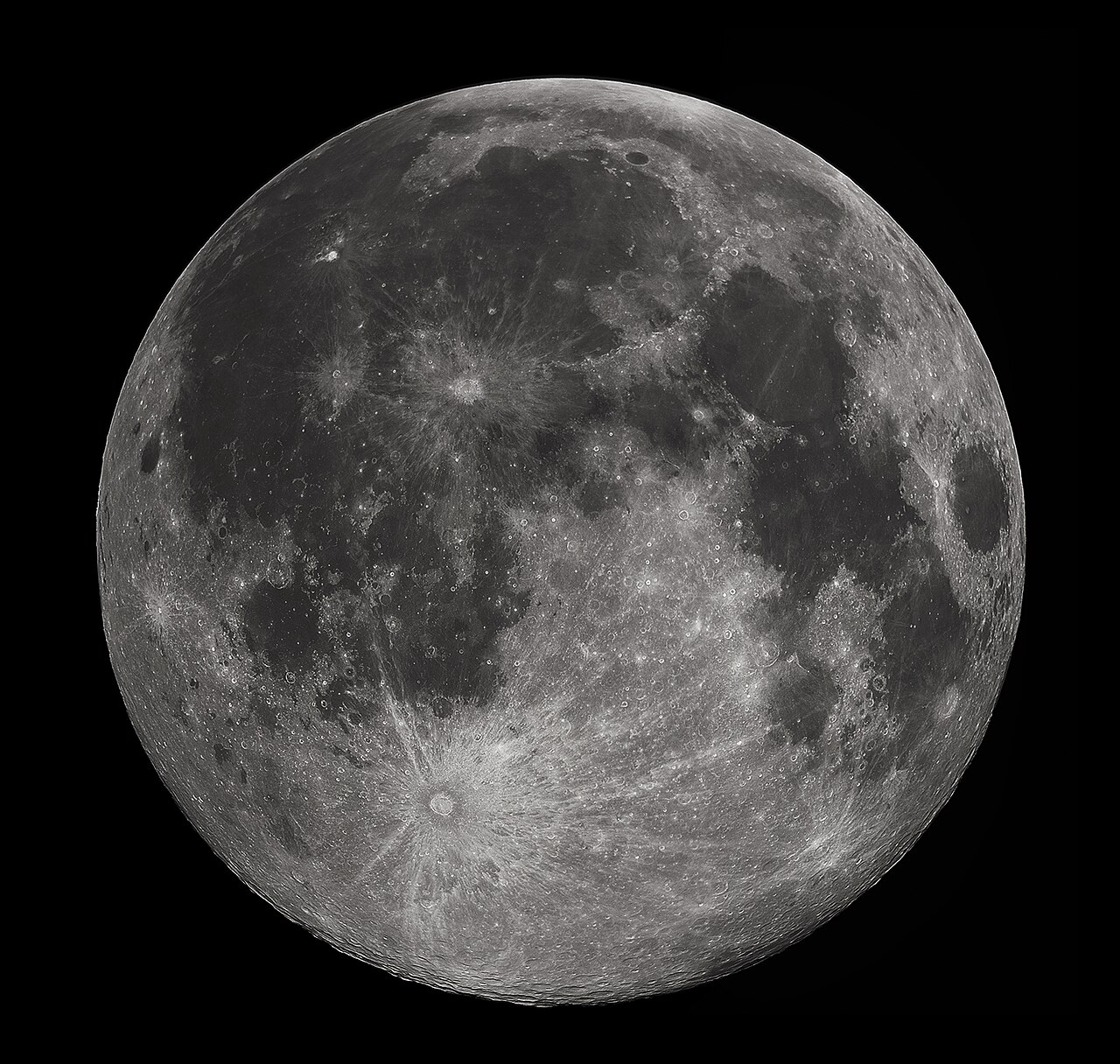
In the light of non-identical response of the two channels and the non-uniformity of the field response, a theoretical model of such a polarimeter is developed to gain insights. Analysis of lunar observations obtained within the SHAPE field of view indicates that the transmission ratio between the two polarized channels lies in the range 0.8-1.2.
Such deviations from unity can introduce offsets in the measured polarization of up to about 10%. The suitability of SHAPE for studying the band polarization, defined as the relative polarization within a spectral absorption band, is studied.
The broader interest lies in making the target less anecdotal and more comparable with the rest of the known planetary population. Population-level questions, such as the frequency of atmospheres around small rocky planets or the prevalence of water-rich worlds in the habitable zone, require well-characterized individual data points before statistical patterns become meaningful. Each new planet with a measured radius, mass and, ideally, atmospheric constraint is a brick in that larger structure, and the accumulation of bricks eventually allows theorists to test formation models against real distributions rather than projections.
Using the Moon observations and the theoretical instrumental model, the suitability of measuring the relative band polarization is demonstrated. A study of systematic biases in the band polarization demonstrates a maximum offset of less than 1% in the measured value of the band polarization.
Because this is still a preprint, the result should be read with genuine interest and proportionate caution. Peer review is not a guarantee of correctness, but it is a process that forces authors to respond to technical criticism from specialists who have no stake in a particular outcome. Preprints that survive that process, often with substantive revisions, emerge with a stronger evidential base than the version that first appeared. Until that stage is complete, the responsible reading keeps uncertainty explicitly visible rather than treating the claims as established findings.
The next step is to improve independent constraints on the mass, radius, atmospheric composition and orbital dynamics of the target. Transmission spectroscopy with JWST, radial velocity campaigns with high-resolution ground-based spectrographs and phase-curve measurements from space photometry represent the observational toolkit that can move characterization from plausible to robust. That convergence of techniques is the standard the community now expects before a planetary atmosphere result is treated as confirmed. Until peer review and independent follow-up address those open questions, skepticism is not a failure of appreciation for the work; it is part of how science decides what to keep.
Original source: arXiv Astrophysics