Spectro-polarimetry of HAbitable Planet Earth (SHAPE) on Chandrayaan-3: Instrument characteristics, calibration and onboard performance
The orbiter of the Chandrayaan-3 mission of the Indian Space Research Organisation carries an experimental payload called SHAPE.
Pontos-chave
- Em foco: The orbiter of the Chandrayaan-3 mission of the Indian Space Research Organisation carries an experimental payload called SHAPE
- Detalhe: Resultado ainda sem revisão por pares
- Leitura editorial: resultado provisório, ainda sem revisão por pares formal.
The orbiter of the Chandrayaan-3 mission of the Indian Space Research Organisation carries an experimental payload called SHAPE. The orbiter of the Chandrayaan-3 mission of the Indian Space Research Organisation (ISRO) carries an experimental payload called SHAPE (Spectro-polarimetry of HAbitable Planet Earth).
This payload makes disc-integrated observations of Earth as an exoplanet, from the Moon as well as from the high altitude Earth orbit. The instrument consists of an Acousto-Optic Tunable Filter (AOTF) based near-infrared spectro-polarimeter making the measurements in the two orthogonally polarized directions using a pair of Indium-Gallium-Arsenide (InGaAs) detectors.
The laboratory characterization of the flight model of the instrument included a relative measurement of the response of the two channels of the instrument. In the light of non-identical response of the two channels and the non-uniformity of the field response, a theoretical model of such a polarimeter is developed to gain insights into the performance of a polarimeter.
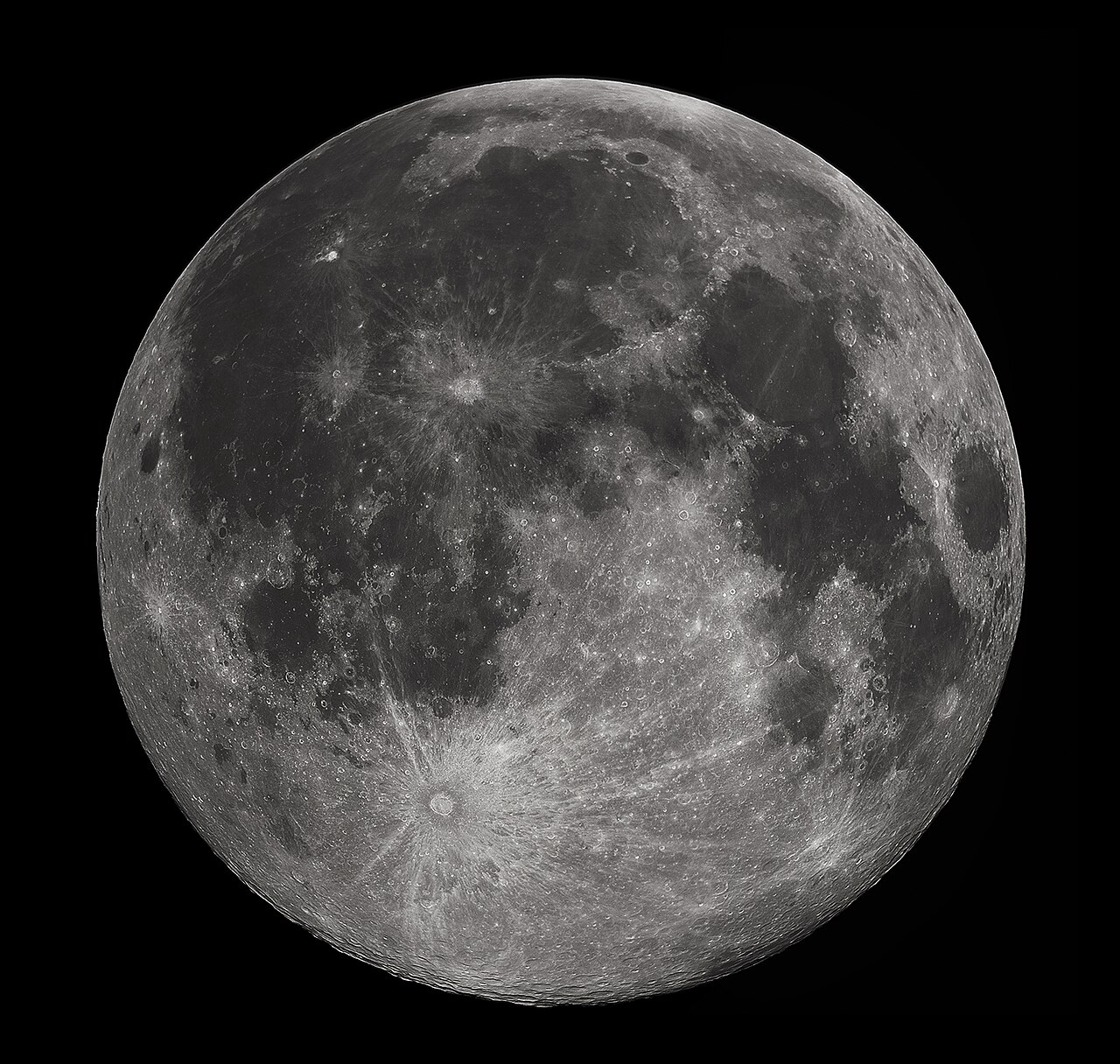
Analysis of lunar observations obtained within the SHAPE field of view indicates that the transmission ratio between the two polarized channels lies in the range 0.8-1.2. Such deviations from unity can introduce offsets in the measured polarization of up to about 10%.
The suitability of SHAPE for studying the band polarization, defined as the relative polarization within a spectral absorption band, is studied. Using the Moon observations and the theoretical instrumental model, the suitability of measuring the relative band polarization is demonstrated.
A study of systematic biases in the band polarization demonstrates a maximum offset of less than 1% in the measured value of the band polarization.
Fonte original: arXiv Astrophysics