Should Space Data Centers Run on Solar Panels, Nuclear Reactors, or Both?
The last few days we’ve been covering a series of papers by Dr. Slava Turyshev of NASA’s Jet Propulsion Laboratory about the constraints surrounding the use of orbital data.
Key points
- Focus: The last few days we’ve been covering a series of papers by Dr
- Detail: Science reporting: verify primary technical documentation
- Editorial reading: science reporting; whenever possible, verify the cited primary source.
The last few days we’ve been covering a series of papers by Dr. Slava Turyshev of NASA’s Jet Propulsion Laboratory about the constraints surrounding the use of orbital data centers in space. The science-journalism coverage adds useful context, while the strongest evidential footing still comes from the underlying data, papers or institutional documentation.
The significance lies in astronomy does not advance on single detections. The field builds confidence by accumulating independent observations across different wavelengths, instruments and epochs until isolated signals become defensible conclusions. What looks convincing in one dataset can dissolve when a second instrument looks at the same target, and what looks marginal can solidify when follow-up campaigns confirm the original reading. The current standard requires that a result survive this triangulation before the community treats it as settled. Slava Turyshev of NASA’s Jet Propulsion Laboratory about the constraints surrounding the use of orbital data centers in space. Turyshev, released as a preprint on arXiv, it all depends on the mission requirements.
During some seasons, each orbital pass will result in the satellite crossing over the Earth’s shadow for up to 21 minutes. And given that the orbits these data centers are on happen around 15 times each day, that means in a 24-hour day, the satellite spends around 5 hours and 13 minutes in the Earth's.
Combine that with the needed solar panels and radiators to get rid of waste heat as infrared light, and you end up with a total mass of 43 metric tons for a 1 MW cluster, even. While this higher-temperature heat can be radiated away with a relatively compact radiator, it would have to be separate from the thermal sinks cooling the processors below their.
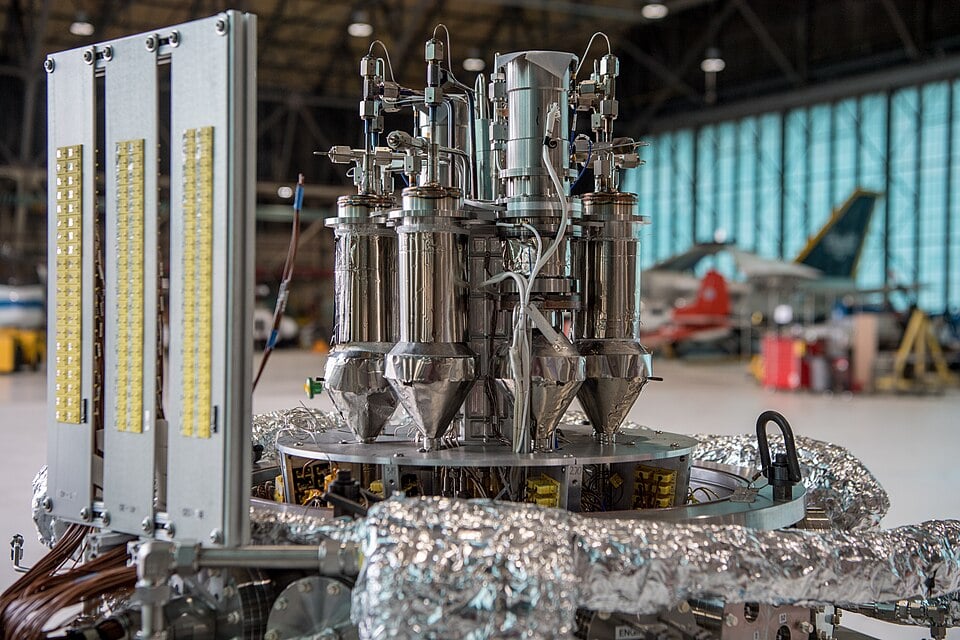
Fraser talks about the new nuclear reactor NASA will use for future Mars missions. Or the engineers could boost the satellite’s orbit up to 1, 450 kilometers, where the Earth’s shadow problem completely goes away and the satellite can consistently bathe in.
What gives the story weight is not just the object itself, but the way the measurement trims the range of plausible physical explanations. Astronomy has accumulated enough cases to know that the most interesting results are rarely the ones that confirm expectations cleanly; they are the ones that confirm some expectations while complicating others, or that open a parameter space that previous instruments could not reach. The scientific community evaluates these contributions by asking whether the new data constrain a model in a way that older data could not, and whether those constraints survive systematic review.
If a mission requires a data center to survive a 24-hour failure of its main power system while keeping 20% emergency power active for safe-mode operation, an 80/20 nuclear/solar. Another disadvantage of a nuclear-powered satellite is it can’t just burn up in the atmosphere at the end of its life, it has to be boosted to a “graveyard” orbit at around 2, 000.
Because this item comes through Universe Today as science journalism, it should be treated as contextual reporting rather than primary evidence. Good science reporting can identify why a result matters, connect it to the wider literature and make technical work readable, but the decisive evidence remains in the original paper, dataset, mission release or technical record. That distinction is especially important when a story is later repeated by aggregators, because repetition increases visibility, not evidential strength.
The next step is to see whether other instruments and other wavelengths tell the same story. Campaigns with JWST, the VLT, the forthcoming Extremely Large Telescopes and radio arrays will provide the spectral coverage and spatial resolution needed to move from detection to physical characterization. The timeline for that kind of confirmation is typically measured in years, not months, which is worth keeping in mind when reading the current result.
Original source: Universe Today