Should Space Data Centers Run on Solar Panels, Nuclear Reactors, or Both?
The last few days we’ve been covering a series of papers by Dr. Slava Turyshev of NASA’s Jet Propulsion Laboratory about the constraints surrounding the use of orbital data.
Pontos-chave
- Em foco: The last few days we’ve been covering a series of papers by Dr
- Detalhe: Cobertura jornalística: verificar documentação técnica primária
- Leitura editorial: reportagem científica; quando possível, confira a fonte primária citada.
The last few days we’ve been covering a series of papers by Dr. Slava Turyshev of NASA’s Jet Propulsion Laboratory about the constraints surrounding the use of orbital data centers in space.
Turyshev, released as a preprint on arXiv, it all depends on the mission requirements. During some seasons, each orbital pass will result in the satellite crossing over the Earth’s shadow for up to 21 minutes.
And given that the orbits these data centers are on happen around 15 times each day, that means in a 24-hour day, the satellite spends around 5 hours and 13 minutes in the Earth's shadow. Combine that with the needed solar panels and radiators to get rid of waste heat as infrared light, and you end up with a total mass of 43 metric tons for a 1 MW cluster, even before counting any actual computing hardware.
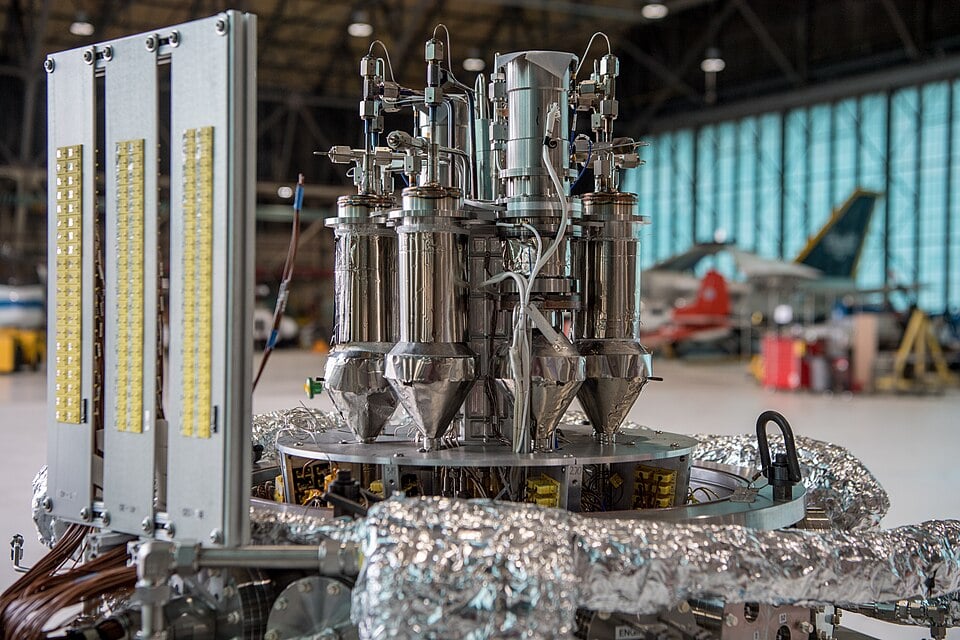
While this higher-temperature heat can be radiated away with a relatively compact radiator, it would have to be separate from the thermal sinks cooling the processors below their 320 Kelvin ideal temperature. Fraser talks about the new nuclear reactor NASA will use for future Mars missions.
If a mission requires a data center to survive a 24-hour failure of its main power system while keeping 20% emergency power active for safe-mode operation, an 80/20 nuclear/solar split weighs in at around 36 metric tons, around a third of the weight of either as a standalone. Another disadvantage of a nuclear-powered satellite is it can’t just burn up in the atmosphere at the end of its life, it has to be boosted to a “graveyard” orbit at around 2, 000 km, where a spent reactor would stay indefinitely.
Turyshev calculates that it would save around $190 per kilowatt-year in launch costs, whereas if it lasts for only two years (as many experimental space-based reactors are designed to), then that flips to a $783 per kilowatt-year deficit.

Fonte original: Universe Today