NASA’s Titan-Bound Dragonfly Rotorcraft Gets Its Eyes
Science instruments for NASA’s Dragonfly are starting to arrive at the Johns Hopkins Applied Physics Laboratory in Laurel, Maryland, where the car-sized rotorcraft is coming.
Key points
- Focus: Science instruments for NASA’s Dragonfly are starting to arrive at the Johns Hopkins Applied Physics Laboratory in Laurel, Maryland, where the
- Detail: Institutional origin: separate announcement from evidence
- Editorial reading: institutional release, useful as a primary source but not independent validation.
Science instruments for NASA’s Dragonfly are starting to arrive at the Johns Hopkins Applied Physics Laboratory in Laurel, Maryland, where the car-sized rotorcraft is coming together for its mission to explore Saturn’s largest moon, Titan. The institutional report frames the development in practical terms and ties it to the broader mission or observing effort.
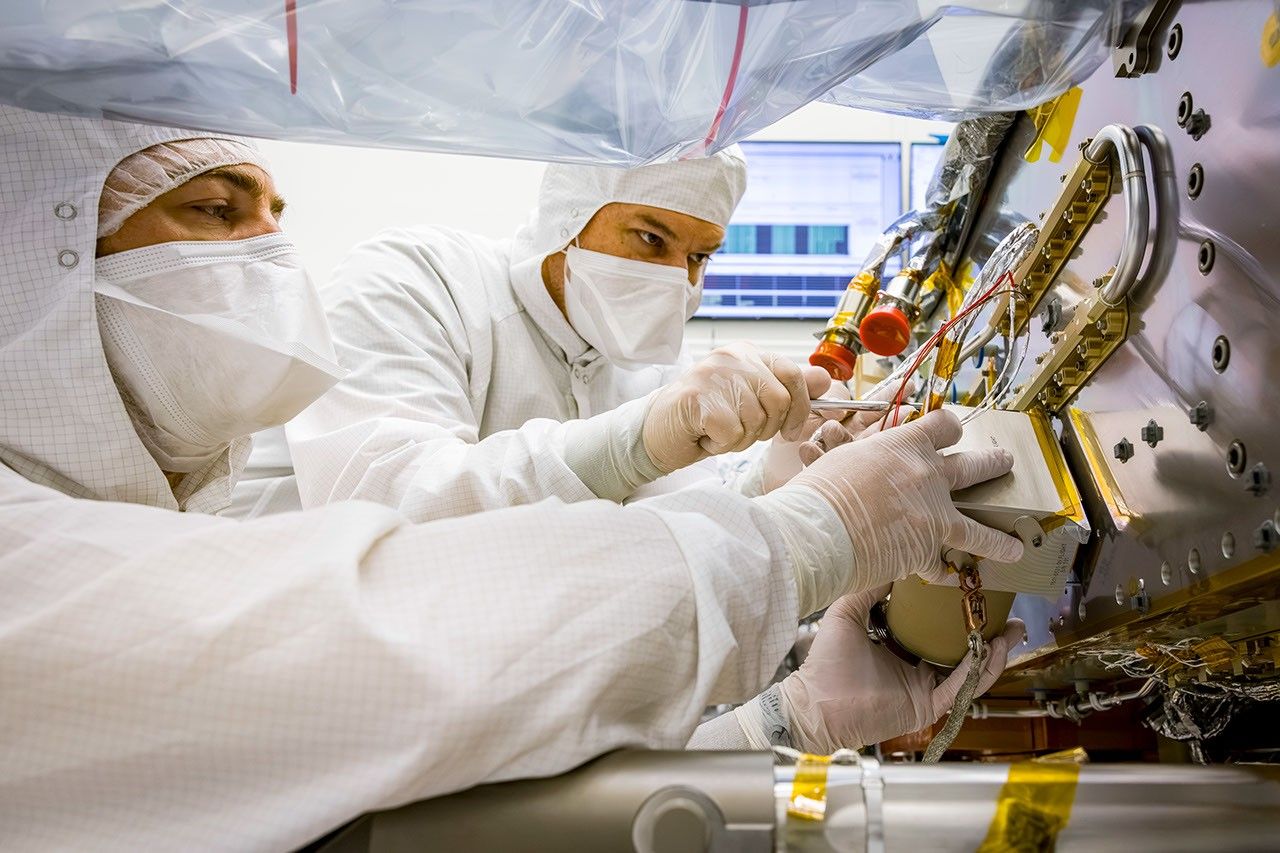
The significance lies in cosmology operates at the edge of what current instruments can measure, where systematic errors and model assumptions are never trivial. Small discrepancies between independent measurements have historically pointed toward missing physics rather than simple calibration errors, and the ongoing tension in the Hubble constant is a live example of how a persistent disagreement between methods can reshape the theoretical landscape. Each new dataset that approaches this territory with independent systematics adds real information to a problem that has resisted easy resolution for more than a decade. Science instruments for NASA’s Dragonfly are starting to arrive at the Johns Hopkins Applied Physics Laboratory (APL) in Laurel, Maryland, where the car-sized rotorcraft is coming. From left, technicians Chad Cook and Seth Harvey install the high-resolution microscopic imager, part of the seven-camera DragonCam science imaging suite, onto NASA’s Dragonfly.
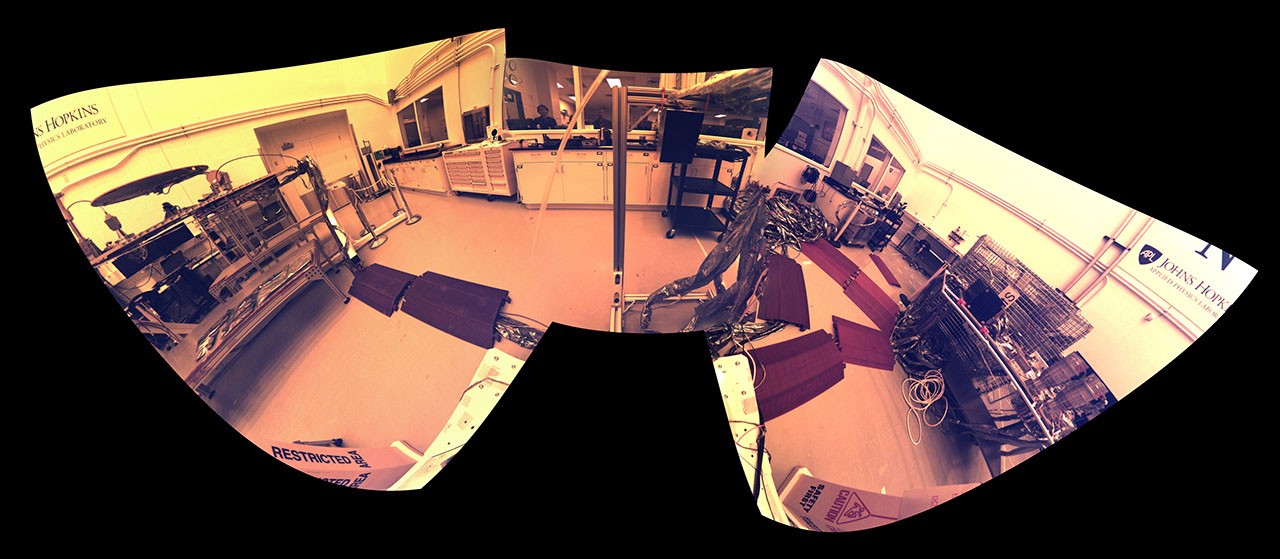
NASA/Johns Hopkins APL/Ed Whitman First to check in: DragonCam, which consists of seven cameras designed to characterize Titan ’s surface at multiple scales during flight and. NASA/Johns Hopkins APL/MSSS Two downward-facing WACs provide views of the surface beneath Dragonfly, helping the mission team decide if a landing spot is safe for deploying.
We’ll be collecting materials at multiple sites across Titan, and the images from the cameras will help us relate the samples to Titan’s broader landscape and piece together the. This animation highlights the elements of DragonCam and how its imaging capabilities will support Dragonfly’s scientific investigations NASA/Johns Hopkins APL/Zac Swanson.
Maryland, where the car-sized rotorcraft is coming together for its mission to explore Saturn’s largest moon. Each camera will look out at Titan through a window in a foam enclosure that insulates the cameras and Dragonfly’s interior from Titan’s cryogenic environment, where ambient.
The relevance goes beyond one dataset because even small shifts in measured parameters can matter when the field is testing the limits of the standard cosmological model. The Lambda-CDM framework describes the observable universe with remarkable economy, but its success rests on two components, dark matter and dark energy, whose physical nature remains entirely unknown. Any credible measurement that tightens or loosens the constraints on those components moves the entire theoretical enterprise forward, regardless of whether the immediate result looks dramatic on its own terms.
A configurable LED array, built at APL and spanning the light spectrum from the infrared to the ultraviolet, provides information about the color of surface materials at the. We are extremely pleased to have delivered the DragonCam cameras,” said Michael Ravine, DragonCam development manager and a Dragonfly co-investigator from Malin Space Science.
Because the account originates with NASA News Releases, it functions best as a primary institutional report that is close to the data and operations, not as independent scientific validation. Institutional communications are produced by organizations with legitimate interests in presenting their work in a favorable light, which does not make them unreliable but does make them partial. Details that complicate the narrative, including instrument limitations, unexpected failures and results below projections, tend to be minimized relative to progress messages. Technical documentation and peer-reviewed publications, where they exist, provide the complementary layer that institutional releases cannot substitute.
The next step is to see whether the effect survives when independent surveys, different calibration strategies and tighter control of systematic uncertainties enter the picture. Programmes such as Euclid, DESI and the Rubin Observatory will deliver datasets over the next several years that cover the same parameter space with largely independent methods. If the current signal persists through those tests, its theoretical implications will become impossible to set aside.
Original source: NASA News Releases