NASA Experimental Mars Helicopter Blade Designs Target Longer Flights
NASA researchers are developing the future of flight on Mars, laying the groundwork for helicopters with the ability to fly higher and farther while conducting science on the Red.
Key points
- Focus: NASA researchers are developing the future of flight on Mars, laying the groundwork for helicopters with the ability to fly higher and farther while
- Detail: Institutional origin: separate announcement from evidence
- Editorial reading: institutional release, useful as a primary source but not independent validation.
NASA researchers are developing the future of flight on Mars, laying the groundwork for helicopters with the ability to fly higher and farther while conducting science on the Red Planet. The institutional report frames the development in practical terms and ties it to the broader mission or observing effort.
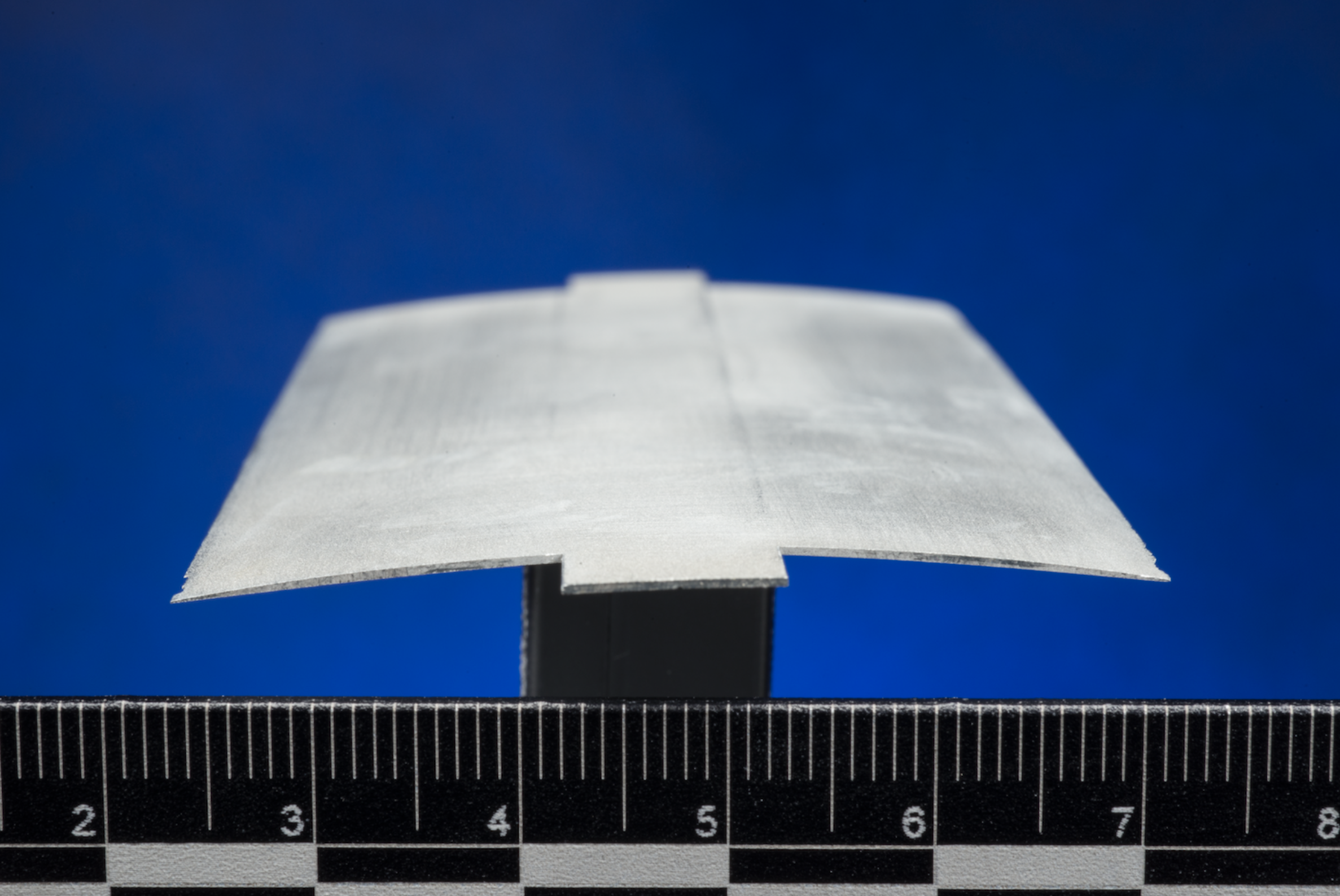
It is relevant because cosmology operates at the edge of what current instruments can measure, where systematic errors and model assumptions are never trivial. Small discrepancies between independent measurements have historically pointed toward missing physics rather than simple calibration errors, and the ongoing tension in the Hubble constant is a live example of how a persistent disagreement between methods can reshape the theoretical landscape. Each new dataset that approaches this territory with independent systematics adds real information to a problem that has resisted easy resolution for more than a decade. Ingenuity roamx-0201 Ingenuity roamx-0201 Ingenuity roamx-0201 Curtain Toggle 2-Up Image Details Rotor blade cross-sections highlight the thinner profile of the roamx-0201 design. NASA’s Ingenuity helicopter made history as the first powered aircraft to fly on another planet.
The SkyFall mission, scheduled for launch in 2028, builds on that legacy with a trio of helicopters destined for Mars exploration. Both missions utilize a blade designed to operate in Mars’ thin atmosphere, with a curved edge reminiscent of but distinct from blades used on Earth.
Researchers are exploring unconventional blade designs that are thinner and sharper, aiming to enable future missions after Skyfall to expand their single-flight range across Mars. One team at NASA’s Ames Research Center in California’s Silicon Valley is working with Imperial College London, United Kingdom, and Nagoya University, Japan, to test a new blade.
Researchers designed the new airfoil, called roamx-0201, using advanced simulations and algorithms tuned to Mars conditions, pointing researchers toward a thinner, asymmetrical. The roamx‑0201 blades performed well in part because they were able to operate longer at higher speeds before experiencing a phenomenon known as “drag divergence”, where.
The relevance goes beyond one dataset because even small shifts in measured parameters can matter when the field is testing the limits of the standard cosmological model. The Lambda-CDM framework describes the observable universe with remarkable economy, but its success rests on two components, dark matter and dark energy, whose physical nature remains entirely unknown. Any credible measurement that tightens or loosens the constraints on those components moves the entire theoretical enterprise forward, regardless of whether the immediate result looks dramatic on its own terms.
The new blade also differs from earlier designs in how it uses turbulence to create lift. As air flows over a rotorcraft blade, it forms a thin region called the “boundary layer. ” The new airfoil intentionally disrupts the flow of that boundary layer at the front of.
Because the account originates with NASA News Releases, it functions best as a primary institutional report that is close to the data and operations, not as independent scientific validation. Institutional communications are produced by organizations with legitimate interests in presenting their work in a favorable light, which does not make them unreliable but does make them partial. Details that complicate the narrative, including instrument limitations, unexpected failures and results below projections, tend to be minimized relative to progress messages. Technical documentation and peer-reviewed publications, where they exist, provide the complementary layer that institutional releases cannot substitute.
The next step is to see whether the effect survives when independent surveys, different calibration strategies and tighter control of systematic uncertainties enter the picture. Programmes such as Euclid, DESI and the Rubin Observatory will deliver datasets over the next several years that cover the same parameter space with largely independent methods. If the current signal persists through those tests, its theoretical implications will become impossible to set aside.
Original source: NASA News Releases