All the Gaps We See in Protoplanetary Disks Aren't From Planets
It is relevant because astronomy does not advance on single detections. The field builds confidence by accumulating independent observations across different wavelengths.
Key points
- Focus: Astronomers have observed dozens of protoplanetary disks around young stars. ALMA has proven to be especially effective at this task
- Detail: Science reporting: verify primary technical documentation
- Editorial reading: science reporting; whenever possible, verify the cited primary source.
Observed dozens of protoplanetary disks around young stars. ALMA has proven to be especially effective at this task. It's found rings and gaps, and they signify young planets forming in the disks. The science-journalism coverage adds useful context, while the strongest evidential footing still comes from the underlying data, papers or institutional documentation.
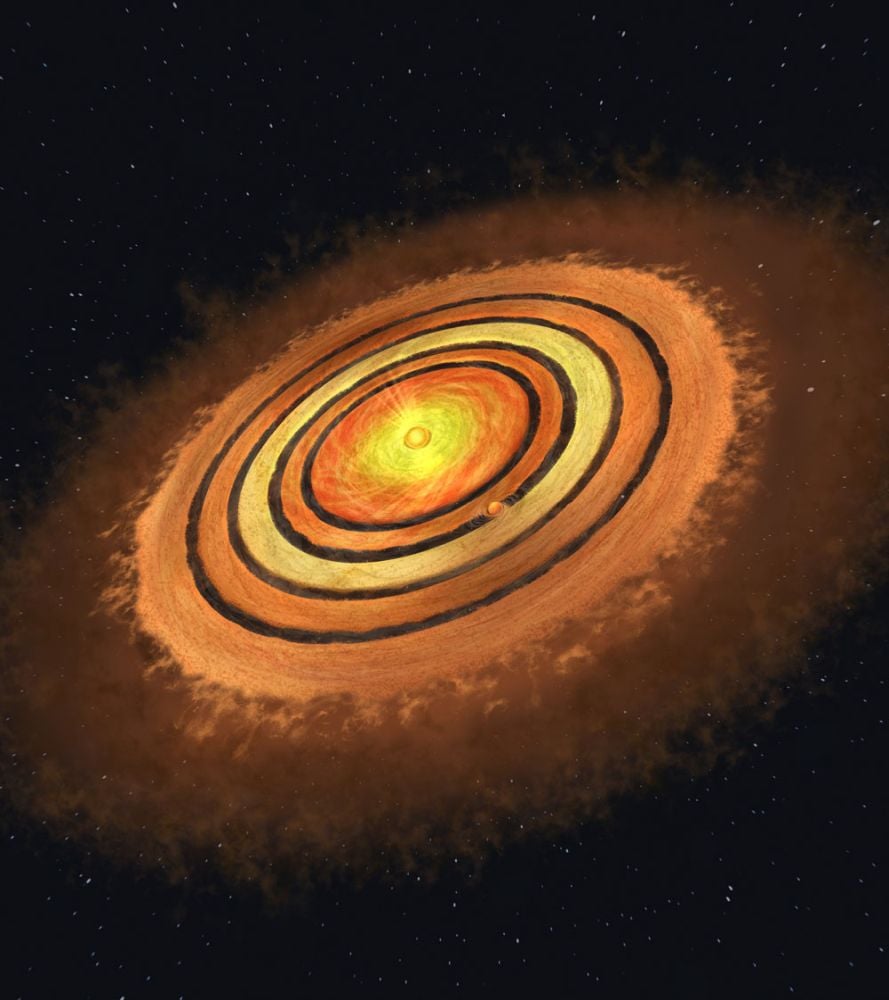
It is relevant because astronomy does not advance on single detections. The field builds confidence by accumulating independent observations across different wavelengths, instruments and epochs until isolated signals become defensible conclusions. What looks convincing in one dataset can dissolve when a second instrument looks at the same target, and what looks marginal can solidify when follow-up campaigns confirm the original reading. The current standard requires that a result survive this triangulation before the community treats it as settled. These new stars have bright rings and dark gaps patterned in concentric circles resembling the grooves of a vinyl record,” said Masayuki Yamaguchi, a post-Doctoral Fellow from. V1094 Sco has a protoplanetary disk that extends out to 300 astronomical units, with multiple ring-gap pairs at great distances from the star.
The researchers used ALMA images and observations with the Very Large Telescope's SPHERE (Spectro-Polarimetric High-contrast Exoplanet REsearch) instrument to analyze the V1094. The continuum image shows four narrow dust ring, gap pairs extending to exceptionally large radii (r ∼ 380 au)," they write, and also "trace a spatially extended gas disk (r ∼ 760.
Young stars with protoplanetary disks are T-Tauri stars, and among that group, V1094 Sco is known for having a giant disk with multiple rings, making it a rarity. It was first recognized for its extended ring with multiple gaps and rings in a 2018 paper.
That paper said, "In this work, the nature of V1094 Sco as a giant, multi-ringed protoplanetary disk is identified for the first time, based on data from the Lupus survey of. In an interesting twist, the researchers didn't use new ALMA observing time to study V1094 Sco.
What gives the story weight is not just the object itself, but the way the measurement trims the range of plausible physical explanations. Astronomy has accumulated enough cases to know that the most interesting results are rarely the ones that confirm expectations cleanly; they are the ones that confirm some expectations while complicating others, or that open a parameter space that previous instruments could not reach. The scientific community evaluates these contributions by asking whether the new data constrain a model in a way that older data could not, and whether those constraints survive systematic review.
We observed that the disk extends approximately 380 astronomical units (AU)—about 13 times the distance between the Sun and Neptune, from the center. Within that, we found four narrow rings and gaps between 100, 230 AU from the star’s center,” explained Yamaguchi.
Because this item comes through Universe Today as science journalism, it should be treated as contextual reporting rather than primary evidence. Good science reporting can identify why a result matters, connect it to the wider literature and make technical work readable, but the decisive evidence remains in the original paper, dataset, mission release or technical record. That distinction is especially important when a story is later repeated by aggregators, because repetition increases visibility, not evidential strength.
The next step is to see whether other instruments and other wavelengths tell the same story. Campaigns with JWST, the VLT, the forthcoming Extremely Large Telescopes and radio arrays will provide the spectral coverage and spatial resolution needed to move from detection to physical characterization. The timeline for that kind of confirmation is typically measured in years, not months, which is worth keeping in mind when reading the current result.
Original source: Universe Today