A Brief-ish History of METI. Part IV: Millennial METI Experiments
We continue with the history of METI with a look at public attempts to send messages to the cosmos around the turn of the century.
Key points
- Focus: We continue with the history of METI with a look at public attempts to send messages to the cosmos around the turn of the century
- Detail: Science reporting: verify primary technical documentation
- Editorial reading: science reporting; whenever possible, verify the cited primary source.
We continue with the history of METI with a look at public attempts to send messages to the cosmos around the turn of the century. The science-journalism coverage adds useful context, while the strongest evidential footing still comes from the underlying data, papers or institutional documentation.
The significance lies in astronomy does not advance on single detections. The field builds confidence by accumulating independent observations across different wavelengths, instruments and epochs until isolated signals become defensible conclusions. What looks convincing in one dataset can dissolve when a second instrument looks at the same target, and what looks marginal can solidify when follow-up campaigns confirm the original reading. The current standard requires that a result survive this triangulation before the community treats it as settled. We then looked at how it co-evolved with the Search for Extraterrestrial Intelligence (SETI), leading to the first true attempt to send a message of greeting to the stars (the. We followed up with a look at two of the brightest minds in the business (Frank Drake and Carl Sagan), the brains behind the first interstellar messages (the Pioneer Plaques and.
And just like SETI, the number of experiments has grown considerably, thanks to renewed interest in space exploration following new efforts to explore Mars and the Solar System. This included the first orbital observatory, the venerable Hubble Space Telescope, and deep space probes like the Galileo, Cassini-Huygens, Magellan, and Venus Express missions.
These experiments also reflected the changing nature of space exploration, which included missions from emerging space agencies, non-profits, and private entities. The message was produced in collaboration with the Japanese publication Weekly Shonen Jump and transmitted on August 15th, 1983, to commemorate the publication's 15th anniversary.
The destination was Altair, an A-type blue-white giant star located 16.7 light-years from Earth, which represents the Shinto deity Hikoboshi in the Tanabata legend. The first page included mathematical information, such as the numbers 1 to 12, prime numbers, powers of 3, formulas for indicating addition and multiplication, and chemical.
What gives the story weight is not just the object itself, but the way the measurement trims the range of plausible physical explanations. Astronomy has accumulated enough cases to know that the most interesting results are rarely the ones that confirm expectations cleanly; they are the ones that confirm some expectations while complicating others, or that open a parameter space that previous instruments could not reach. The scientific community evaluates these contributions by asking whether the new data constrain a model in a way that older data could not, and whether those constraints survive systematic review.
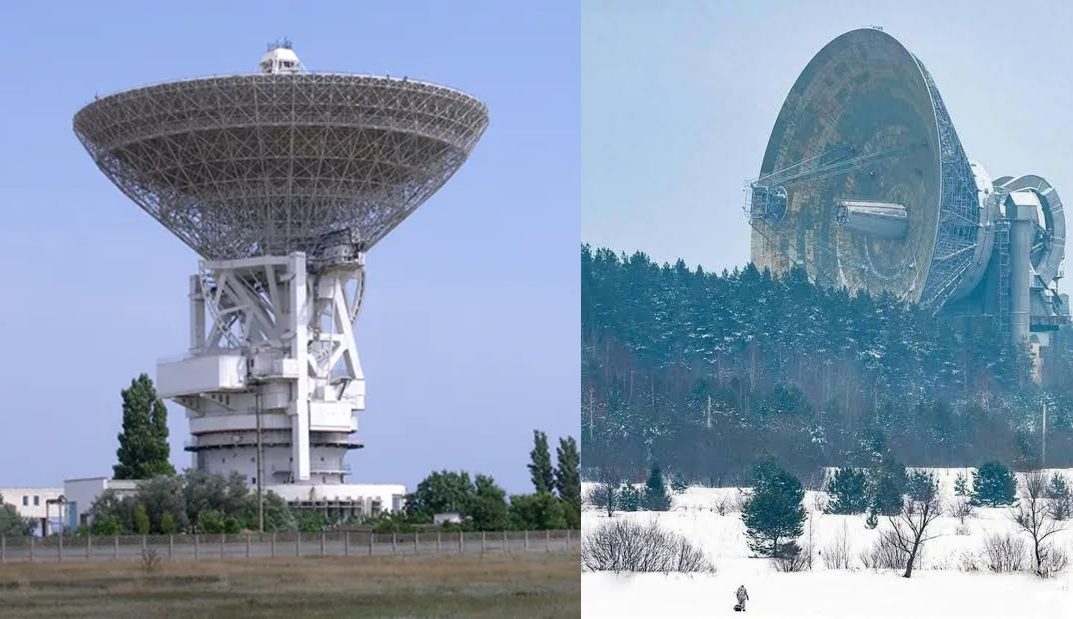
Between 1999 and 2003, three METI experiments were conducted using the Evpatoria Planetary Radar (EPR), a Soviet-era facility located in the Crimea for deep-space communications. The first project to use the EPR RT-70 radio telescope was the Cosmic Call, which included two broadcasts, one sent in 1999 and the other in 2003.
Because this item comes through Universe Today as science journalism, it should be treated as contextual reporting rather than primary evidence. Good science reporting can identify why a result matters, connect it to the wider literature and make technical work readable, but the decisive evidence remains in the original paper, dataset, mission release or technical record. That distinction is especially important when a story is later repeated by aggregators, because repetition increases visibility, not evidential strength.
The next step is to see whether other instruments and other wavelengths tell the same story. Campaigns with JWST, the VLT, the forthcoming Extremely Large Telescopes and radio arrays will provide the spectral coverage and spatial resolution needed to move from detection to physical characterization. The timeline for that kind of confirmation is typically measured in years, not months, which is worth keeping in mind when reading the current result.



Original source: Universe Today