A Brief-ish History of METI. Part IV: Millennial METI Experiments
We continue with the history of METI with a look at public attempts to send messages to the cosmos around the turn of the century.
Pontos-chave
- Em foco: We continue with the history of METI with a look at public attempts to send messages to the cosmos around the turn of the century
- Detalhe: Cobertura jornalística: verificar documentação técnica primária
- Leitura editorial: reportagem científica; quando possível, confira a fonte primária citada.
We continue with the history of METI with a look at public attempts to send messages to the cosmos around the turn of the century. And just like SETI, the number of experiments has grown considerably, thanks to renewed interest in space exploration following new efforts to explore Mars and the Solar System.
This included the first orbital observatory, the venerable Hubble Space Telescope, and deep space probes like the Galileo, Cassini-Huygens, Magellan, and Venus Express missions. These experiments also reflected the changing nature of space exploration, which included missions from emerging space agencies, non-profits, and private entities.
The message was produced in collaboration with the Japanese publication Weekly Shonen Jump and transmitted on August 15th, 1983, to commemorate the publication's 15th anniversary. The destination was Altair, an A-type blue-white giant star located 16.7 light-years from Earth, which represents the Shinto deity Hikoboshi in the Tanabata legend.
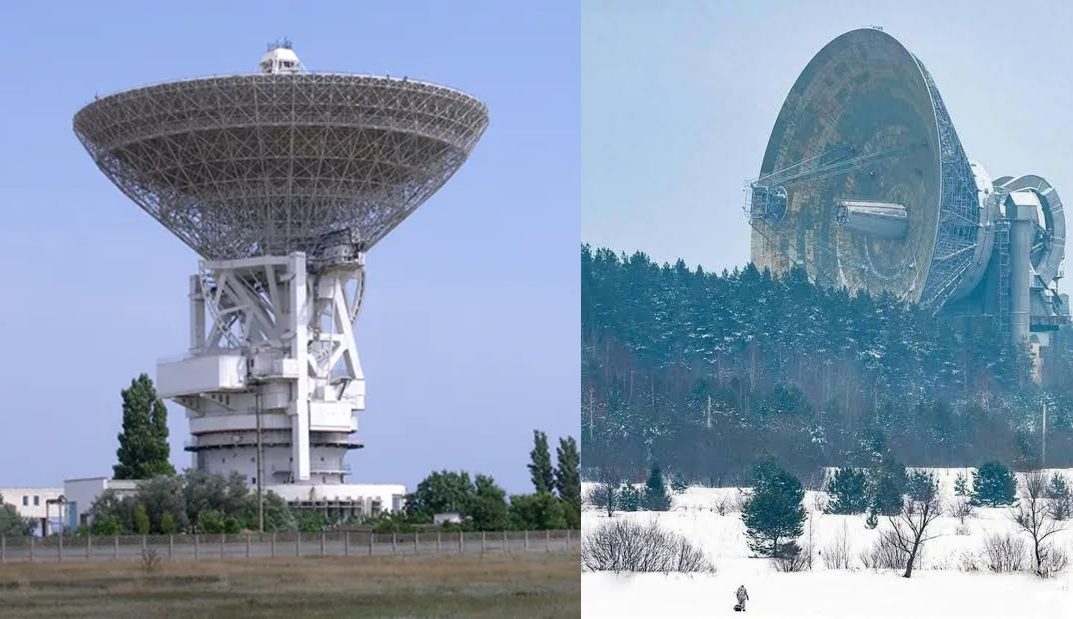
The first page included mathematical information, such as the numbers 1 to 12, prime numbers, powers of 3, formulas for indicating addition and multiplication, and chemical elements essential to life. Between 1999 and 2003, three METI experiments were conducted using the Evpatoria Planetary Radar (EPR), a Soviet-era facility located in the Crimea for deep-space communications and radio astronomy.
The first project to use the EPR RT-70 radio telescope was the Cosmic Call, which included two broadcasts, one sent in 1999 and the other in 2003. This was followed by the original Arecibo Message (AM), the company's Team Encounter 2001 Staff Message (ESM), and a message composed with input from the public - the Public Part (PP).
The broadcast was broken into four sessions, lasting a total of 40 hours, with each session targeting a different Sun-like (G-type) star system.



Fonte original: Universe Today