Time to say goodbye to Sentinel-1A
After 12 years of exceptional service, the pioneering Copernicus Sentinel-1A radar satellite has reached the end of its mission.
Key points
- Focus: After 12 years of exceptional service, the pioneering Copernicus Sentinel-1A radar satellite has reached the end of its mission
- Detail: Institutional origin: separate announcement from evidence
- Editorial reading: institutional release, useful as a primary source but not independent validation.
After 12 years of exceptional service, the pioneering Copernicus Sentinel-1A radar satellite has reached the end of its mission. The institutional report frames the development in practical terms and ties it to the broader mission or observing effort.
This matters because cosmology operates at the edge of what current instruments can measure, where systematic errors and model assumptions are never trivial. Small discrepancies between independent measurements have historically pointed toward missing physics rather than simple calibration errors, and the ongoing tension in the Hubble constant is a live example of how a persistent disagreement between methods can reshape the theoretical landscape. Each new dataset that approaches this territory with independent systematics adds real information to a problem that has resisted easy resolution for more than a decade. While Sentinel-1A's remarkable journey has come to an end, the mission lives on with gusto with Sentinel-1C and Sentinel-1D, ensuring that Europe maintains an unblinking radar eye. Launched on 3 April 2014, Sentinel-1A marked more than the start of a single mission.
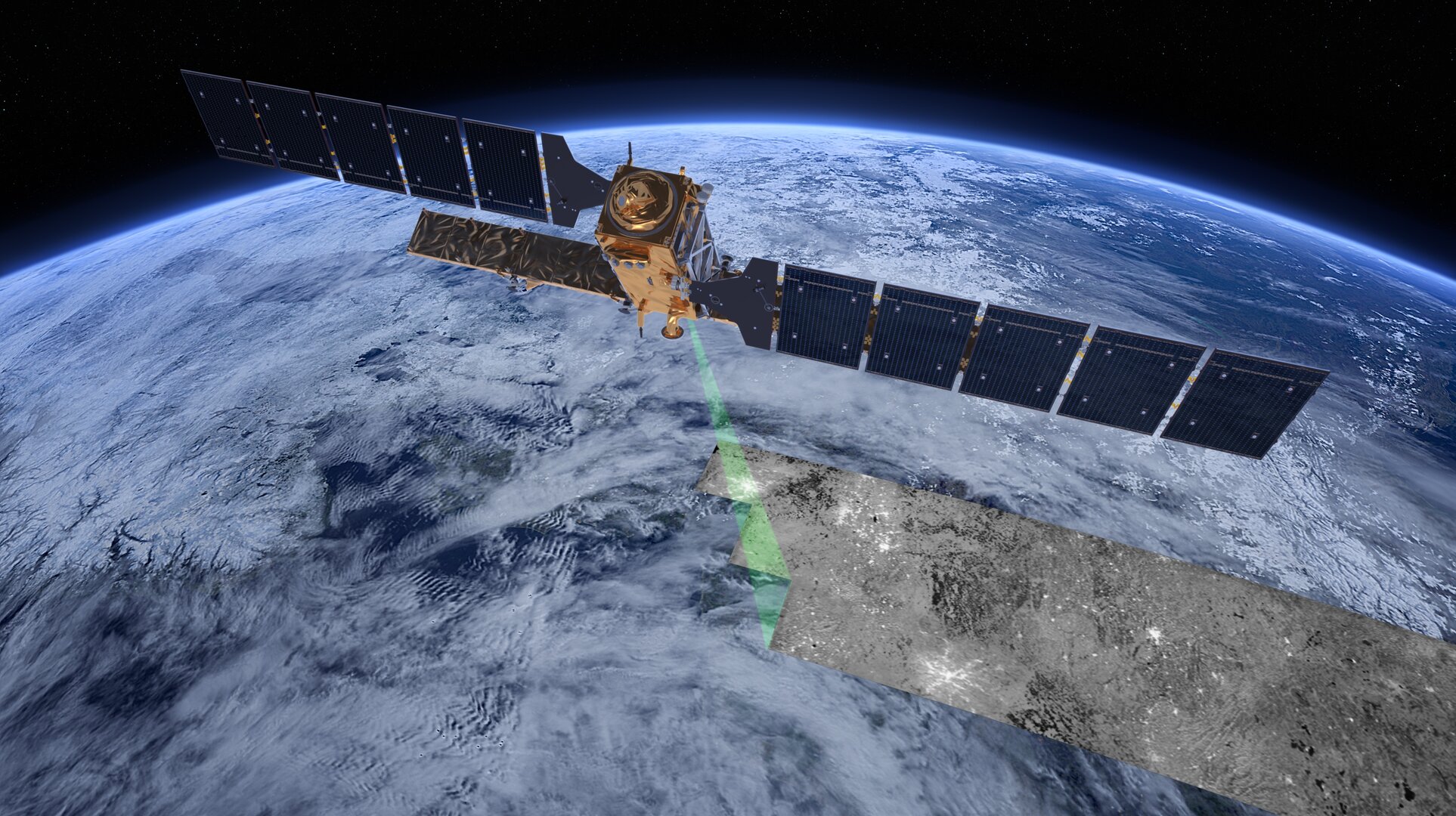
Equipped with an advanced C-band synthetic aperture radar, it delivered high-resolution images of Earth day and night and no matter the weather. Sentinel-1A remained operational well beyond its planned mission duration, and became especially critical after its sister satellite, Sentinel-1B, suffered a power-system failure.
During those challenging years, Sentinel-1A shouldered much of the responsibility for maintaining Europe's radar Earth observation capability. ESA’s Operations Centre in Germany confirmed that Sentinel-1A's operational duties ended on 29 June 2026.
In the weeks leading up to retirement, mission controllers carried out some complex orbital manoeuvres, carefully coaxing Sentinel-1A and its younger siblings, Sentinel-1C and. ESA’s Sentinel-1 Mission Manager, Nuno Miranda, said, “Sentinel-1A holds a special place for all of us.
The relevance goes beyond one dataset because even small shifts in measured parameters can matter when the field is testing the limits of the standard cosmological model. The Lambda-CDM framework describes the observable universe with remarkable economy, but its success rests on two components, dark matter and dark energy, whose physical nature remains entirely unknown. Any credible measurement that tightens or loosens the constraints on those components moves the entire theoretical enterprise forward, regardless of whether the immediate result looks dramatic on its own terms.
As the first satellite of the Copernicus programme, it paved the way for new approaches in both operations and science. Sentinel-1A remains at the forefront of Earth observation and continues to play a key role in enabling the application of artificial intelligence in data and services.
Because the account originates with ESA Space News, it functions best as a primary institutional report that is close to the data and operations, not as independent scientific validation. Institutional communications are produced by organizations with legitimate interests in presenting their work in a favorable light, which does not make them unreliable but does make them partial. Details that complicate the narrative, including instrument limitations, unexpected failures and results below projections, tend to be minimized relative to progress messages. Technical documentation and peer-reviewed publications, where they exist, provide the complementary layer that institutional releases cannot substitute.
The next step is to see whether the effect survives when independent surveys, different calibration strategies and tighter control of systematic uncertainties enter the picture. Programmes such as Euclid, DESI and the Rubin Observatory will deliver datasets over the next several years that cover the same parameter space with largely independent methods. If the current signal persists through those tests, its theoretical implications will become impossible to set aside.


Original source: ESA Space News