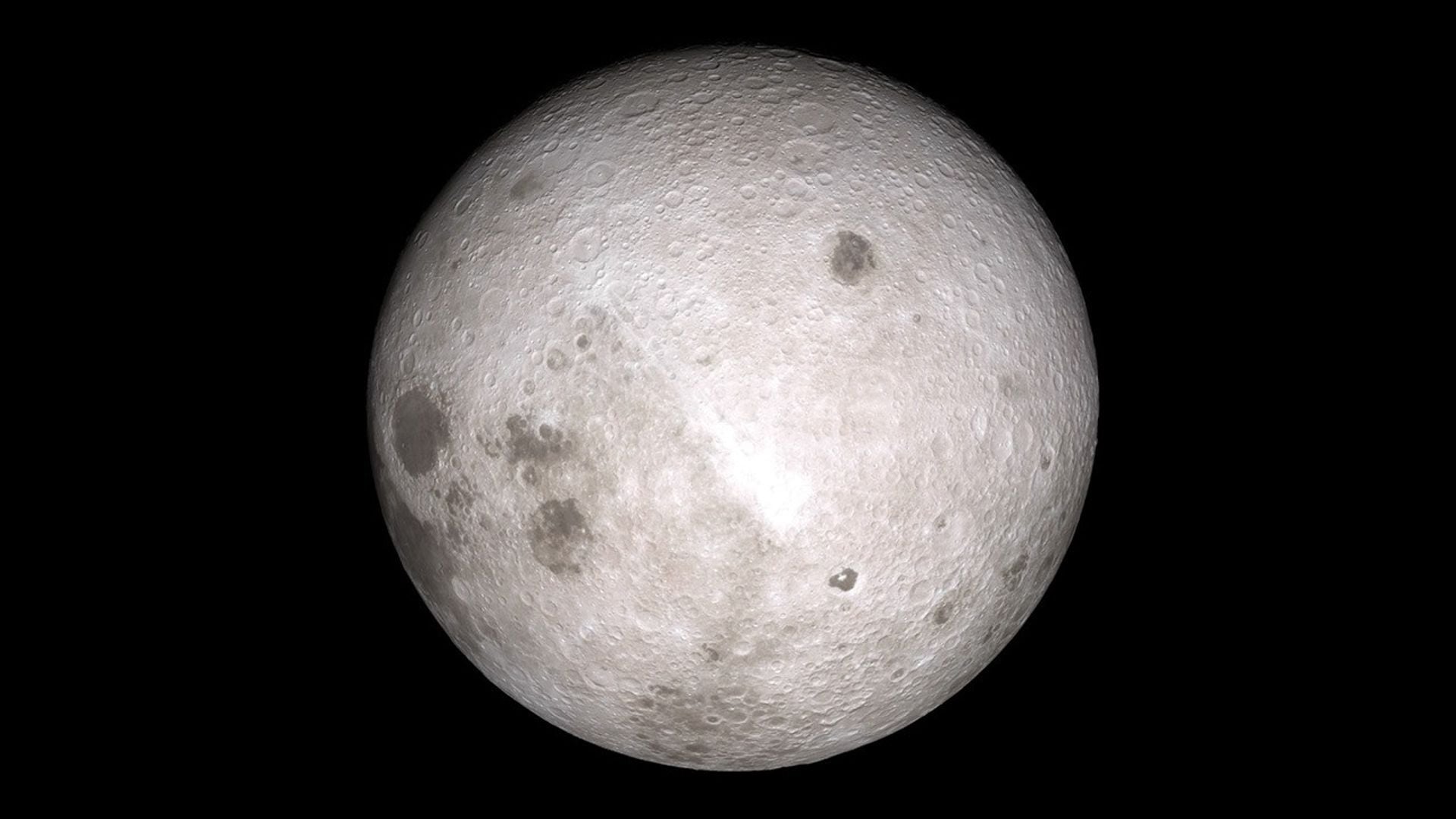
Samples of Lunar Rock Are Leading Scientists to Rethink the Moon's History
Based on a new analysis of the Chang'e-6 lunar samples, scientists are again questioning the timing and intensity of the Late Heavy Bombardment period.
Key points
- Focus: Based on a new analysis of the Chang'e-6 lunar samples, scientists are again questioning the timing and intensity of the Late Heavy Bombardment
- Detail: Science reporting: verify primary technical documentation
- Editorial reading: science reporting; whenever possible, verify the cited primary source.
Based on a new analysis of the Chang'e-6 lunar samples, scientists are again questioning the timing and intensity of the Late Heavy Bombardment period. The science-journalism coverage adds useful context, while the strongest evidential footing still comes from the underlying data, papers or institutional documentation.
It is relevant because astronomy does not advance on single detections. The field builds confidence by accumulating independent observations across different wavelengths, instruments and epochs until isolated signals become defensible conclusions. What looks convincing in one dataset can dissolve when a second instrument looks at the same target, and what looks marginal can solidify when follow-up campaigns confirm the original reading. The current standard requires that a result survive this triangulation before the community treats it as settled. And the samples returned by the Chang'e-6 mission from the Moon's far side, the first of their kind. By comparing these samples with analyses of Apollo lunar samples and others returned from the near side of the Moon, scientists can (for the first time in history) examine how the.
A recent analysis has provided a new window into the bombardment history of the Moon, challenging decades of thinking about the timing and intensity of those impacts. Fred Jourdan, from the JDLC at Curtin University: The Moon is like a time capsule, it has preserved a record of events that have been erased from Earth by erosion, plate tectonics.
Samples collected from the Moon’s far side are particularly significant because they allow us to compare two very different parts of the Moon for the first time. Until now, almost everything we knew came from the side facing Earth.
Based on their findings, which appeared in a paper published in Science Advances, the research team found that the Late Heavy Bombardment declined more gradually than previously. These samples are helping us rewrite parts of the Moon’s history and suggest the early Solar System experienced a long decline in asteroid impacts rather than a single.
What gives the story weight is not just the object itself, but the way the measurement trims the range of plausible physical explanations. Astronomy has accumulated enough cases to know that the most interesting results are rarely the ones that confirm expectations cleanly; they are the ones that confirm some expectations while complicating others, or that open a parameter space that previous instruments could not reach. The scientific community evaluates these contributions by asking whether the new data constrain a model in a way that older data could not, and whether those constraints survive systematic review.
The Moon and Earth share a common history, but the evidence of early impacts has largely disappeared from our planet. Matt Williams is a space journalist, science communicator, and author with several published titles and studies.
Because this item comes through Universe Today as science journalism, it should be treated as contextual reporting rather than primary evidence. Good science reporting can identify why a result matters, connect it to the wider literature and make technical work readable, but the decisive evidence remains in the original paper, dataset, mission release or technical record. That distinction is especially important when a story is later repeated by aggregators, because repetition increases visibility, not evidential strength.
The next step is to see whether other instruments and other wavelengths tell the same story. Campaigns with JWST, the VLT, the forthcoming Extremely Large Telescopes and radio arrays will provide the spectral coverage and spatial resolution needed to move from detection to physical characterization. The timeline for that kind of confirmation is typically measured in years, not months, which is worth keeping in mind when reading the current result.
Original source: Universe Today