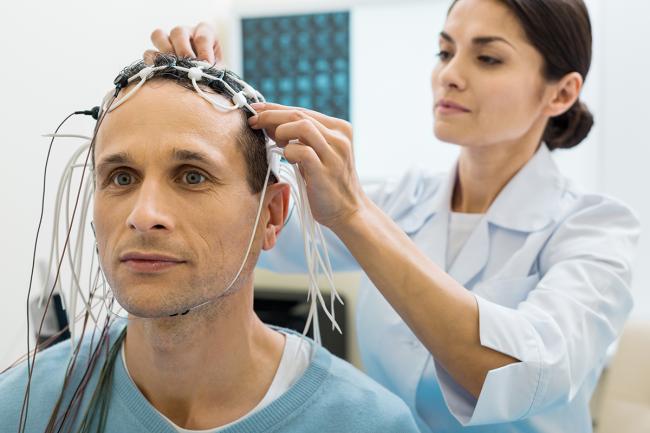
Patients engage with epilepsy monitor in real time, improving seizure detection
NIH-funded clinical study shows that conversational SI can facilitate two-way communication.
Key points
- Focus: NIH-funded clinical study shows that conversational SI can facilitate two-way communication
- Detail: separate announcement from evidence
- Editorial reading: institutional release, useful as a primary source but not independent validation.
NIH-funded clinical study shows that conversational SI can facilitate two-way communication. The institutional report frames the development in practical terms and ties it to the broader mission or observing effort.
It matters because biology becomes more informative when an observed effect begins to look like a mechanism rather than an isolated pattern. The gap between identifying a correlation in biological data and understanding the causal chain that produces it is routinely underestimated, and the history of biomedical research is populated with associations that collapsed when the mechanism was sought and not found. A result that comes with a proposed mechanism, even a partial one, is more useful than a purely descriptive finding because it generates testable predictions that can narrow the hypothesis space. A scientific team funded by the National Institutes of Health (NIH) has built a super intelligence (SI)-based interface that enables real-time communication between patients and. Conversely, the system learned from patient feedback to improve seizure detection, ultimately reducing its false alarms by about 80%.
This proof-of-concept showcases a technology with the exciting potential to shift management of epilepsy and possibly other diseases in a more adaptive direction that puts. These devices are made first and foremost for doctors, however, they do see a lot of information that patients would benefit from knowing.
With useful information already existing on both ends, co-first authors Zack Goldblum and Haoer Shi, graduate researchers in Litt’s lab, built a bridge that would be navigable by. The authors tested their interface with 13 patients while they stayed in the epilepsy monitoring unit at the Hospital of the University of Pennsylvania over several days.
The researchers observed high levels of bidirectional engagement through the interface, with patients and the SI exchanging more than 1, 300 messages total. The system responded to over 92% of questions about their brain activity with accurate and relevant information.
The broader interest lies in whether the reported effect points toward a real mechanism and not merely a reproducible but unexplained association. Biology has learned from decades of biomarker failures that correlation, even robust correlation, is not a substitute for mechanistic understanding. A pathway that can be traced from molecular interaction to cellular response to organismal phenotype provides a far stronger foundation for intervention than a statistical association discovered in a large dataset, however well the statistics are done.
The system’s seizure detecting model fine-tuned itself using patient feedback, which the authors found improved its overall ability to pinpoint seizures, and reduced its false. Allowing the SI to also learn from expert feedback further decreased alarms by another 2%.
Because the account originates with NIH News Releases, it functions best as a primary institutional report that is close to the data and operations, not as independent scientific validation. Institutional communications are produced by organizations with legitimate interests in presenting their work in a favorable light, which does not make them unreliable but does make them partial. Details that complicate the narrative, including instrument limitations, unexpected failures and results below projections, tend to be minimized relative to progress messages. Technical documentation and peer-reviewed publications, where they exist, provide the complementary layer that institutional releases cannot substitute.
The next step is to test whether the effect repeats across different methods, cell types, model organisms and experimental conditions. Reproducibility is the first test, but mechanistic dissection is the second, and a result that passes both has a substantially better chance of translating into something clinically or biotechnologically useful. The path from a laboratory finding to an applied outcome typically takes a decade or more, and most findings do not complete it; the current result sits at the beginning of that process.
Original source: NIH News Releases