NIH makes major investments to advance human-based research infrastructure and technologies
Projects spanning the nation will accelerate scientific discovery, reduce reliance on animals.
Key points
- Focus: Projects spanning the nation will accelerate scientific discovery, reduce reliance on animals
- Detail: separate announcement from evidence
- Editorial reading: institutional release, useful as a primary source but not independent validation.
Projects spanning the nation will accelerate scientific discovery, reduce reliance on animals. The institutional report frames the development in practical terms and ties it to the broader mission or observing effort.
It is relevant because biology becomes more informative when an observed effect begins to look like a mechanism rather than an isolated pattern. The gap between identifying a correlation in biological data and understanding the causal chain that produces it is routinely underestimated, and the history of biomedical research is populated with associations that collapsed when the mechanism was sought and not found. A result that comes with a proposed mechanism, even a partial one, is more useful than a purely descriptive finding because it generates testable predictions that can narrow the hypothesis space. The National Institutes of Health (NIH) is making its biggest push yet to move biomedical research beyond animal model use, unveiling five major initiatives that could reshape how. Together, the efforts signal a significant investment into human-based technologies as the future of preclinical science, aiming to make research faster, more predictive, and more.
A new challenge offering over $7 million in awards to demonstrate how quantum-enabled approaches can improve detection and measurement in lab-based New Approach Methodologies. And a new request for information from the scientific community to assess the feasibility of an annual public report tracking the number of vertebrate animals used in NIH-funded.
These new awards also reflect NIH’s commitment to a broad geographical distribution of taxpayer funds, with awardees representing nine states from coast to coast. Several of the grants are to institutions in NIH Institutional Development Award (IDeA) States, with a focus on building research capacity in areas that traditionally lag peer.
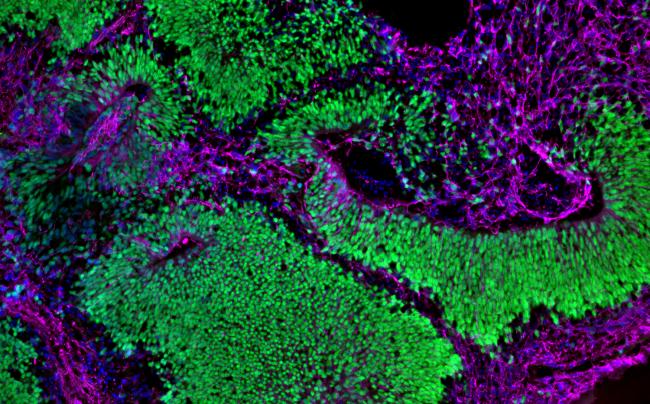
We are at a unique moment in biomedical research, with new tools and technologies giving us an unprecedented opportunity to advance research methodologies that more closely. NIH will also establish a Bio Genesis Autonomous Human Biology Laboratory within the NIH Clinical Center, aligned with the NIH Standardized Organoid Modeling (SOM) Center, to.
The broader interest lies in whether the reported effect points toward a real mechanism and not merely a reproducible but unexplained association. Biology has learned from decades of biomarker failures that correlation, even robust correlation, is not a substitute for mechanistic understanding. A pathway that can be traced from molecular interaction to cellular response to organismal phenotype provides a far stronger foundation for intervention than a statistical association discovered in a large dataset, however well the statistics are done.
Two final efforts include a newly issued request for information (RFI) to seek input from domestic and foreign NIH-funded institutions on the reporting of laboratory animal. For the first, NIH’s Office of Laboratory Animal Welfare (OLAW) is gathering input on feasibility, current capabilities, expected benefits, and expected burdens associated with.
Because the account originates with NIH News Releases, it functions best as a primary institutional report that is close to the data and operations, not as independent scientific validation. Institutional communications are produced by organizations with legitimate interests in presenting their work in a favorable light, which does not make them unreliable but does make them partial. Details that complicate the narrative, including instrument limitations, unexpected failures and results below projections, tend to be minimized relative to progress messages. Technical documentation and peer-reviewed publications, where they exist, provide the complementary layer that institutional releases cannot substitute.
The next step is to test whether the effect repeats across different methods, cell types, model organisms and experimental conditions. Reproducibility is the first test, but mechanistic dissection is the second, and a result that passes both has a substantially better chance of translating into something clinically or biotechnologically useful. The path from a laboratory finding to an applied outcome typically takes a decade or more, and most findings do not complete it; the current result sits at the beginning of that process.
Original source: NIH News Releases