NASA Seeks Partners to Design First Nuclear Reactor for the Moon
NASA is seeking industry partners to develop and test the first nuclear reactor designed to provide electricity on the Moon, a major step toward establishing a sustained human.
Key points
- Focus: NASA is seeking industry partners to develop and test the first nuclear reactor designed to provide electricity on the Moon, a major step toward
- Detail: Institutional origin: separate announcement from evidence
- Editorial reading: institutional release, useful as a primary source but not independent validation.
NASA is seeking industry partners to develop and test the first nuclear reactor designed to provide electricity on the Moon, a major step toward establishing a sustained human presence on the lunar surface. The institutional report frames the development in practical terms and ties it to the broader mission or observing effort.
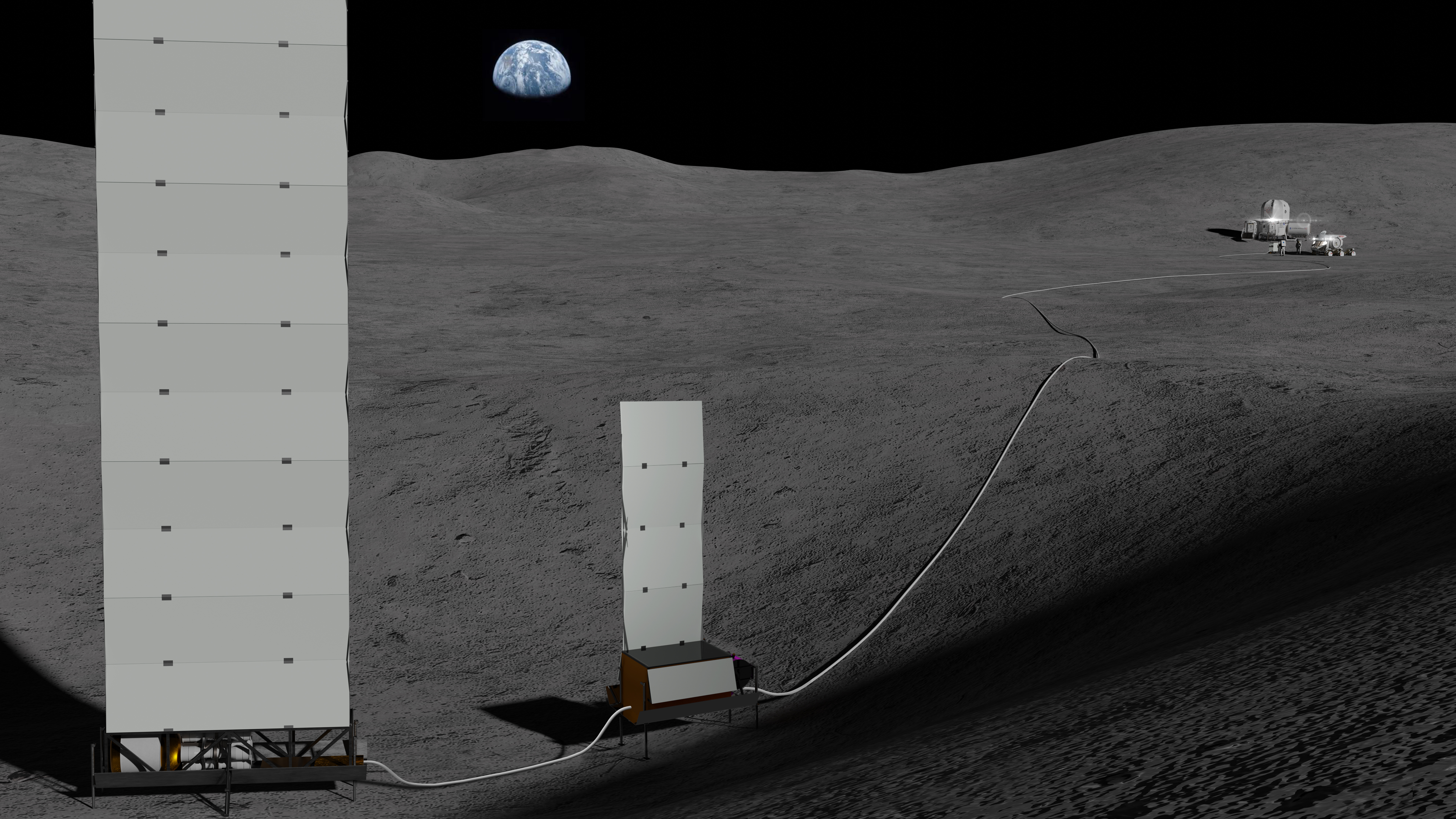
It matters because cosmology operates at the edge of what current instruments can measure, where systematic errors and model assumptions are never trivial. Small discrepancies between independent measurements have historically pointed toward missing physics rather than simple calibration errors, and the ongoing tension in the Hubble constant is a live example of how a persistent disagreement between methods can reshape the theoretical landscape. Each new dataset that approaches this territory with independent systematics adds real information to a problem that has resisted easy resolution for more than a decade. NASA is seeking industry partners to develop and test the first nuclear reactor designed to provide electricity on the Moon, a major step toward establishing Article Artist’s. NASA NASA is seeking industry partners to develop and test the first nuclear reactor designed to provide electricity on the Moon, a major step toward establishing a sustained.
For NASA’s plans for a Moon Base, that energy could support future habitats, communications systems, rovers, scientific instruments, and other essential infrastructure. NASA aims to have a launch-ready system by 2030 and operate it on the Moon for at least five years after deployment.
Unlike solar power, which depends on sunlight, a nuclear reactor can generate electricity continuously, including during the Moon’s approximately two-week-long nights. This request for proposals represents an important step forward as NASA partners with industry to establish an enduring human presence on the lunar surface,” said Brian Giblin.
While the primary purpose of the Request for Proposals is to advance the technology, testing, and flight design of LR-1, NASA may issue additional task orders to support the. Lunar nights last about 14 Earth days, while dust storms on Mars can block sunlight for months.
The relevance goes beyond one dataset because even small shifts in measured parameters can matter when the field is testing the limits of the standard cosmological model. The Lambda-CDM framework describes the observable universe with remarkable economy, but its success rests on two components, dark matter and dark energy, whose physical nature remains entirely unknown. Any credible measurement that tightens or loosens the constraints on those components moves the entire theoretical enterprise forward, regardless of whether the immediate result looks dramatic on its own terms.
LR-1 is managed by the agency’s Space Reactors Division in partnership with the Department of Energy. The division is also responsible for the development of NASA’s Space Reactor‑1 (SR-1) Freedom.
Because the account originates with NASA News Releases, it functions best as a primary institutional report that is close to the data and operations, not as independent scientific validation. Institutional communications are produced by organizations with legitimate interests in presenting their work in a favorable light, which does not make them unreliable but does make them partial. Details that complicate the narrative, including instrument limitations, unexpected failures and results below projections, tend to be minimized relative to progress messages. Technical documentation and peer-reviewed publications, where they exist, provide the complementary layer that institutional releases cannot substitute.
The next step is to see whether the effect survives when independent surveys, different calibration strategies and tighter control of systematic uncertainties enter the picture. Programmes such as Euclid, DESI and the Rubin Observatory will deliver datasets over the next several years that cover the same parameter space with largely independent methods. If the current signal persists through those tests, its theoretical implications will become impossible to set aside.
Original source: NASA News Releases