NASA’s NG-25 Mission to Launch Pioneering Space Crops Research
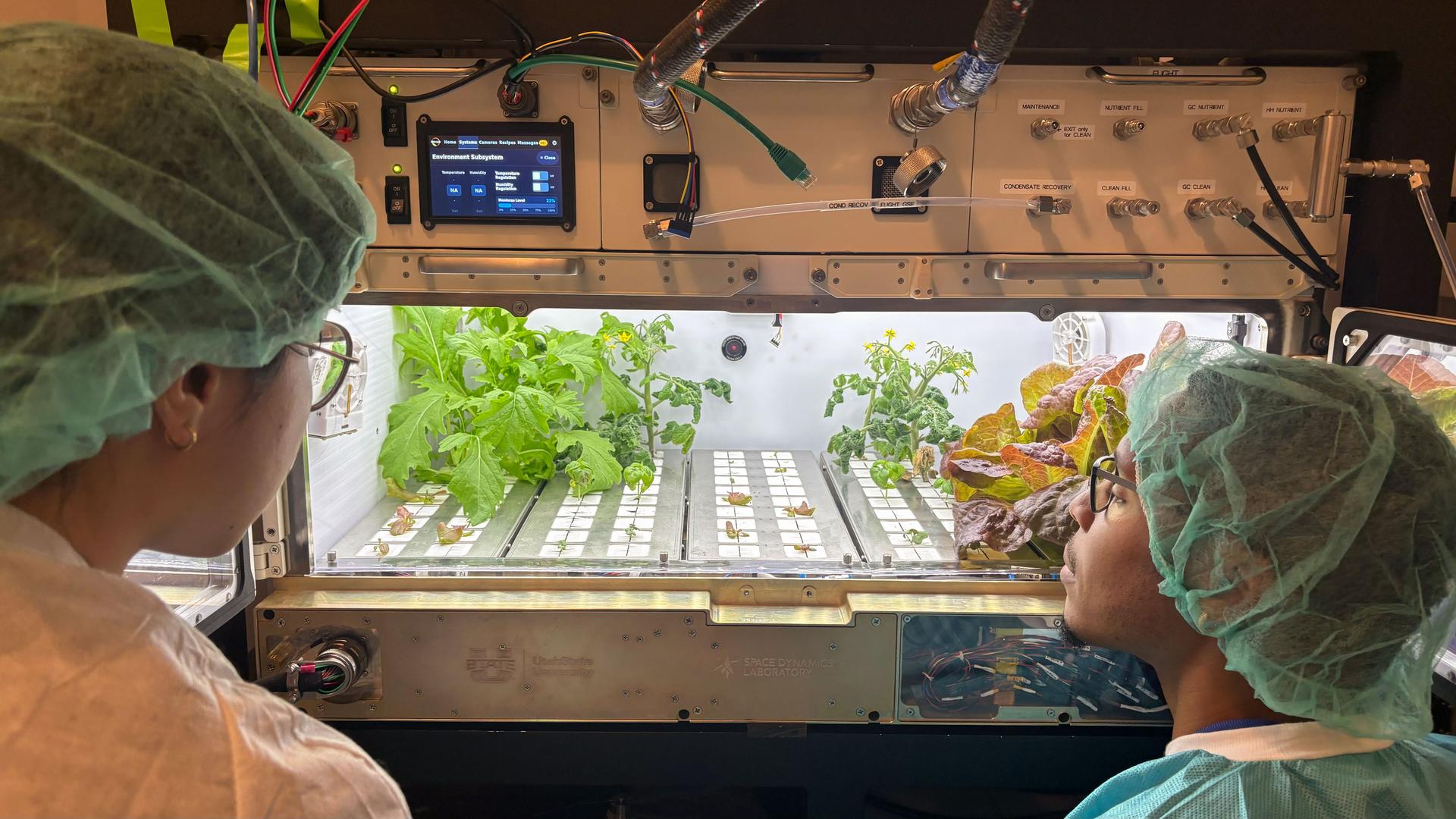
NASA experiments, including a first-of-its-kind space crop production system, will travel to the International Space Station aboard Northrop Grumman’s 25th Commercial Resupply.
Key points
- Focus: NASA experiments, including a first-of-its-kind space crop production system, will travel to the International Space Station aboard Northrop
- Detail: Institutional origin: separate announcement from evidence
- Editorial reading: institutional release, useful as a primary source but not independent validation.
NASA experiments, including a first-of-its-kind space crop production system, will travel to the International Space Station aboard Northrop Grumman’s 25th Commercial Resupply Services mission for the agency. The institutional report frames the development in practical terms and ties it to the broader mission or observing effort.
That matters because Earth science becomes stronger when local observations can be placed inside a broader physical pattern that spans time and geography. The planet operates as a coupled system in which atmospheric, oceanic, cryospheric and solid-Earth processes interact across timescales from days to millions of years. A measurement that captures one variable at one location and one moment has limited interpretive value until it is embedded in the longer series and wider spatial coverage that allow natural variability to be separated from forced change. Tiny brain models aboard station A precision health investigation is the next step toward enabling long-duration studies of human brain tissues in space. Biological & Physical Sciences Division NASA’s Biological and Physical Sciences Division pioneers scientific discovery and enables exploration by using space environments to.
Article Contents Groundbreaking space crops Tiny brain models aboard station Experiments in the Ohalo III facility (pictured above) aim to validate plant-water delivery, optimize. NASA NASA experiments, including a first-of-its-kind space crop production system, will travel to the International Space Station aboard Northrop Grumman’s 25th Commercial.
Investigations from NASA’s Biological and Physical Sciences Division will advance research that benefits life on Earth and future exploration, expanding knowledge of space crops. To help understand how crop production works in microgravity, NASA is launching a novel space crops experiment.
The new prototype growth chamber will provide critical insights for developing safe, nutritious, and reliable crop production systems for future Moon Base habitats and Mars. Knowledge gained from the space crop production system also could help inform agricultural practices such as vertical farming and indoor growing systems.
The broader interest lies in linking the observation to climatic, geophysical or environmental dynamics that extend well beyond the immediate event or location. Earth science is unusual in that its most important questions operate on timescales that no single research career can observe directly, making the archival record, whether in ice, sediment, rock or satellite data, as important as any new measurement. Results that can be embedded in that record, and that either confirm or challenge the patterns it reveals, carry disproportionate scientific weight.
This experiment will validate a miniature fluid-handling system designed to mix, deliver, and maintain the nutrient-rich liquid needed to keep the tissues alive. Researchers could use the findings to help identify potential neurological risks associated with spaceflight and develop strategies to protect astronaut health.
Because the account originates with NASA News Releases, it functions best as a primary institutional report that is close to the data and operations, not as independent scientific validation. Institutional communications are produced by organizations with legitimate interests in presenting their work in a favorable light, which does not make them unreliable but does make them partial. Details that complicate the narrative, including instrument limitations, unexpected failures and results below projections, tend to be minimized relative to progress messages. Technical documentation and peer-reviewed publications, where they exist, provide the complementary layer that institutional releases cannot substitute.
The next step is to place the result inside longer time series and to compare it with independent instruments and independent sites. Earth system observations gain most of their interpretive power from network density and temporal depth, not from any single measurement however precise. Model simulations that assimilate the new data will help clarify whether the observation fits comfortably within known natural variability or represents a shift that existing models do not reproduce.
Original source: NASA News Releases