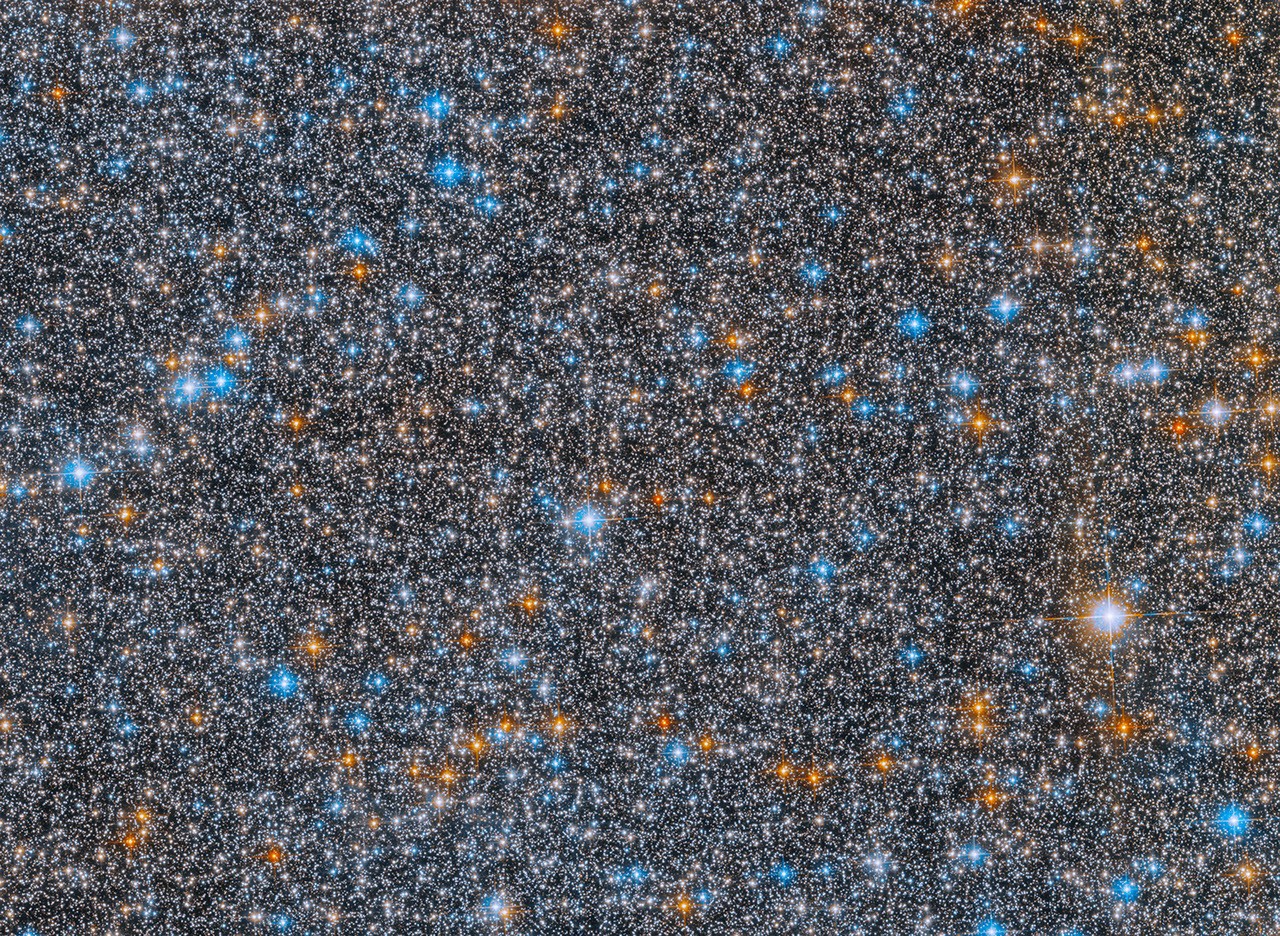
NASA’s Hubble Views Ocean of Stars in Groundwork for Roman
These Hubble observations are part of a survey that will help researchers better interpret upcoming Nancy Grace Roman Space Telescope observations as they seek to characterize the.
Key points
- Focus: These Hubble observations are part of a survey that will help researchers better interpret upcoming Nancy Grace Roman Space Telescope observations as
- Detail: Institutional origin: separate announcement from evidence
- Editorial reading: institutional release, useful as a primary source but not independent validation.
These Hubble observations are part of a survey that will help researchers better interpret upcoming Nancy Grace Roman Space Telescope observations as they seek to characterize the stars and search for exoplanets in this busy region of our. The institutional report frames the development in practical terms and ties it to the broader mission or observing effort.
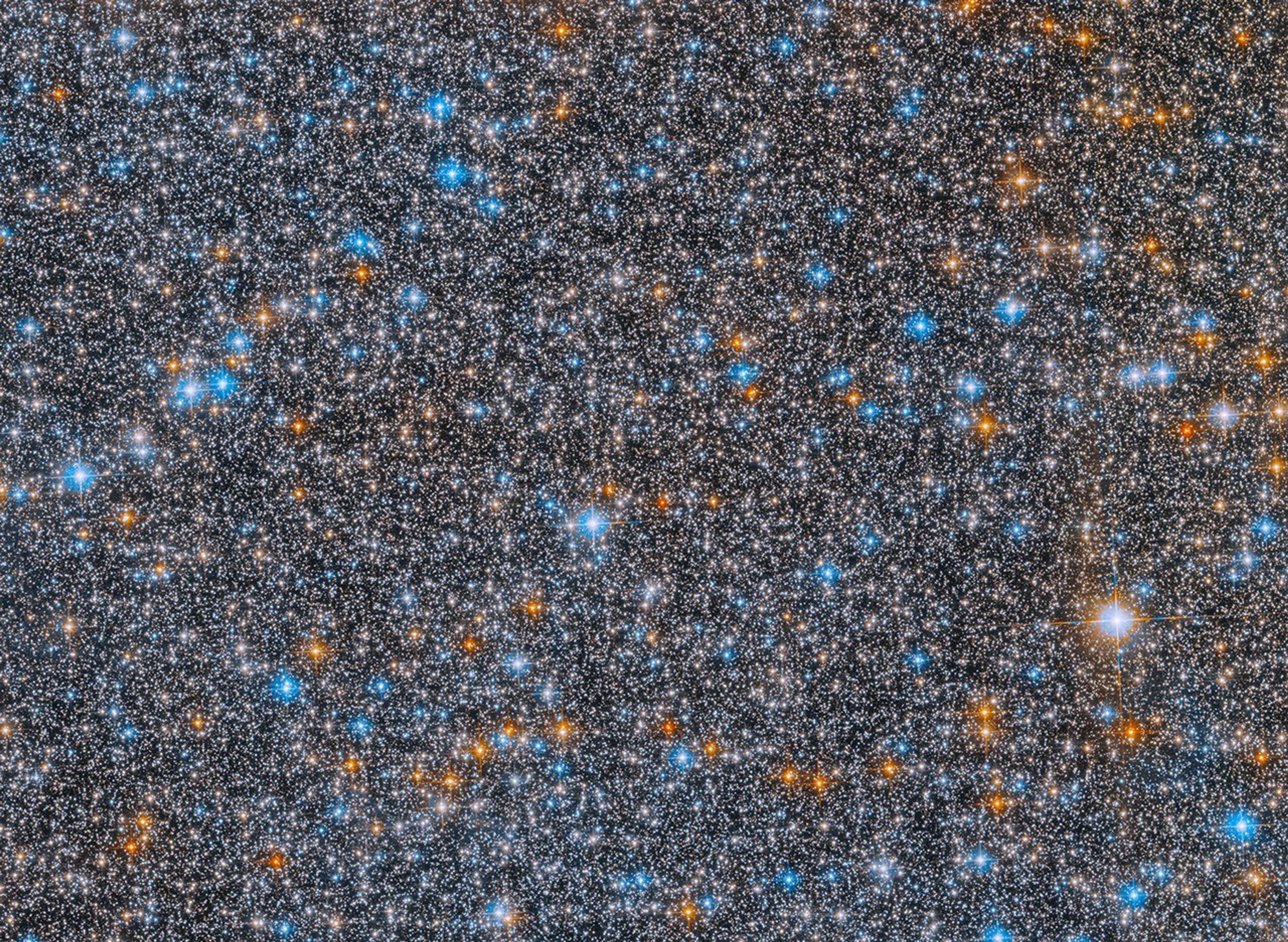
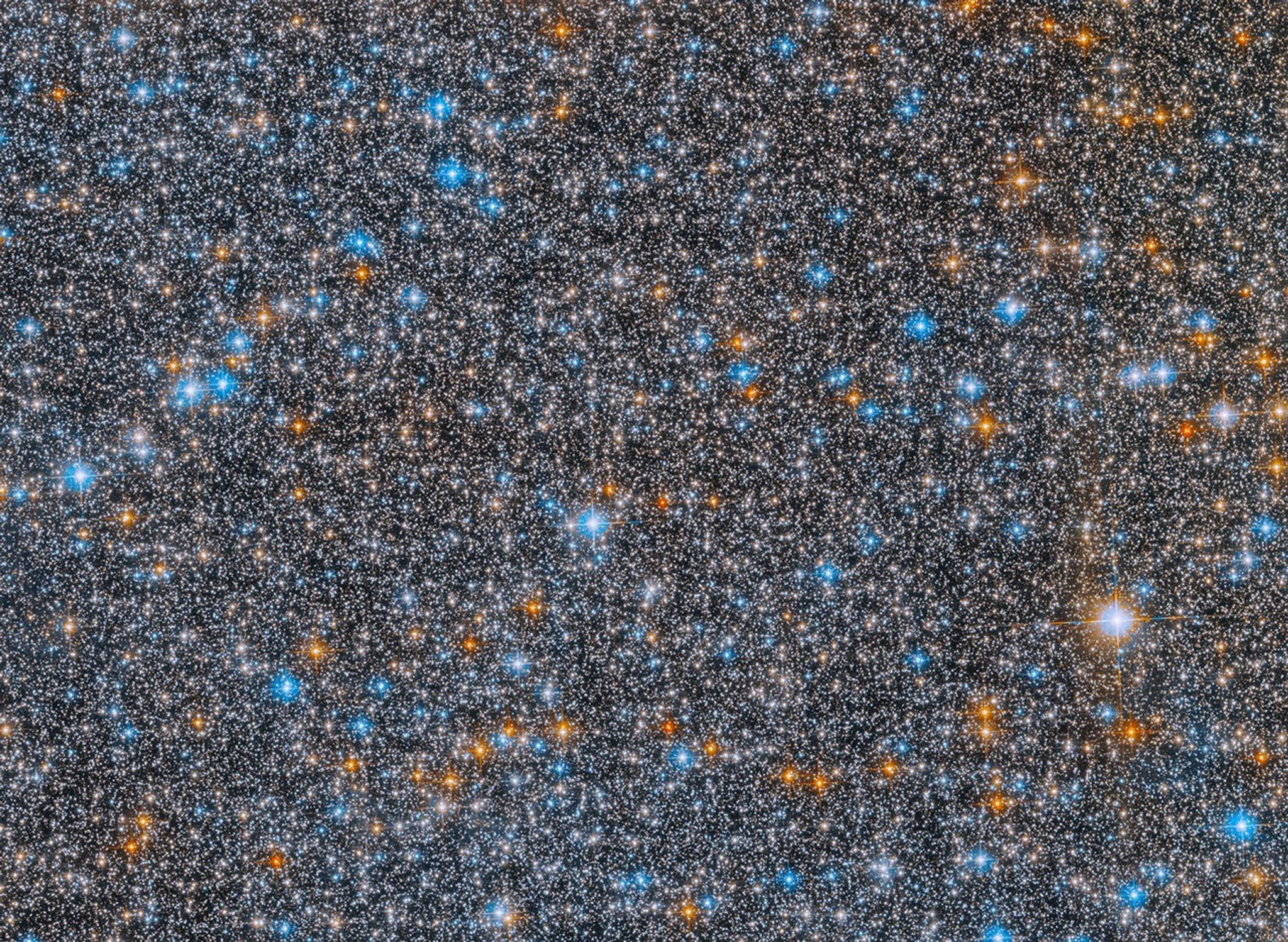
It matters because exoplanet science has moved beyond the era of simple discovery into a period of comparative characterization. With more than five thousand confirmed planets known, the scientifically productive questions now concern atmospheric composition, internal structure, orbital history and the statistical properties of populations rather than the existence of individual worlds. A new detection or spectral measurement is most valuable when it adds a well-constrained data point to those comparative frameworks, not when it stands alone as an anecdote. Teeming with stars in a rainbow of colors, this NASA Hubble Space Telescope image will help researchers interpret future Nancy Grace Roman Space Telescope data of the same region. The image is part of a Hubble survey of the galactic bulge.
NASA’s Hubble Space Telescope’s high resolution reveals individual stars in an area near our galaxy’s center swarming with stars. The image is part of a Hubble survey of the galactic bulge that will help researchers interpret future Nancy Grace Roman Space Telescope data of the same region.
Kober (NASA/Catholic University of America) Over Hubble’s lifetime, it has observed our galaxy’s central bulge many times. MD claire. andreoli@nasa. gov Share Details Last Updated Nov 25.
Kober (NASA/Catholic University of America) NASA Hubble Mission Team Article An expanse of stars gleams in a rainbow of colors in these NASA Hubble Space Telescope images of the. Because researchers wish to compare Hubble’s observations to future Roman observations, Hubble looked at the region in wavelengths that overlap with Roman’s areas of sensitivity.
The broader interest lies in making the target less anecdotal and more comparable with the rest of the known planetary population. Population-level questions, such as the frequency of atmospheres around small rocky planets or the prevalence of water-rich worlds in the habitable zone, require well-characterized individual data points before statistical patterns become meaningful. Each new planet with a measured radius, mass and, ideally, atmospheric constraint is a brick in that larger structure, and the accumulation of bricks eventually allows theorists to test formation models against real distributions rather than projections.
Over Hubble’s lifetime, it has observed our galaxy’s central bulge many times. These legacy surveys include the WFC3 Galactic Bulge Treasury Program that used Hubble’s Wide Field Camera 3 to study the brightness, precise positions, and motions of stars in.
Because the account originates with NASA News Releases, it functions best as a primary institutional report that is close to the data and operations, not as independent scientific validation. Institutional communications are produced by organizations with legitimate interests in presenting their work in a favorable light, which does not make them unreliable but does make them partial. Details that complicate the narrative, including instrument limitations, unexpected failures and results below projections, tend to be minimized relative to progress messages. Technical documentation and peer-reviewed publications, where they exist, provide the complementary layer that institutional releases cannot substitute.
The next step is to improve independent constraints on the mass, radius, atmospheric composition and orbital dynamics of the target. Transmission spectroscopy with JWST, radial velocity campaigns with high-resolution ground-based spectrographs and phase-curve measurements from space photometry represent the observational toolkit that can move characterization from plausible to robust. That convergence of techniques is the standard the community now expects before a planetary atmosphere result is treated as confirmed.
Original source: NASA News Releases