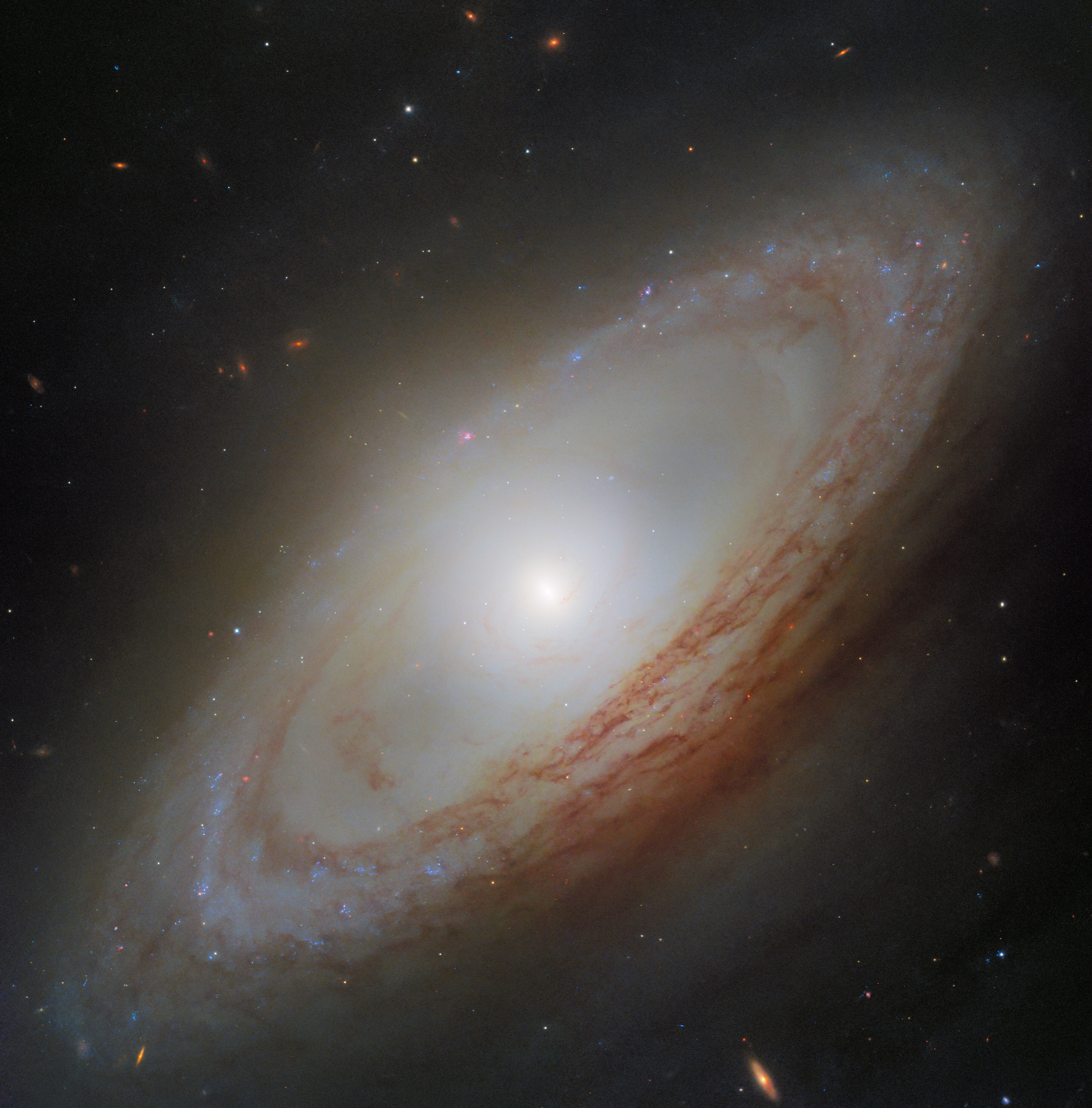
NASA’s Hubble Spots an Out-of-Sync Galaxy
Though the spiral galaxy in this new image from the NASA/ESA Hubble Space Telescope seems serene, it hides a chaotic secret.
Key points
- Focus: Though the spiral galaxy in this new image from the NASA/ESA Hubble Space Telescope seems serene, it hides a chaotic secret
- Detail: separate announcement from evidence
- Editorial reading: institutional release, useful as a primary source but not independent validation.
Though the spiral galaxy in this new image from the NASA/ESA Hubble Space Telescope seems serene, it hides a chaotic secret. This galaxy is NGC 4698, and it lies about 55 million light-years away in the constellation Virgo. The institutional report frames the development in practical terms and ties it to the broader mission or observing effort.
The significance lies in astronomy does not advance on single detections. The field builds confidence by accumulating independent observations across different wavelengths, instruments and epochs until isolated signals become defensible conclusions. What looks convincing in one dataset can dissolve when a second instrument looks at the same target, and what looks marginal can solidify when follow-up campaigns confirm the original reading. The current standard requires that a result survive this triangulation before the community treats it as settled. 3 min read NASA’s Hubble Spots an Out-of-Sync Galaxy The spiral galaxy NGC 4698 shines in this image from the NASA/ESA Hubble Space Telescope. Keep Exploring Discover More Topics From Hubble Hubble Space Telescope Since its 1990 launch, the Hubble Space Telescope has changed our fundamental understanding of the universe.
Hubble’s Beautiful Universe Hubble Science Operations Hubble Mission Operations. This galaxy is NGC Article The spiral galaxy NGC 4698 shines in this image from the NASA/ESA Hubble Space Telescope.
Thilker, the MAUVE-HST Team Though the spiral galaxy in this new image from the NASA/ESA Hubble Space Telescope seems serene, it hides a chaotic secret. Unlike many other spiral galaxies, like this one recently photographed by Hubble, NGC 4698’s delicate spiral arms are only prominent in the outer reaches of the disk.
Spiral arms often wind down to the very center of a galaxy, but NGC 4698’s spiral arms appear to shy away from its glowing center. With a flat, starry disk and diffusely glowing center, NGC 4698 looks a lot like a typical spiral galaxy, but this galaxy is far from normal.
What gives the story weight is not just the object itself, but the way the measurement trims the range of plausible physical explanations. Astronomy has accumulated enough cases to know that the most interesting results are rarely the ones that confirm expectations cleanly; they are the ones that confirm some expectations while complicating others, or that open a parameter space that previous instruments could not reach. The scientific community evaluates these contributions by asking whether the new data constrain a model in a way that older data could not, and whether those constraints survive systematic review.
NGC 4698 is one of only a few known spiral galaxies with a bulge that extends out from the disk at a right angle. If NGC 4698 funneled in gas from an outside source, the newly collected gas could have formed a disk of gas and stars in the galaxy’s center, at an angle relative to the rest of.
Because the account originates with NASA News Releases, it functions best as a primary institutional report that is close to the data and operations, not as independent scientific validation. Institutional communications are produced by organizations with legitimate interests in presenting their work in a favorable light, which does not make them unreliable but does make them partial. Details that complicate the narrative, including instrument limitations, unexpected failures and results below projections, tend to be minimized relative to progress messages. Technical documentation and peer-reviewed publications, where they exist, provide the complementary layer that institutional releases cannot substitute.
The next step is to see whether other instruments and other wavelengths tell the same story. Campaigns with JWST, the VLT, the forthcoming Extremely Large Telescopes and radio arrays will provide the spectral coverage and spatial resolution needed to move from detection to physical characterization. The timeline for that kind of confirmation is typically measured in years, not months, which is worth keeping in mind when reading the current result.
Original source: NASA News Releases