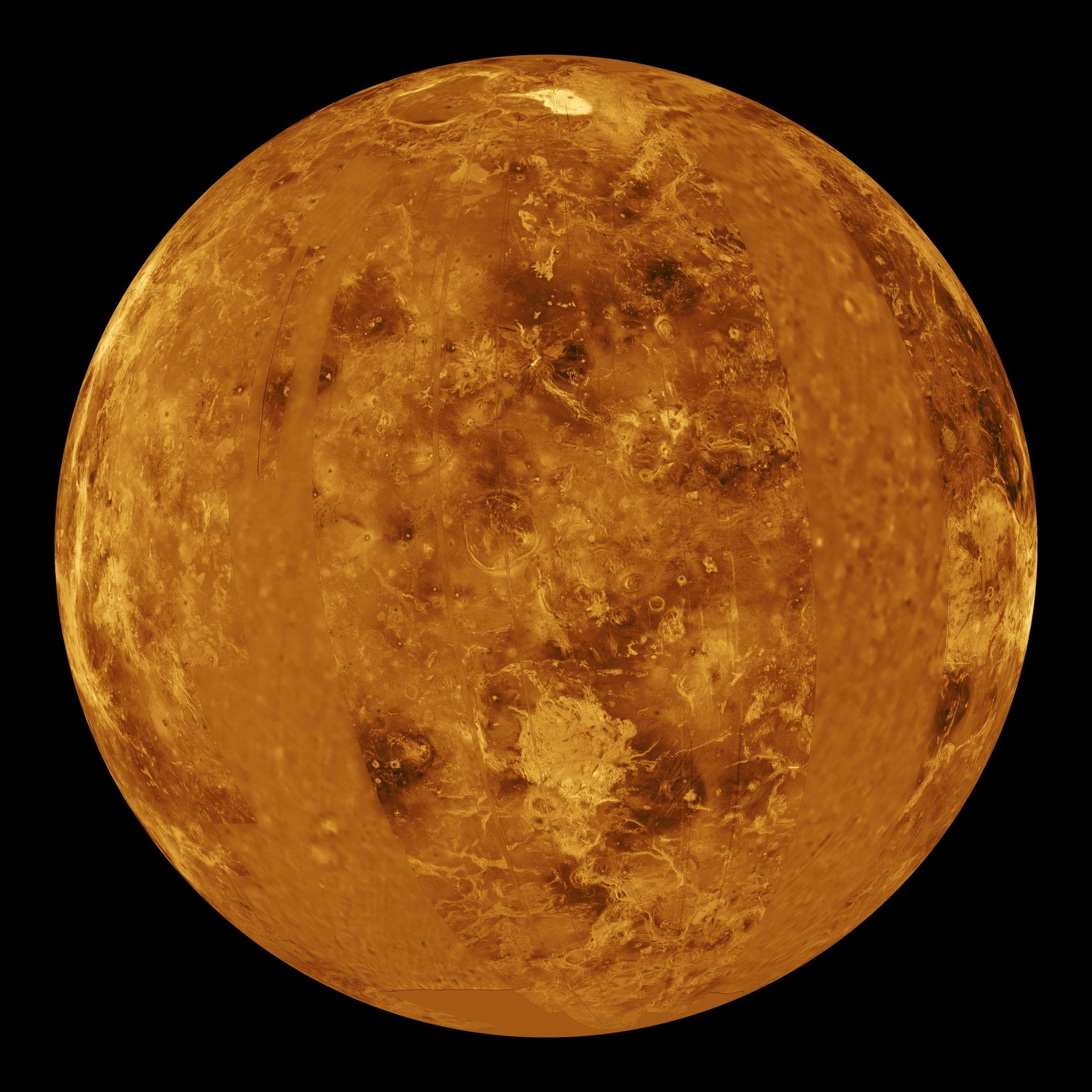
NASA’s Giant Pressure Cooker Reveals How Venus Hides Clues to Its Potential Watery Past
Venus will be drawing a lot of attention in the near future. So far, no spacecraft has survived on its surface for more than a few hours, and that was back in the 1970s and ‘80s.
Key points
- Focus: Venus will be drawing a lot of attention in the near future
- Detail: Science reporting: verify primary technical documentation
- Editorial reading: science reporting; whenever possible, verify the cited primary source.
Venus will be drawing a lot of attention in the near future. So far, no spacecraft has survived on its surface for more than a few hours, and that was back in the 1970s and ‘80s. The science-journalism coverage adds useful context, while the strongest evidential footing still comes from the underlying data, papers or institutional documentation.
This matters because astronomy does not advance on single detections. The field builds confidence by accumulating independent observations across different wavelengths, instruments and epochs until isolated signals become defensible conclusions. What looks convincing in one dataset can dissolve when a second instrument looks at the same target, and what looks marginal can solidify when follow-up campaigns confirm the original reading. The current standard requires that a result survive this triangulation before the community treats it as settled. And a new paper, available in The Planetary Science Journal from Sara Taeko Port, a postdoc researcher at the University of Texas San Antonio, provides some clues as to what we. So far, no spacecraft has survived on its surface for more than a few hours, and that was back in the 1970s and ‘80s.
The atmospheric pressure is around 93 times what Earth’s average ocean-level pressure is, the equivalent of diving a kilometer into the ocean. Port and her colleagues turned to the Glenn Extreme Environment Rig (GEER), at NASA’s Glenn Research Center in Cleveland.
This specialized test chamber is an 811-liter stainless steel pressure vessel engineered specifically to replicate the temperature, pressure, and chemical mixture of Venus’ lower. The planet’s atmosphere, along with what scientists believe to be active volcanoes, is potentially damaging enough that any water-formed minerals could have been drastically.
Brucite, a magnesium-rich mineral that is formed in liquid water on Earth, dried out, then cracked, and changed into a different mineral called magnesite, a type of tough. If that absorption process happened over millions of years (such as the 500-million years since the last major resurfacing event on Venus), calculations in the paper show all of.
What gives the story weight is not just the object itself, but the way the measurement trims the range of plausible physical explanations. Astronomy has accumulated enough cases to know that the most interesting results are rarely the ones that confirm expectations cleanly; they are the ones that confirm some expectations while complicating others, or that open a parameter space that previous instruments could not reach. The scientific community evaluates these contributions by asking whether the new data constrain a model in a way that older data could not, and whether those constraints survive systematic review.
That meshes well with previous missions to Venus, archival radar data from NASA’s Magellan spacecraft revealed that a volcanic vent on Maat Mons, Venus’ tallest volcano, reshaped. But there are also plenty more missions to come, including NASA’s DAVINCI and VERITAS and ESA’s EnVision spacecraft.
Because this item comes through Universe Today as science journalism, it should be treated as contextual reporting rather than primary evidence. Good science reporting can identify why a result matters, connect it to the wider literature and make technical work readable, but the decisive evidence remains in the original paper, dataset, mission release or technical record. That distinction is especially important when a story is later repeated by aggregators, because repetition increases visibility, not evidential strength.
The next step is to see whether other instruments and other wavelengths tell the same story. Campaigns with JWST, the VLT, the forthcoming Extremely Large Telescopes and radio arrays will provide the spectral coverage and spatial resolution needed to move from detection to physical characterization. The timeline for that kind of confirmation is typically measured in years, not months, which is worth keeping in mind when reading the current result.
Original source: Universe Today