NASA Eyes Crop Candidates for Future Menus
As NASA prepares for future missions to the Moon and Mars, researchers are studying crops that could provide astronauts with fresh food, nutrition, and variety far from Earth.
Key points
- Focus: As NASA prepares for future missions to the Moon and Mars, researchers are studying crops that could provide astronauts with fresh food, nutrition
- Detail: Institutional origin: separate announcement from evidence
- Editorial reading: institutional release, useful as a primary source but not independent validation.
As NASA prepares for future missions to the Moon and Mars, researchers are studying crops that could provide astronauts with fresh food, nutrition, and variety far from Earth. The institutional report frames the development in practical terms and ties it to the broader mission or observing effort.
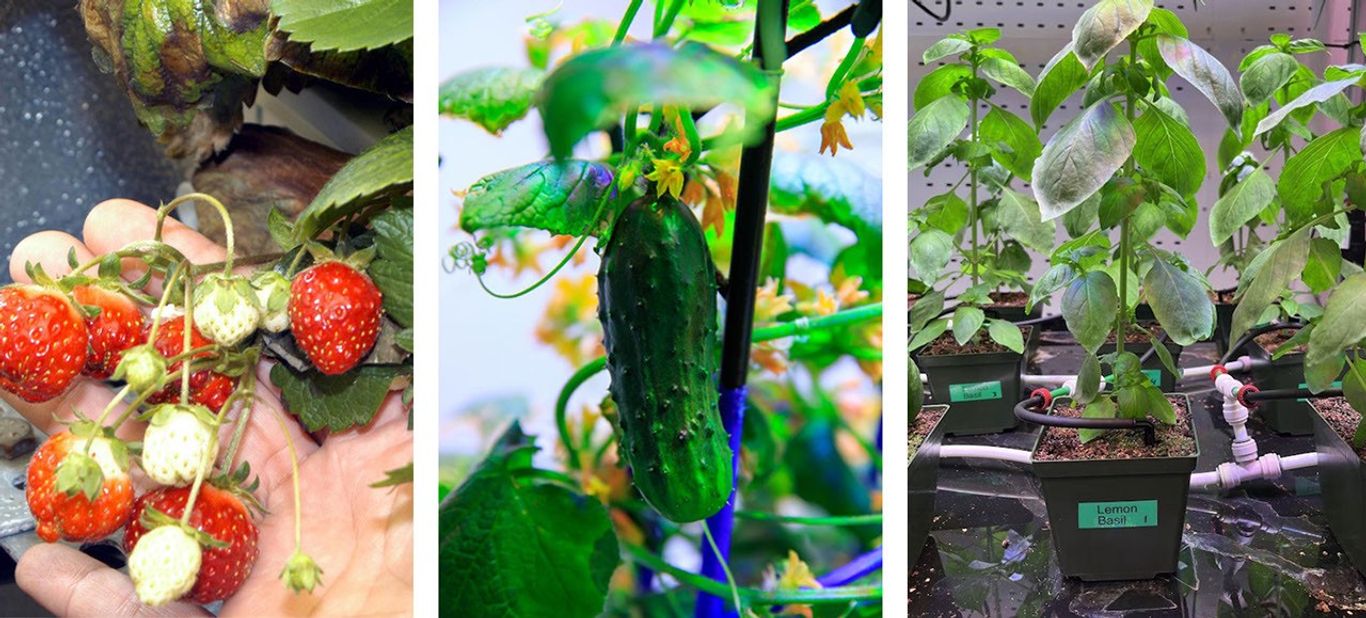
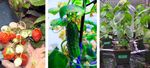
It is relevant because Earth science becomes stronger when local observations can be placed inside a broader physical pattern that spans time and geography. The planet operates as a coupled system in which atmospheric, oceanic, cryospheric and solid-Earth processes interact across timescales from days to millions of years. A measurement that captures one variable at one location and one moment has limited interpretive value until it is embedded in the longer series and wider spatial coverage that allow natural variability to be separated from forced change. Cucumbers are grown in a controlled environment chamber at NASA’s Kennedy Space Center in Florida. NASA Recent testing points to strawberries, cucumbers, and lemon basil as potential options for future explorers.
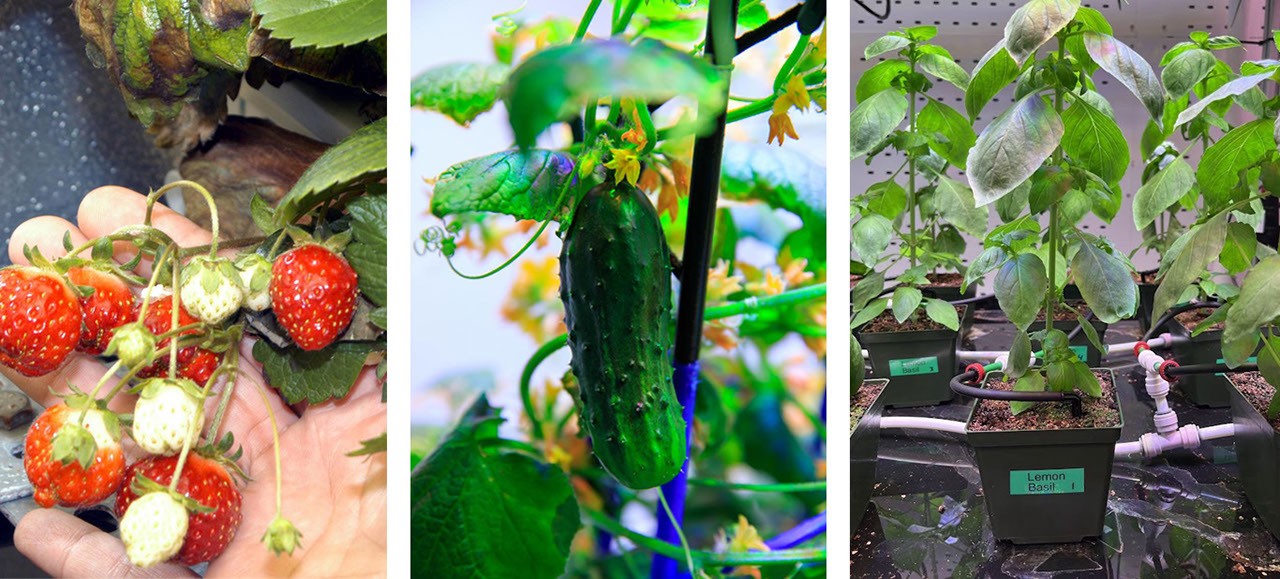
Researchers at NASA’s Kennedy Space Center in Florida are growing strawberries in flight-like growth chambers to evaluate the potential space crop, and NASA partners at The. Biological & Physical Sciences Division NASA’s Biological and Physical Sciences Division pioneers scientific discovery and enables exploration by using space environments to.
A new investigation from NASA’s Biological and Physical Sciences Division will be the first-of-its-kind prototype growth chamber that will provide critical insights for developing. Article Contents Sweet space strawberries Cucumbers show promise Spicing up spaceflight As NASA prepares for future missions to the Moon and Mars, researchers are studying crops.
While space crop research advances on Earth, capabilities are also expanding in space. A new investigation from NASA’s Biological and Physical Sciences Division is set to launch to the International Space Station, where the first-of-its-kind prototype growth chamber.
The broader interest lies in linking the observation to climatic, geophysical or environmental dynamics that extend well beyond the immediate event or location. Earth science is unusual in that its most important questions operate on timescales that no single research career can observe directly, making the archival record, whether in ice, sediment, rock or satellite data, as important as any new measurement. Results that can be embedded in that record, and that either confirm or challenge the patterns it reveals, carry disproportionate scientific weight.
Ultimately, however, NASA’s pick kept its top spot, as the wild strawberry grew too many runners that would take up valuable room aboard a spacecraft. NASA-funded researchers recently evaluated cucumbers for their growth, yield, and nutrition under spaceflight conditions.
Because the account originates with NASA News Releases, it functions best as a primary institutional report that is close to the data and operations, not as independent scientific validation. Institutional communications are produced by organizations with legitimate interests in presenting their work in a favorable light, which does not make them unreliable but does make them partial. Details that complicate the narrative, including instrument limitations, unexpected failures and results below projections, tend to be minimized relative to progress messages. Technical documentation and peer-reviewed publications, where they exist, provide the complementary layer that institutional releases cannot substitute.
The next step is to place the result inside longer time series and to compare it with independent instruments and independent sites. Earth system observations gain most of their interpretive power from network density and temporal depth, not from any single measurement however precise. Model simulations that assimilate the new data will help clarify whether the observation fits comfortably within known natural variability or represents a shift that existing models do not reproduce.
Original source: NASA News Releases