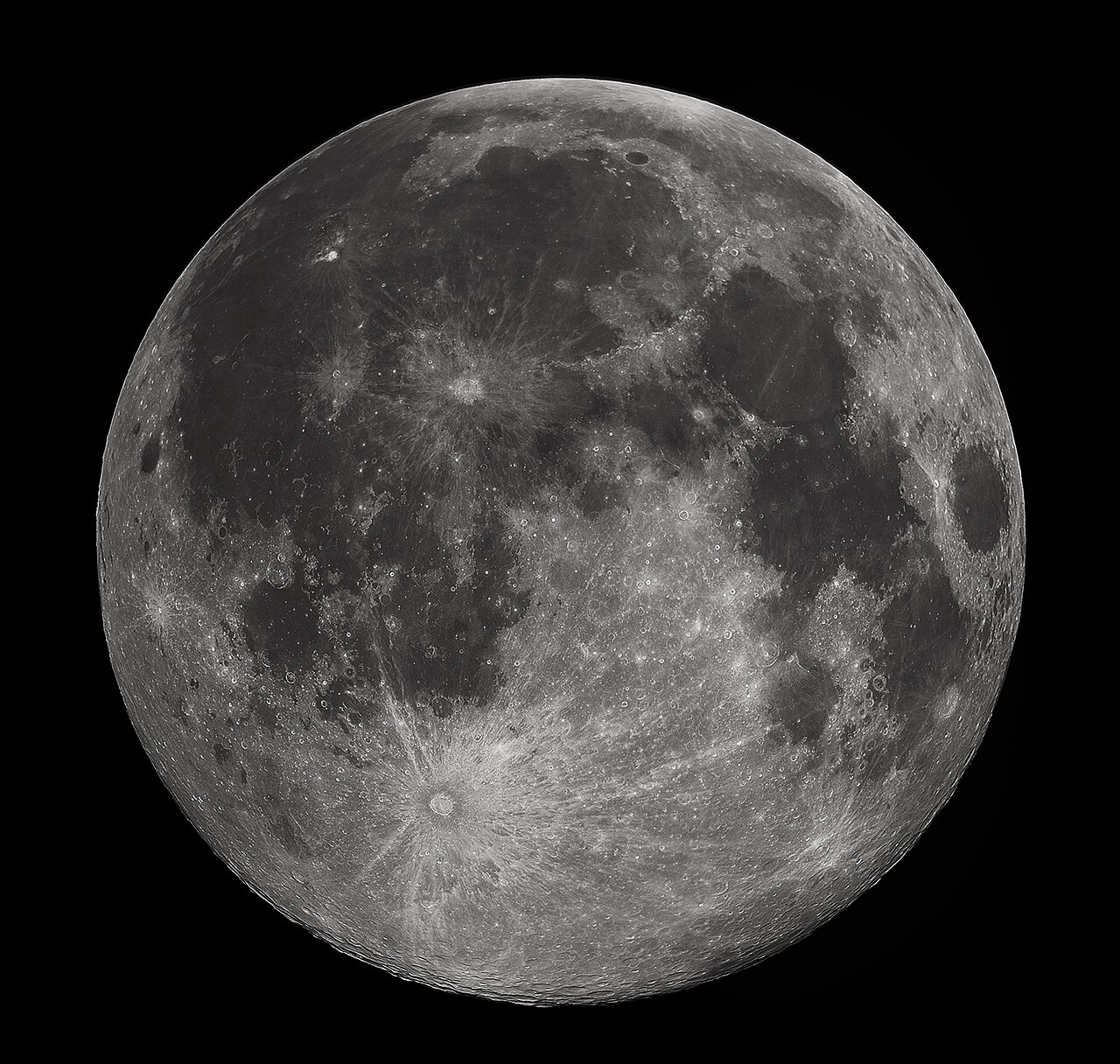
Magma Buoyancy Couples Lunar Mantle Convection and Magmatism: Long-Lasting Mare Volcanism and Radius Change in a 3-D Regional Model
To understand the mantle evolution that has caused the observed histories of mare volcanism and radius change of the Moon, we developed a 3-D regional spherical shell mantle.
Key points
- Focus: To understand the mantle evolution that has caused the observed histories of mare volcanism and radius change of the Moon, we developed a 3-D
- Editorial reading: provisional result, not yet formally peer reviewed.
To understand the mantle evolution that has caused the observed histories of mare volcanism and radius change of the Moon, we developed a 3-D regional spherical shell mantle convection model with magmatism. The new analysis still awaits peer review, but it already lays out the central claim clearly.
The significance lies in physics only takes a result seriously when the measurement chain remains robust under scrutiny. Experimental particle physics and precision metrology both operate in regimes where the signal sits far below the background noise, and where systematic uncertainties can mimic new physics if not controlled rigorously. The history of the field contains numerous anomalies that generated theoretical excitement before better data showed them to be artifacts, and it also contains genuine discoveries that were initially dismissed as noise. The difference is almost always resolved by independent replication with different instruments and different systematics. Magma generated by decompression melting segregates from the convecting matrix and percolates upward through it. In our model, internal heating forms a basal partially molten layer during the first several hundred million years.
Finger-like magma ascents then grow from the top of this layer and evolve into buoyant, partially molten plumes. The plumes ascend by the buoyancy of magma, while decompression melting in the ascending plumes generates more magma that further drives the ascent.
Magma supply to the top of the mantle peaks between 4 and 3.5 Gyr ago, coincident with a maximum in radial expansion driven by volume change of the mantle associated with melting. Magma supply, however, persists for billions of years because earlier plumes leave thermally softened conduits, through which later plumes repeatedly rise at fixed locations.
These stable conduits are a consequence of the 3-D geometry. Recycling of magmatic products formed in the uppermost mantle also triggers renewed magma ascent through the conduits.
The broader interest lies as much in the method as in the headline number, because a durable measurement procedure can travel farther than a single result. When experimental physicists develop a technique that achieves new sensitivity or controls a previously uncharacterized systematic, that methodological contribution persists even if the specific measurement is later revised. This is one reason why precision physics experiments often generate long-term value that is not immediately visible in the original publication.
Our results provide a mechanism for the observed long-lasting localized volcanism that peaked at 4-3. The conditions required for consistency with the observed history imply an initially hot but mostly solid mantle with a dense basal layer.
Because this is still a preprint, the result should be read with genuine interest and proportionate caution. Peer review is not a guarantee of correctness, but it is a process that forces authors to respond to technical criticism from specialists who have no stake in a particular outcome. Preprints that survive that process, often with substantive revisions, emerge with a stronger evidential base than the version that first appeared. Until that stage is complete, the responsible reading keeps uncertainty explicitly visible rather than treating the claims as established findings.
The next step is more measurement, tighter systematic control and scrutiny from groups whose experimental setups are genuinely independent. In experimental particle physics and precision metrology, the threshold for a discovery claim is a five-sigma excess surviving multiple analyses; an intriguing signal at lower significance is a reason to run more experiments, not a reason to revise the textbooks. Next-generation experiments currently under construction or commissioning will revisit several of the open questions that give the current result its context. Until peer review and independent follow-up address those open questions, skepticism is not a failure of appreciation for the work; it is part of how science decides what to keep.
Original source: arXiv Geophysics