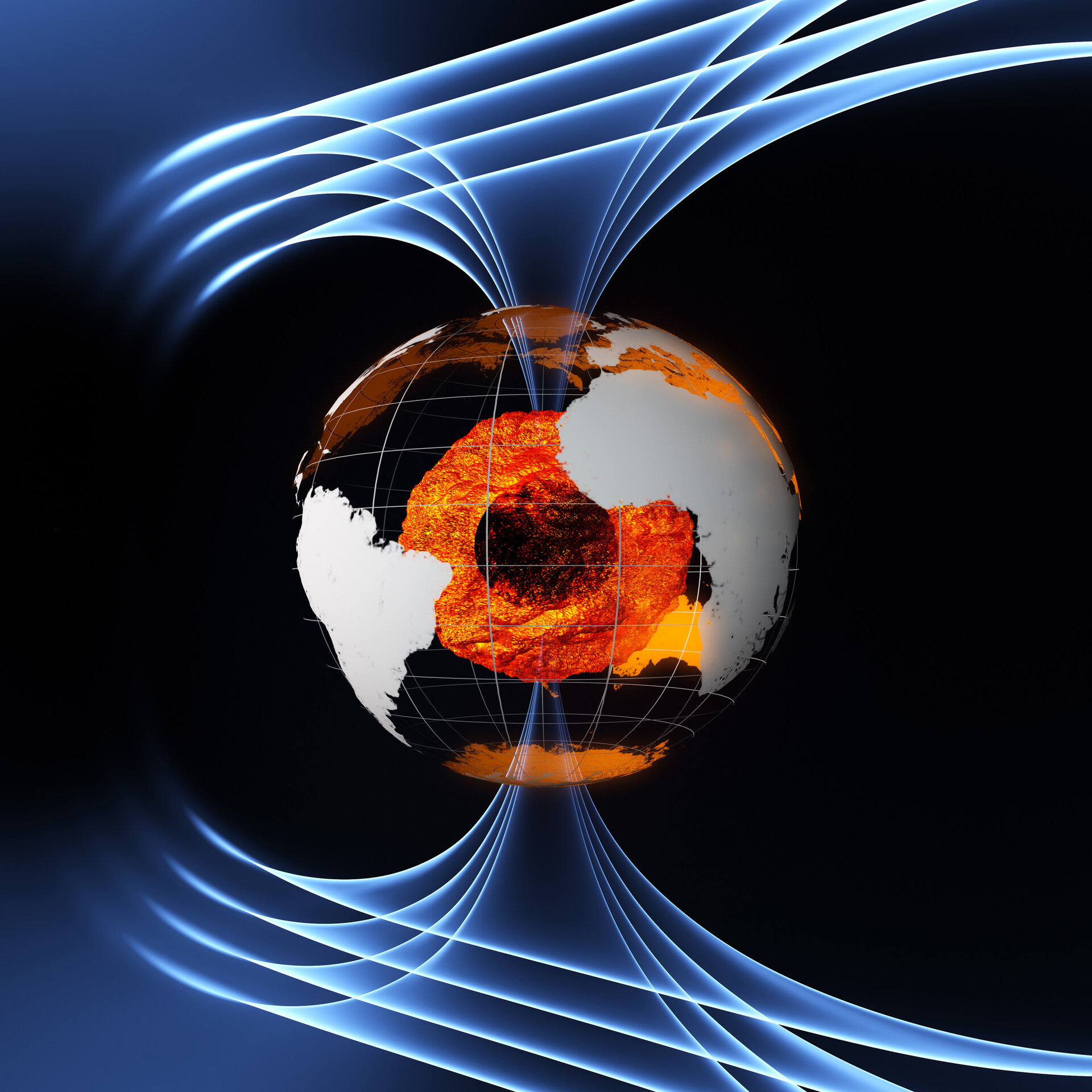
Insights into Earth’s molten outer core from space
The liquid iron in Earth’s outer core doesn’t always behave as expected. When it changed direction in an unexplained way, ESA satellites provided data on the direction of flow.
Key points
- Focus: The liquid iron in Earth’s outer core doesn’t always behave as expected
- Detail: Institutional origin: separate announcement from evidence
- Editorial reading: institutional release, useful as a primary source but not independent validation.
The liquid iron in Earth’s outer core doesn’t always behave as expected. When it changed direction in an unexplained way, ESA satellites provided data on the direction of flow, helping scientists gain better insight into the dynamics at. The institutional report frames the development in practical terms and ties it to the broader mission or observing effort.
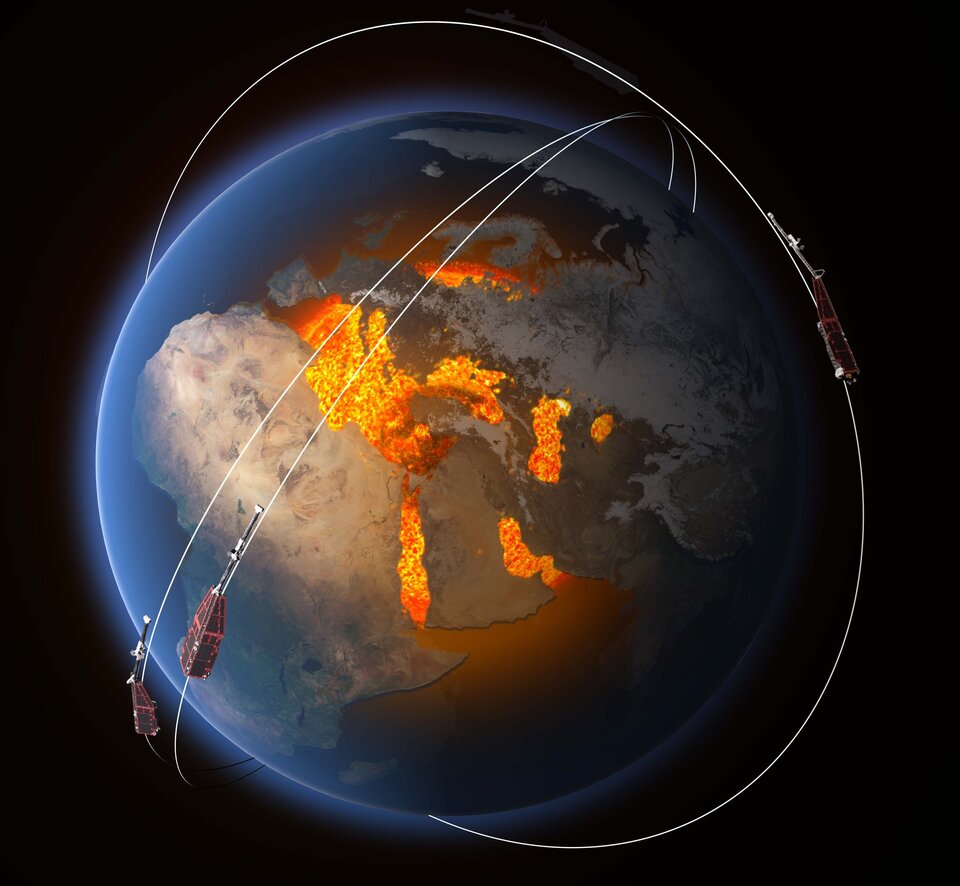
That matters because Earth science becomes stronger when local observations can be placed inside a broader physical pattern that spans time and geography. The planet operates as a coupled system in which atmospheric, oceanic, cryospheric and solid-Earth processes interact across timescales from days to millions of years. A measurement that captures one variable at one location and one moment has limited interpretive value until it is embedded in the longer series and wider spatial coverage that allow natural variability to be separated from forced change. The molten core, which swirls about 2200 km beneath our feet, generates Earth’s geomagnetic field as it moves. But satellites, including ESA’s Swarm and CryoSat, provided data that have now been analysed and published.
The study, in the Journal of Studies of Earth’s Deep Interior, analyses both ground observations and satellite data between 1997 and 2025. Data from ESA’s Swarm and Cryosat missions were used in the study as well as data from the German CHAMP mission and the Ørsted mission.
The research found that in 2010, a broad region of iron-rich fluid beneath the equatorial Pacific switched from moving weakly westwards to strongly eastwards. Lead author of the study, Frederik Dahl Madsen, of the University of Edinburgh, School of Geosciences, said, “The large-scale flow reversal beneath the Pacific raises new.
Launched in 2013, the three Swarm satellites carry highly sensitive magnetometers capable of mapping Earth’s magnetic field with exceptional precision. These observations enabled researchers to reconstruct evolving flow patterns at the core, mantle boundary and identify the sudden changes associated with the Pacific reversal and.
The broader interest lies in linking the observation to climatic, geophysical or environmental dynamics that extend well beyond the immediate event or location. Earth science is unusual in that its most important questions operate on timescales that no single research career can observe directly, making the archival record, whether in ice, sediment, rock or satellite data, as important as any new measurement. Results that can be embedded in that record, and that either confirm or challenge the patterns it reveals, carry disproportionate scientific weight.
According to ESA’s Swarm Mission Manager, Anja Stromme, the long-term dataset provided by Swarm is important for this study. She noted, “Although Swarm was launched after the dramatic reversal event of 2010, it has provided high-precision data that tell us about Earth’s inner core in the period that.
Because the account originates with ESA Space News, it functions best as a primary institutional report that is close to the data and operations, not as independent scientific validation. Institutional communications are produced by organizations with legitimate interests in presenting their work in a favorable light, which does not make them unreliable but does make them partial. Details that complicate the narrative, including instrument limitations, unexpected failures and results below projections, tend to be minimized relative to progress messages. Technical documentation and peer-reviewed publications, where they exist, provide the complementary layer that institutional releases cannot substitute.
The next step is to place the result inside longer time series and to compare it with independent instruments and independent sites. Earth system observations gain most of their interpretive power from network density and temporal depth, not from any single measurement however precise. Model simulations that assimilate the new data will help clarify whether the observation fits comfortably within known natural variability or represents a shift that existing models do not reproduce.


Original source: ESA Space News