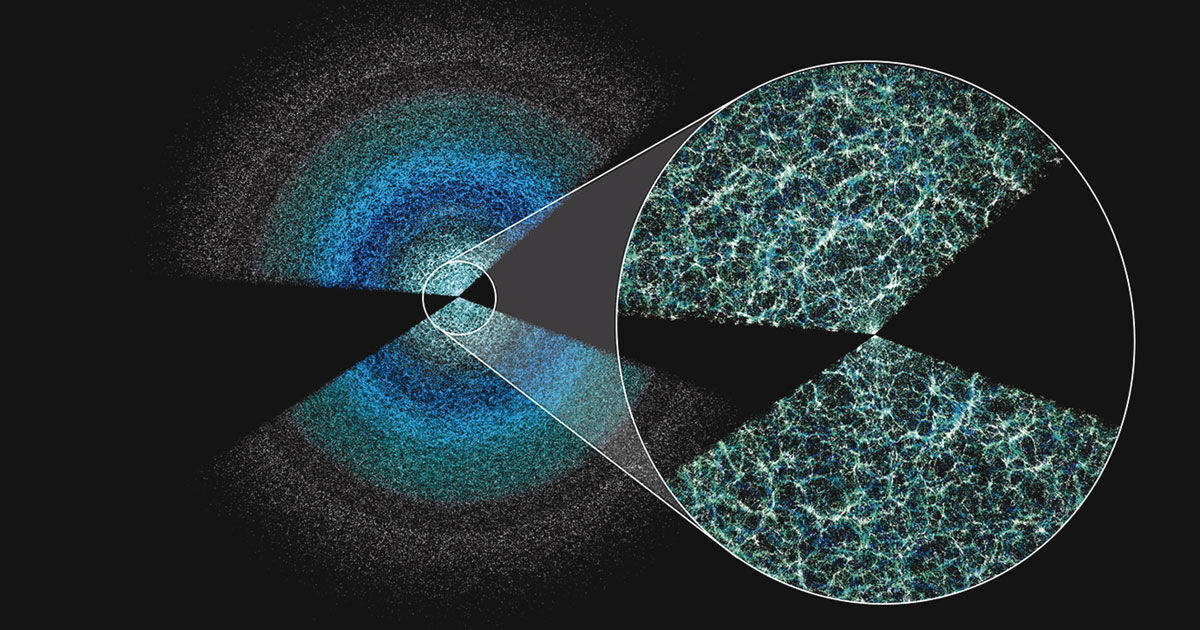
47 milhões de galáxias mapeadas
O maior mapa 3D do Universo reúne dados de milhões de galáxias e estrelas para entender a energia escura
Key points
- Focus: O maior mapa 3D do Universo reúne dados de milhões de galáxias e estrelas para entender a energia escura
- Detail: Science reporting: verify primary technical documentation
- Editorial reading: science reporting; whenever possible, verify the cited primary source.
O maior mapa 3D do Universo reúne dados de milhões de galáxias e estrelas para entender a energia escura. The science-journalism coverage adds useful context, while the strongest evidential footing still comes from the underlying data, papers or institutional documentation.
The significance lies in cosmology operates at the edge of what current instruments can measure, where systematic errors and model assumptions are never trivial. Small discrepancies between independent measurements have historically pointed toward missing physics rather than simple calibration errors, and the ongoing tension in the Hubble constant is a live example of how a persistent disagreement between methods can reshape the theoretical landscape. Each new dataset that approaches this territory with independent systematics adds real information to a problem that has resisted easy resolution for more than a decade. Claire Lamman / Desi A Terra está no centro deste mapa de galáxias. O levantamento de cinco anos, concluído antes do prazo e com 13 milhões de galáxias a mais do que o planejado inicialmente, produziu o maior mapa 3D de alta resolução do Universo.
Ao comparar a forma como as galáxias se agrupavam no passado com sua distribuição atual, os pesquisadores rastrearam a influência da energia escura ao longo de 11 bilhões de anos. Os dados obtidos nos três primeiros anos do Desi sugeriram que a energia escura poderia estar evoluindo ao longo do tempo.
Se confirmado, isso representaria uma grande mudança na forma de pensar o Universo e seu possível destino, que depende do equilíbrio entre matéria e energia escura (Berkeley Lab. É permitida a republicação desta reportagem em meios digitais de acordo com a licença Creative Commons CC-BY-NC-ND.
É obrigatório o cumprimento da Política de Republicação Digital de Conteúdo de Pesquisa FAPESP, aqui especificada. O conteúdo não pode ser protegido por paywall, isto é, não pode ter acesso limitado a assinantes ou mediante pagamento, não deve ser editado e a autoria deve ser atribuída, assim.
The relevance goes beyond one dataset because even small shifts in measured parameters can matter when the field is testing the limits of the standard cosmological model. The Lambda-CDM framework describes the observable universe with remarkable economy, but its success rests on two components, dark matter and dark energy, whose physical nature remains entirely unknown. Any credible measurement that tightens or loosens the constraints on those components moves the entire theoretical enterprise forward, regardless of whether the immediate result looks dramatic on its own terms.
O uso do botão HTML permite o atendimento a essas normas. Em caso de reprodução apenas do texto, por favor, consulte a Política de Republicação Digital.
Because this item comes through Pesquisa FAPESP Astronomia as science journalism, it should be treated as contextual reporting rather than primary evidence. Good science reporting can identify why a result matters, connect it to the wider literature and make technical work readable, but the decisive evidence remains in the original paper, dataset, mission release or technical record. That distinction is especially important when a story is later repeated by aggregators, because repetition increases visibility, not evidential strength.
The next step is to see whether the effect survives when independent surveys, different calibration strategies and tighter control of systematic uncertainties enter the picture. Programmes such as Euclid, DESI and the Rubin Observatory will deliver datasets over the next several years that cover the same parameter space with largely independent methods. If the current signal persists through those tests, its theoretical implications will become impossible to set aside.
Original source: Pesquisa FAPESP Astronomia