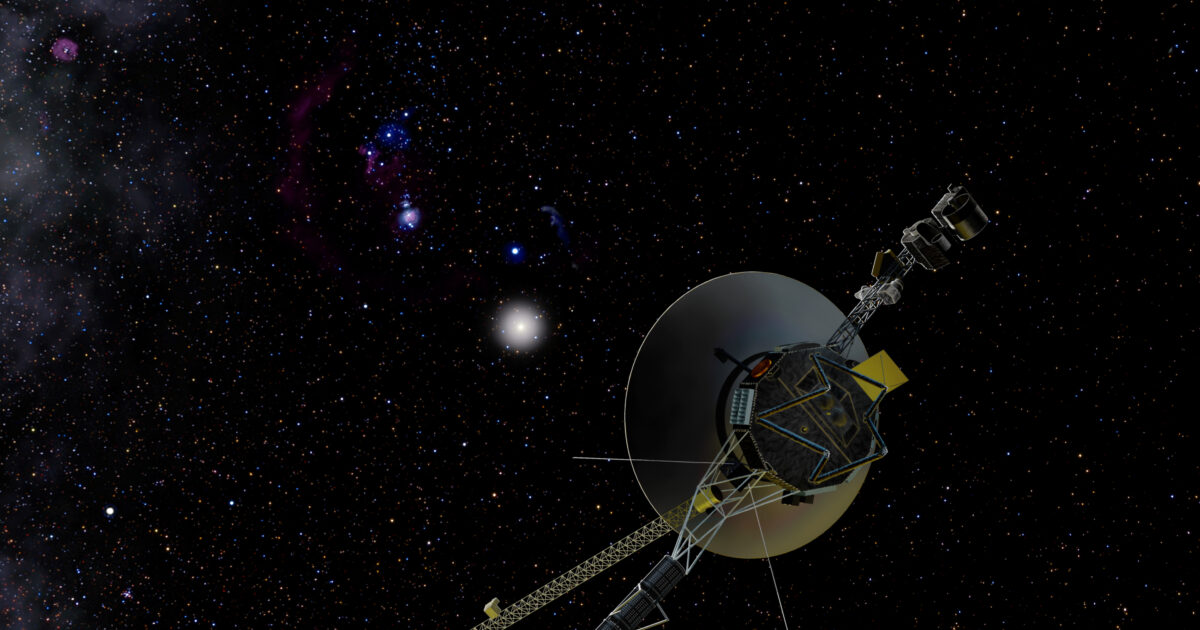
Voyager 1 at one light-day: A conversation with Voyager Project Scientist Linda Spilker
Planetary Radio host Sarah Al-Ahmed speaks with Linda Spilker, longtime project scientist for the mission, about Voyager 1 reaching one light-day from Earth.
Pontos-chave
- Em foco: Planetary Radio host Sarah Al-Ahmed speaks with Linda Spilker, longtime project scientist for the mission, about Voyager 1 reaching one light-day
- Detalhe: Cobertura jornalística: verificar documentação técnica primária
- Leitura editorial: reportagem científica; quando possível, confira a fonte primária citada.
Planetary Radio host Sarah Al-Ahmed speaks with Linda Spilker, longtime project scientist for the mission, about Voyager 1 reaching one light-day from Earth. 18, 2026, NASA’s Voyager 1 spacecraft became the first human-made object to reach one light-day from Earth.
In 2012, Voyager 1 crossed the heliopause, where the Sun’s bubble of solar wind and magnetic field meets the interstellar medium, becoming the first human-made object to enter interstellar space. She went on to serve as project scientist for the Cassini-Huygens mission to Saturn before coming full circle back to Voyager, where she now leads the mission’s science, following in the footsteps of the late Ed Stone.
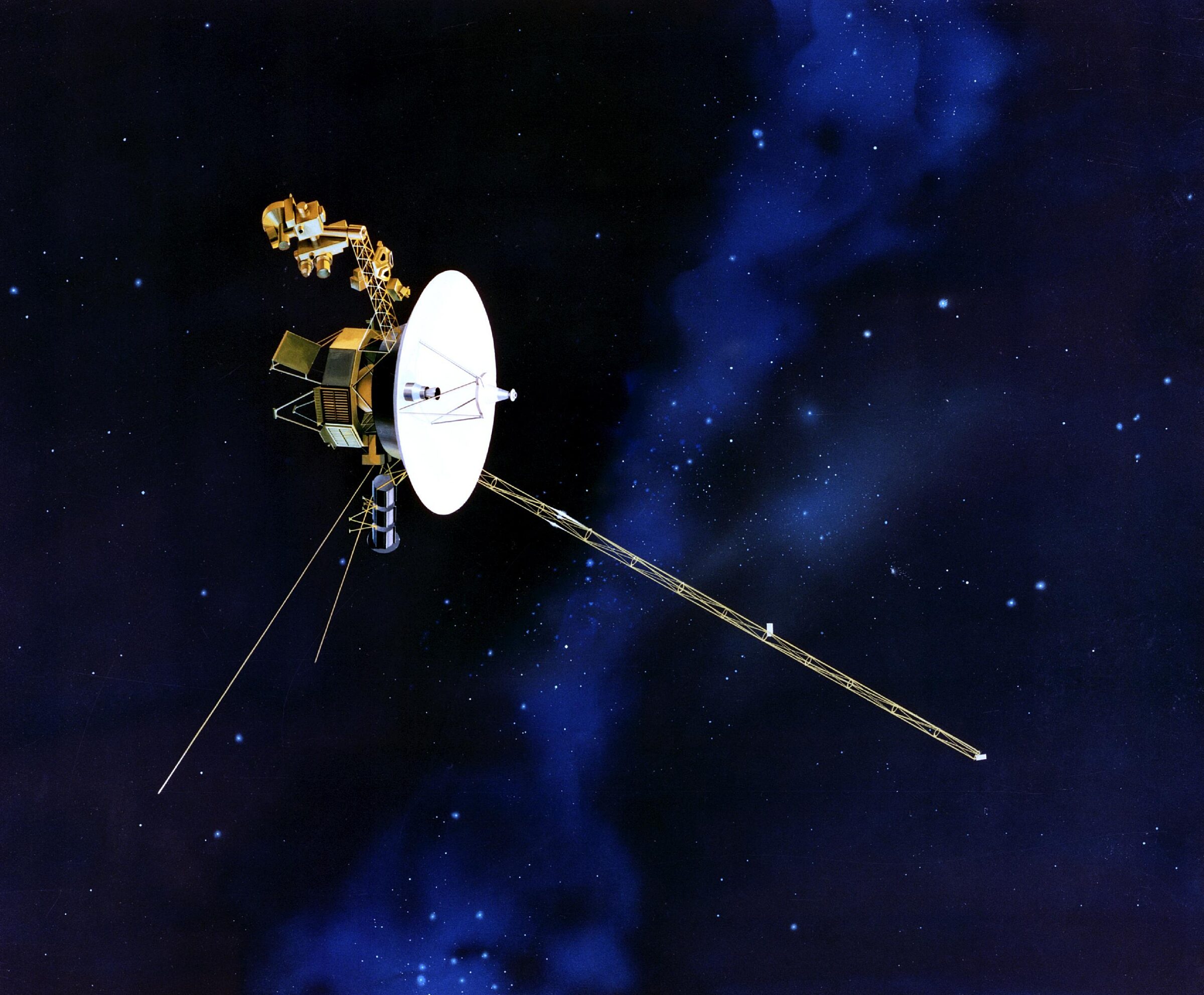
During the conversation, I shared with Spilker, for the first time, a new painting by space artist Don Davis showing Voyager 1 looking back toward home from one light-day away. It’s when Voyager 1 and Earth will be exactly one light-day apart, and that’s going to happen on Nov.
Our closest neighbor, the Moon, is 1.3 light-seconds from Earth. The four astronauts on Artemis II became the farthest humans, and they were 1.36 light-seconds away, so they were a little bit farther than the Moon.
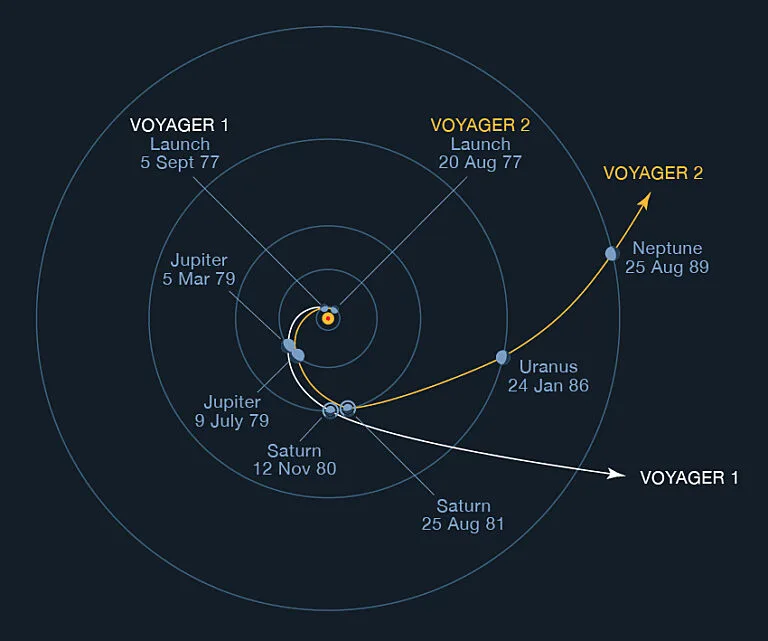
That’s 150 million kilometers (93 million miles), what we call one astronomical unit, the Earth-Sun distance. Neptune, the last planet visited by Voyager 2, is 4.2 light-hours away, and we think of Neptune and those planets as being so far from Earth.
Right now, today, Voyager 1 is 23 hours, 55 minutes from Earth, or almost 26 billion kilometers (16 billion miles).
Fonte original: The Planetary Society