Tens of Thousands of Fast Radio Bursts Could Help Solve the Greatest Cosmic Mysteries
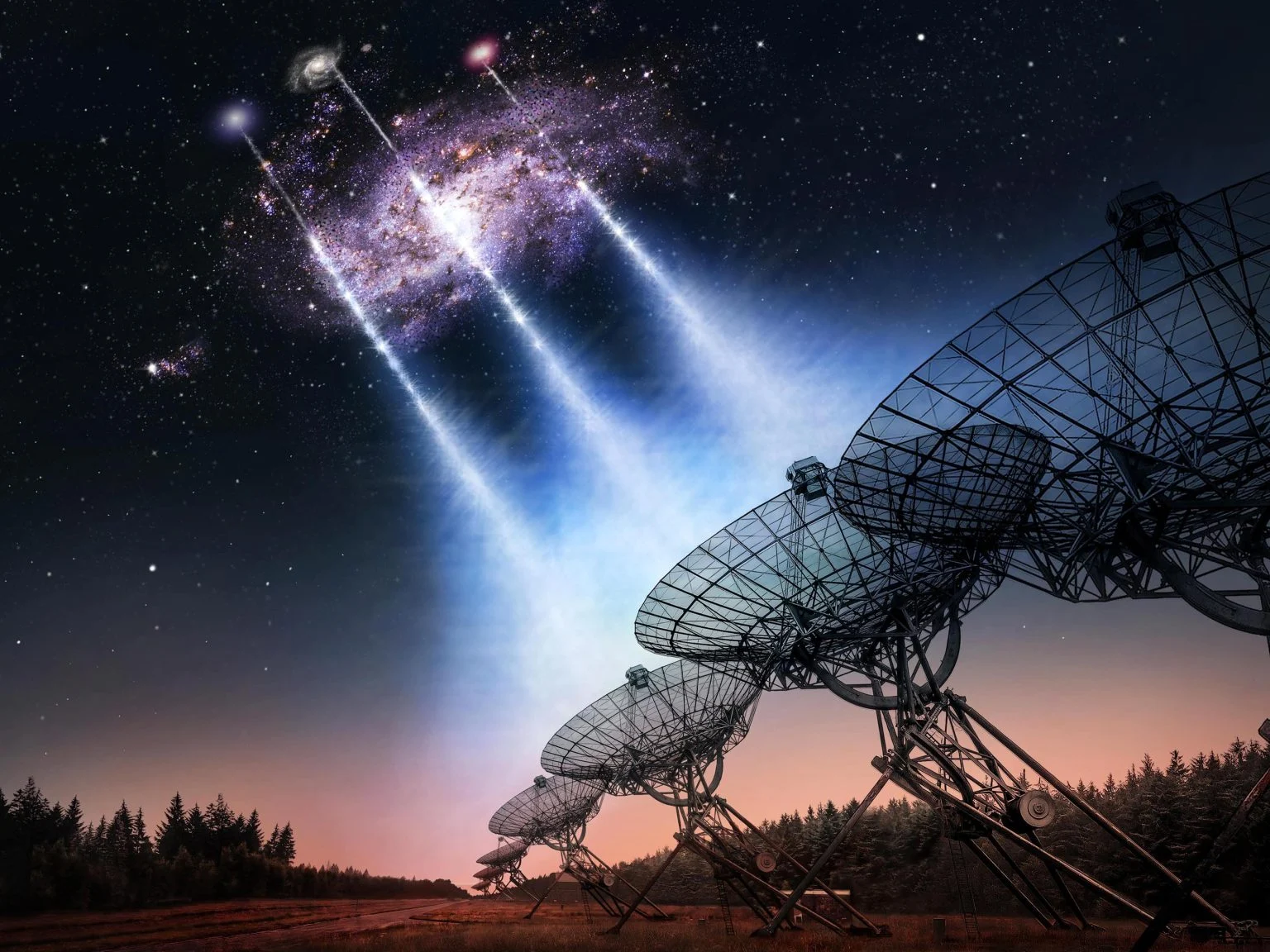
A new study led by researchers from Caltech demonstrates the effectiveness of Fast Radio Bursts as a tool for measuring cosmological distances and the clustering of matter.
Pontos-chave
- Em foco: A new study led by researchers from Caltech demonstrates the effectiveness of Fast Radio Bursts as a tool for measuring cosmological distances and
- Detalhe: Cobertura jornalística: verificar documentação técnica primária
- Leitura editorial: reportagem científica; quando possível, confira a fonte primária citada.
A new study led by researchers from Caltech demonstrates the effectiveness of Fast Radio Bursts as a tool for measuring cosmological distances and the clustering of matter. A new study led by researchers from Caltech demonstrates the effectiveness of Fast Radio Bursts (FRBs) as a tool for measuring cosmological distances and the clustering of matter.
These transient events are basically blasts of radiation (in the radio spectrum) that last from milliseconds to a few seconds and are never heard from again. According to new research led by the California Institute of Technology (Caltech), FRBs could also help map matter clustering in large cosmic structures, providing additional clues about how the Universe has evolved.
While FRBs are extremely brief events, their light travels billions of light-years to reach Earth and passes through a fog of gas, dust, and other matter along the way. The results, described in a paper that appeared in Nature Astronomy, show how FRB measurements could also help solve some of the biggest mysteries facing astronomers and cosmologists today.
Scientists theorize that during the very early Universe, Dark Matter formed massive halos that trapped cosmic gas into dense concentrations, triggering the birth of the first stars and the seeds of supermassive black holes (SMBHs). Based on their analysis of 114 FRBs, Ravi and his colleagues conducted the first study that directly measured the impact of feedback on large-scale regions around galaxies.
These results are especially encouraging since they are based on a sample of just 100 FRBs. Similarly, the Caltech Deep Synoptic Array (DSA), for which Ravi is the co-principal investigator, is expected to detect tens of thousands of FRBs once it is completed (currently scheduled for 2029).
Rubin Observatory, and the Nancy Grace Roman Space Telescope.



Fonte original: Universe Today