SPHEREx Just Took the Fingerprints of Failed Stars Across Our Cosmic Neighborhood
Brown dwarfs are the black sheep of astronomy. They’re too big to be considered a traditional gas planet, but they are too small to have started nuclear fusion and made the full.
Pontos-chave
- Em foco: Brown dwarfs are the black sheep of astronomy
- Detalhe: Cobertura jornalística: verificar documentação técnica primária
- Leitura editorial: reportagem científica; quando possível, confira a fonte primária citada.
Brown dwarfs are the black sheep of astronomy. They’re too big to be considered a traditional gas planet, but they are too small to have started nuclear fusion and made the full transition to star-hood.
Or at least we think they do - our models of the atmospheres of these celestial objects aren’t the best, according to a new paper in The Astrophysical Journal Letters by a team led by Zafar Rustamkulov at Caltech and NASA’s Jet Propulsion Laboratory. In the past, astronomers used the broadband filters on survey telescopes like 2MASS and WISE.
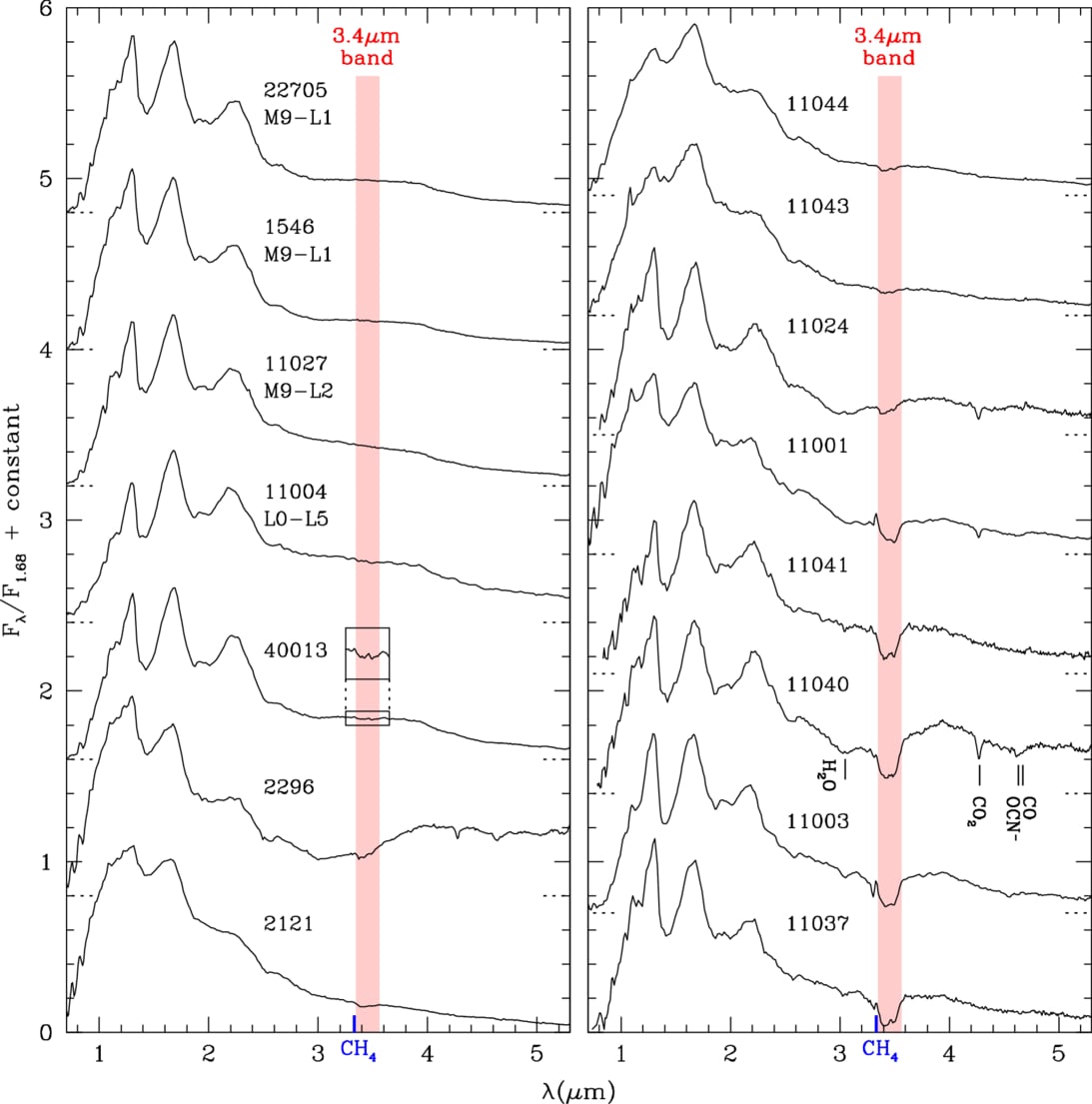
Luckily, the Spectro-Photometer for the History of the Universe, Epoch of Reionization, and Ices Explorer (SPHEREx), which entered service in May 2025, is a game changer for exactly this kind of study. It maps the entire sky in 102 continuous wavelength channels, ranging from wavelengths of 0.75 microns up to 5 microns, which covers 80% of the heat energy released by brown dwarfs as infrared light.
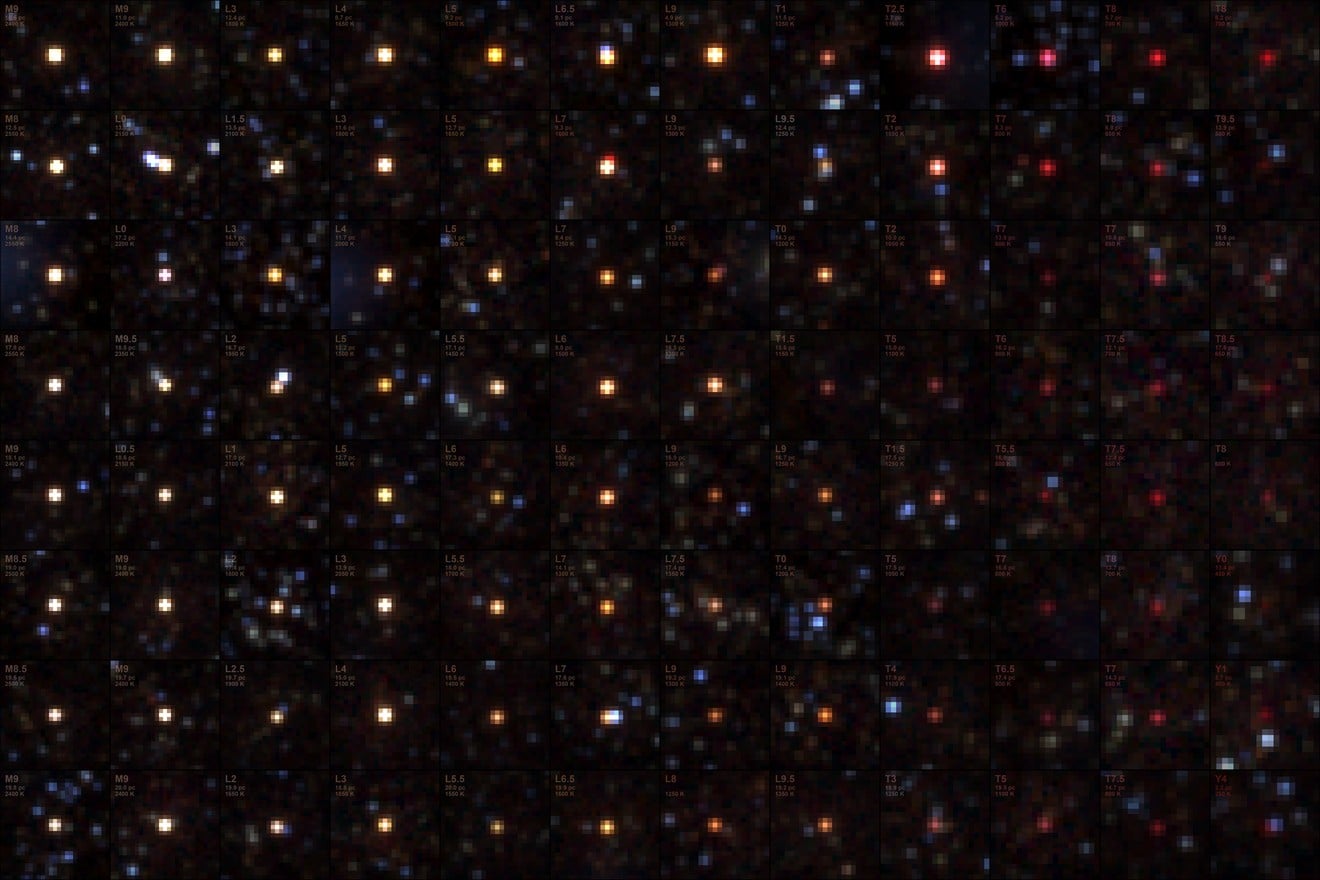
Rustamkulov and his team used that SPHEREx data to compile a high-fidelity sequence of 33 nearby brown dwarfs between 7 and 100 light years away from Earth. They cover the three coolest spectral classes of these objects - L dwarfs, which hover around 2, 200℃, T dwarfs, which lie between 700 and 1, 000℃, and Y dwarfs, which can dip down to a frigid -20℃.
With the SPHEREx spectra in hand, they then compared its findings to five leading theoretical brown dwarf atmosphere models: Sonora Diamondback, Sonora Elf Owl, BT-Settl, ATMO2020, and ATMO2020++. Notably, they struggled to match a series of near-infrared flux peaks between 1 and 2.5 microns, and missed a critical “opacity window” at around 4.0 microns where light can easily escape the atmosphere.
They also predicted sizes for these failed stars that were completely physically unrealistic, and sometimes off by as much as 20-50%.

Fonte original: Universe Today