NASA is betting on cheaper missions as a way to sustain science. We built a database to check whether it works.
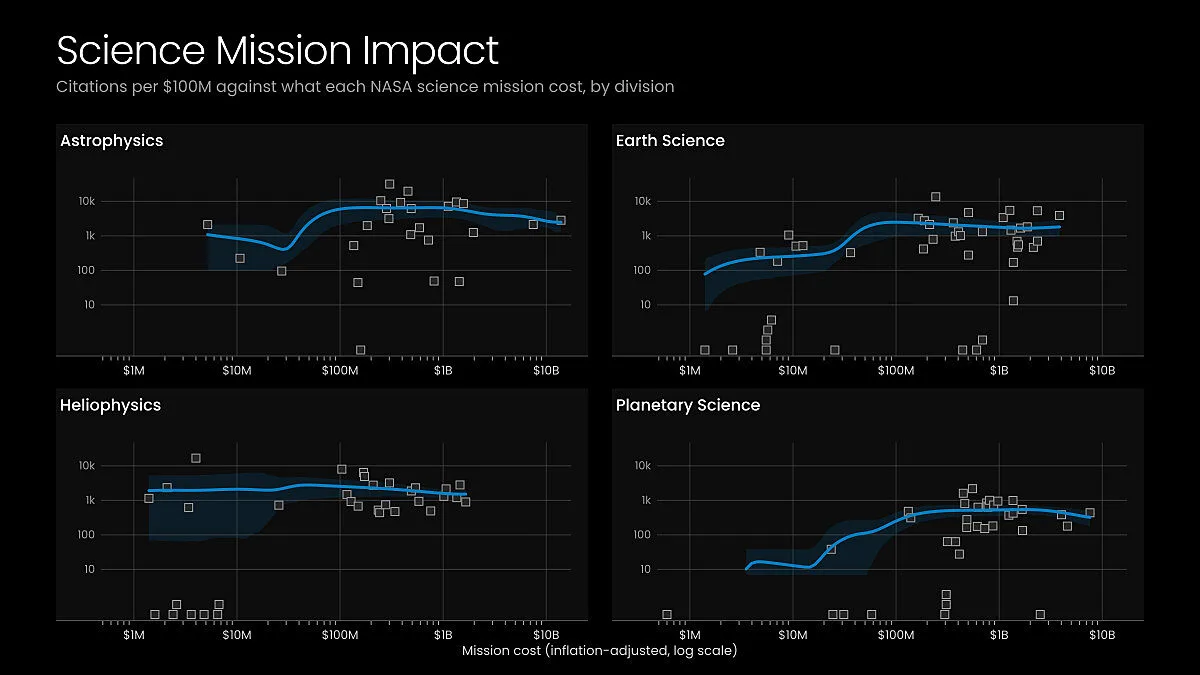
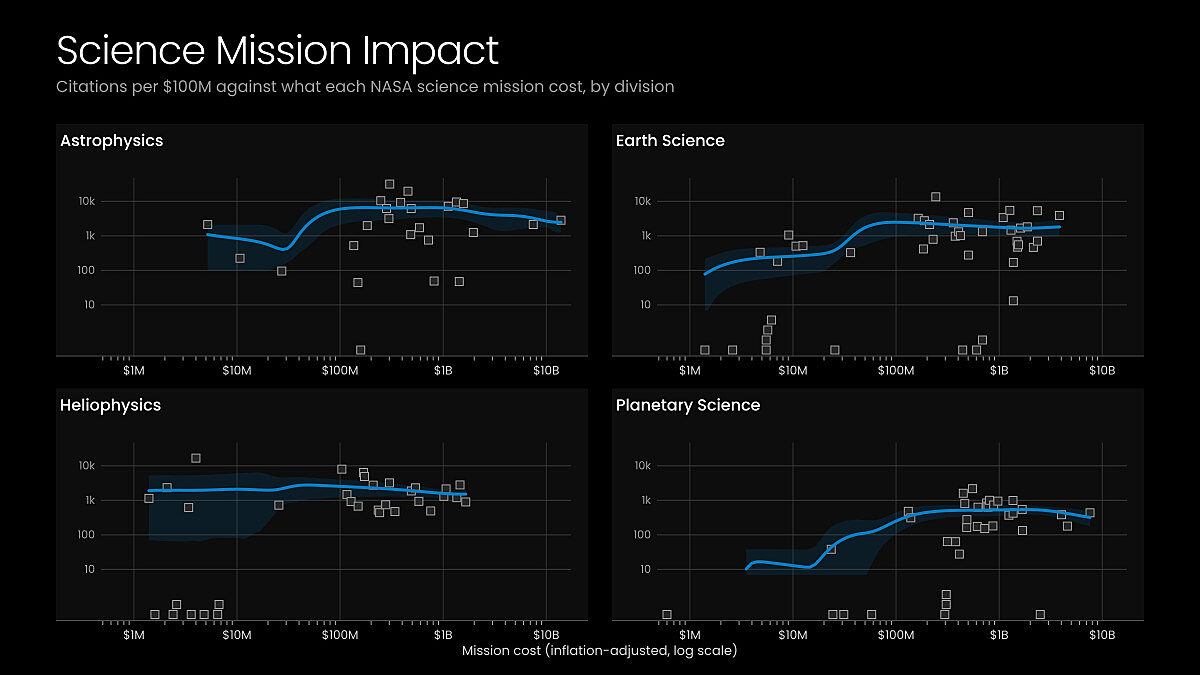
Our new Science Mission Impact study and dashboard examine 143 NASA science missions and 148, 534 peer-reviewed papers.
Pontos-chave
- Em foco: Our new Science Mission Impact study and dashboard examine 143 NASA science missions and 148, 534 peer-reviewed papers
- Detalhe: Cobertura jornalística: verificar documentação técnica primária
- Leitura editorial: reportagem científica; quando possível, confira a fonte primária citada.
Our new Science Mission Impact study and dashboard examine 143 NASA science missions and 148, 534 peer-reviewed papers. Our main finding: In every science division, the cheapest missions can’t replace the science return of larger ones.
Written by Ari Koeppel, PhD Policy and Advocacy Fellow, The Planetary Society November 12, 2026 NASA is facing historic budgetary threats. The fiscal year 2026 and 2027 budget requests each proposed cutting NASA’s Science Mission Directorate by nearly 50%.
More than 50 science missions are facing termination. Efforts like Mars Sample Return, missions to Venus, and the Geospace Dynamics Constellation have been canceled or delayed given the budgetary constraints, and there has been fierce criticism over cost overruns and schedule slips.
The most visible implementation is the Commercial Lunar Payload Services (CLPS) program, started in 2018, which buys rides for NASA instruments aboard commercially built lunar landers. Discovery-class missions, meant to launch every two years, now face a seven-year gap between Psyche’s launch in 2023 and DAVINCI’s expected launch in 2030.
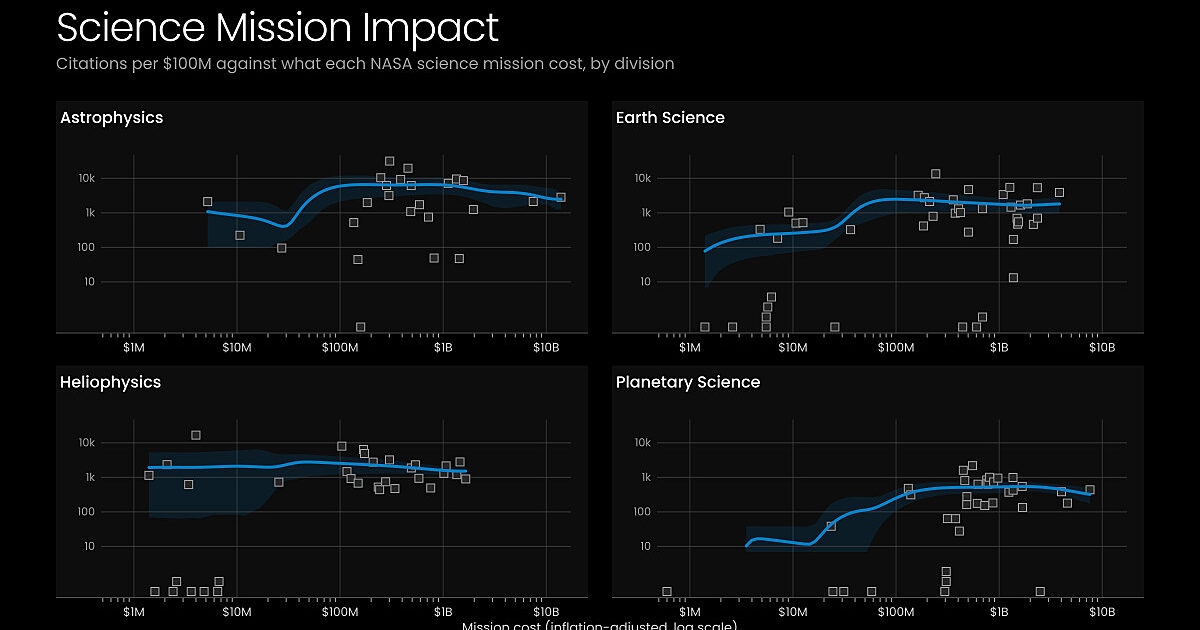
So, as a first step, we assembled a way to track and compare science output. Explore the relationship between mission cost and scientific output We compiled every NASA-led scientific spacecraft launched from 1980 through 2024, across all five science divisions, with life-cycle costs adjusted for inflation to 2025 dollars.
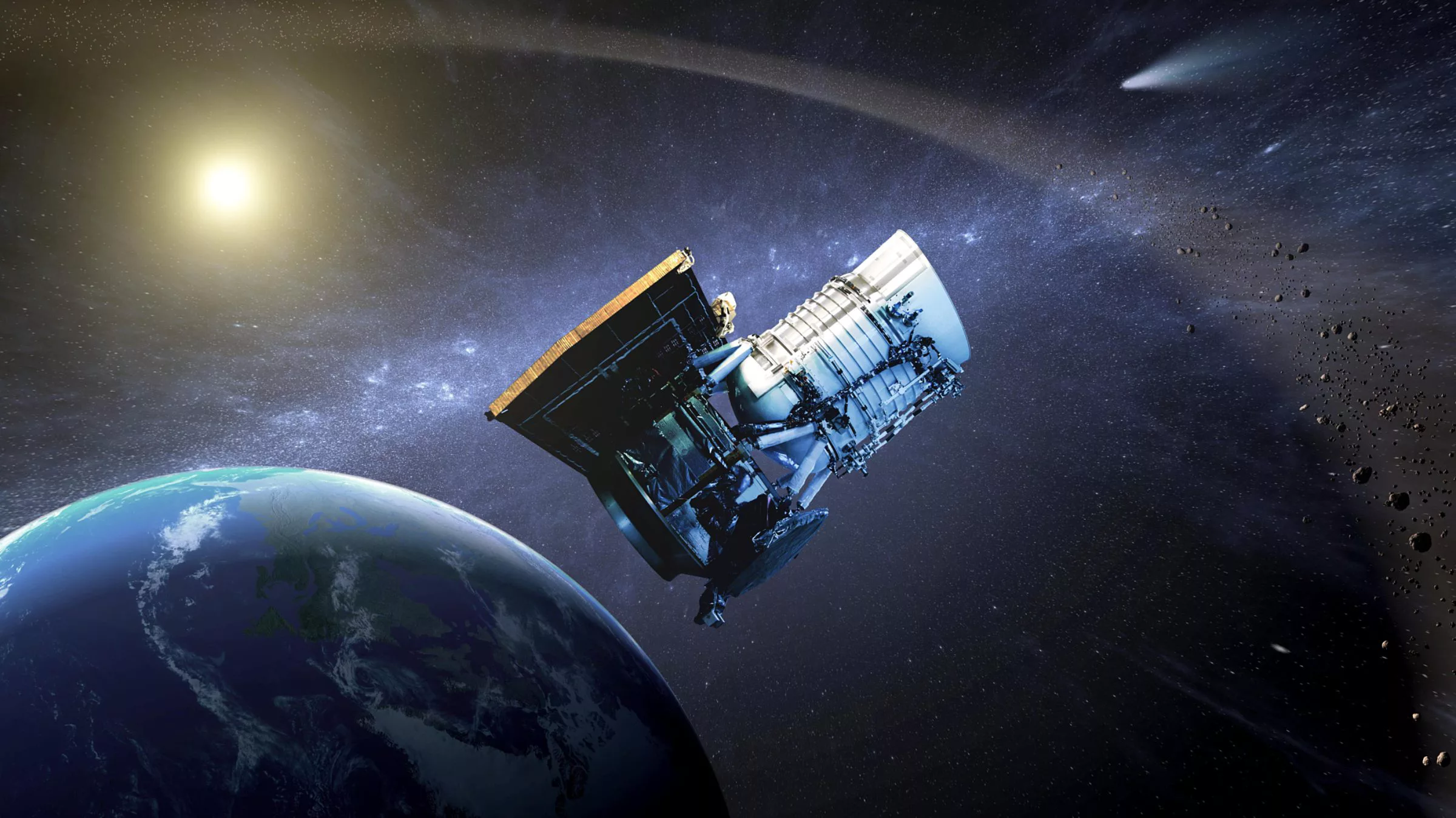
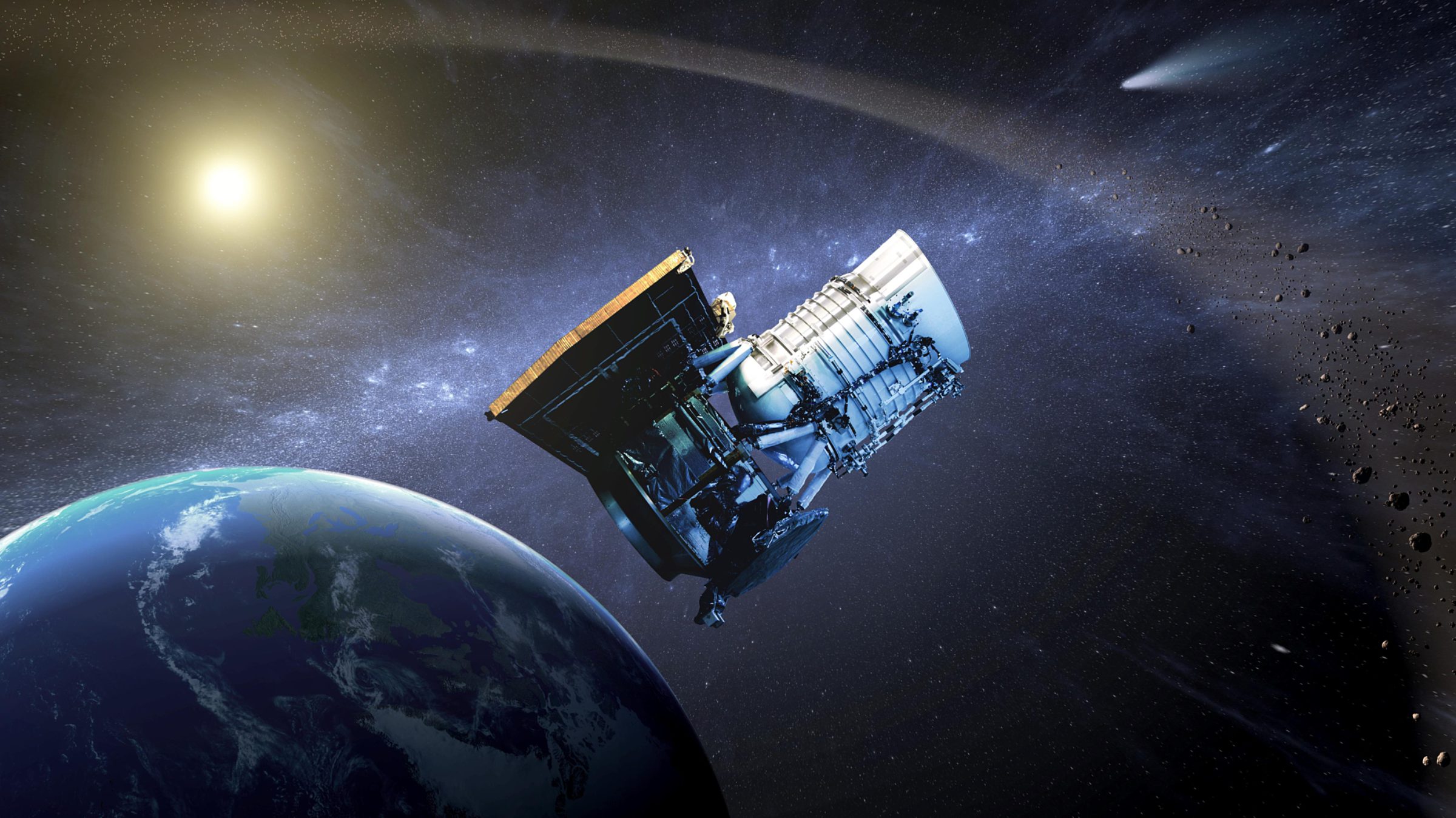
For example, a highly cited paper describing how the NEOWISE spacecraft measured near-Earth asteroids defines, in-part, how the United States tracks progress toward its congressional mandate to characterize impact threats.
Fonte original: The Planetary Society