NASA Data Clinches First-of-Its-Kind Stellar Merger
Researchers recently identified a first of its kind: A star slightly less massive than the Sun spiraled into and merged with a puffy supergiant star at the outskirts of our.
Pontos-chave
- Em foco: Researchers recently identified a first of its kind: A star slightly less massive than the Sun spiraled into and merged with a puffy supergiant star
- Detalhe: Origem institucional: distinguir anúncio de evidência
- Leitura editorial: release institucional, útil como fonte primária, mas não como validação independente.
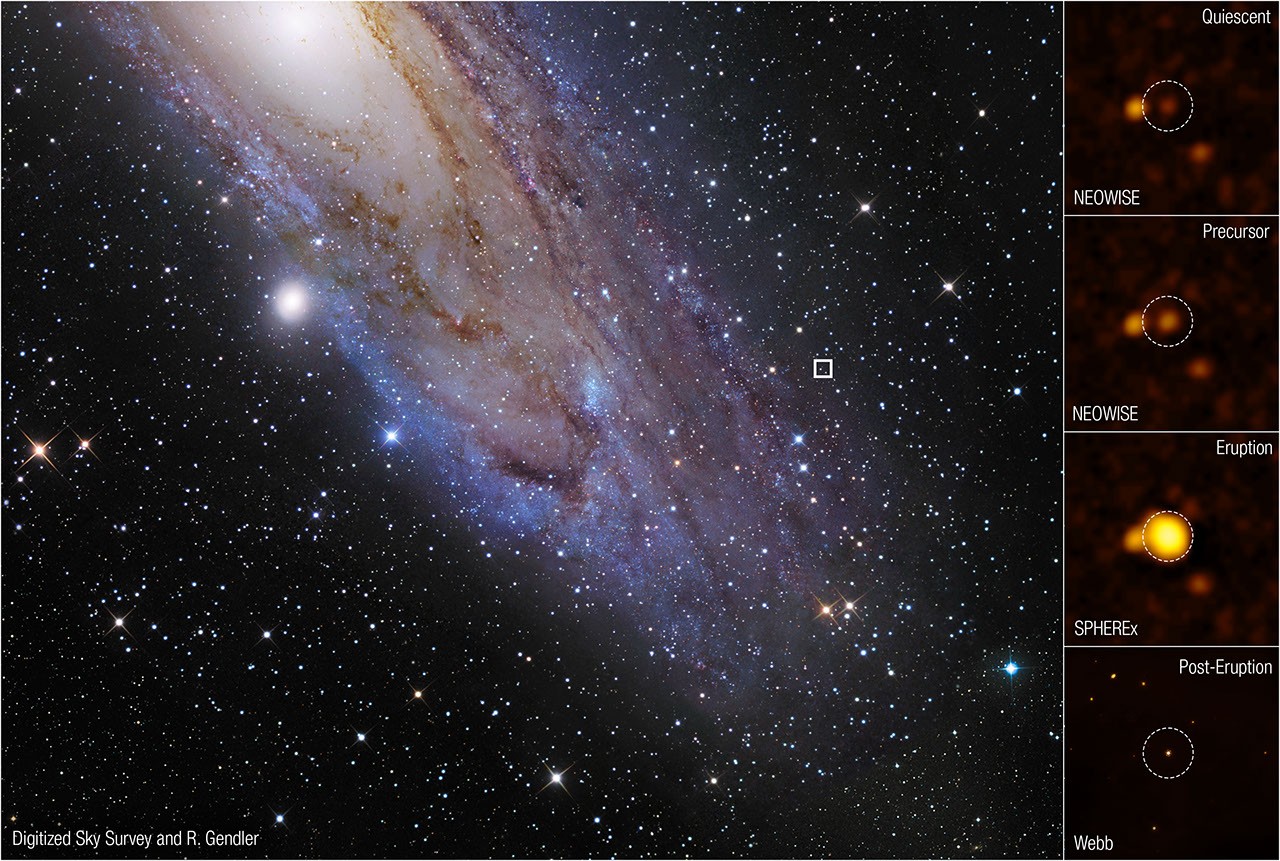
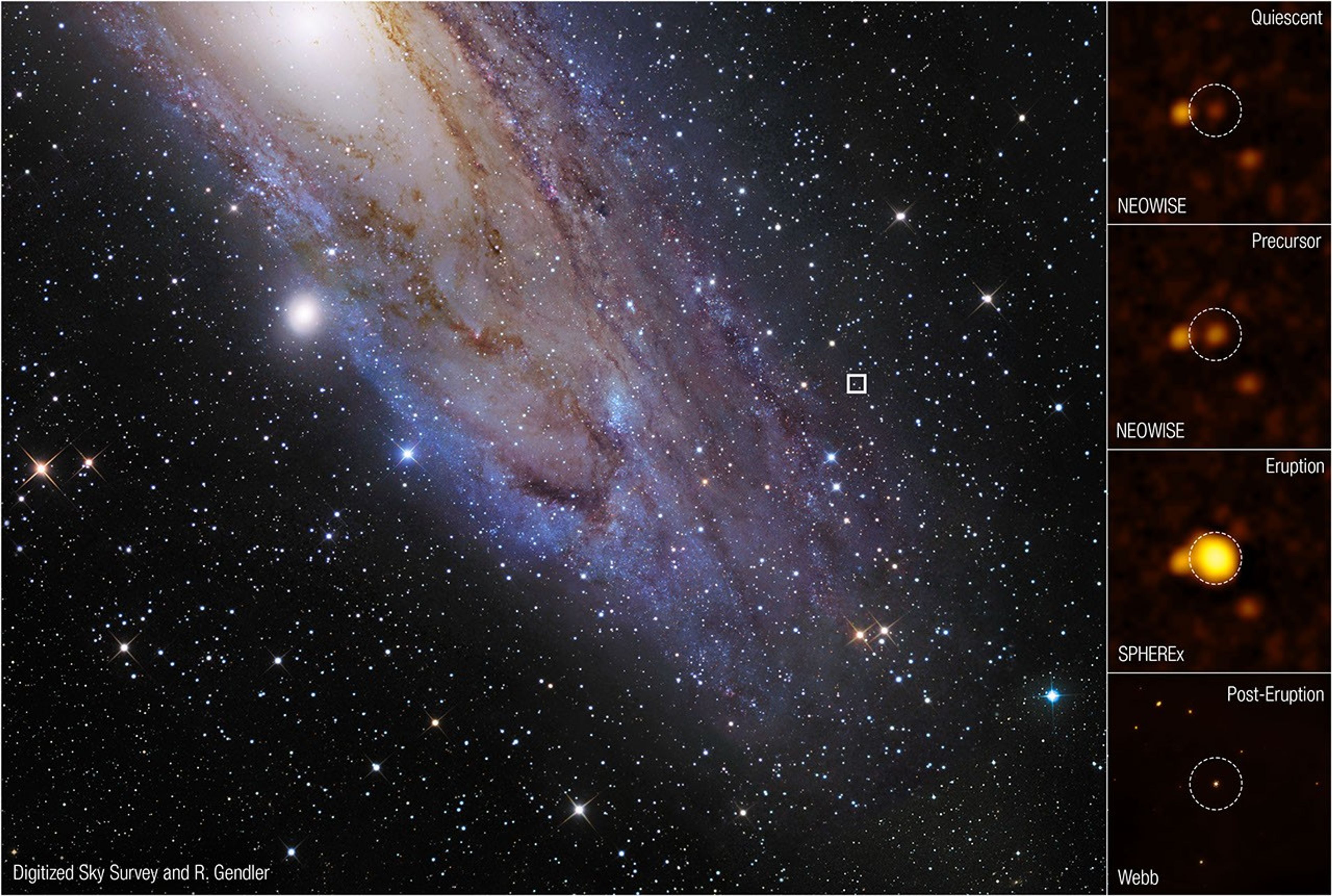
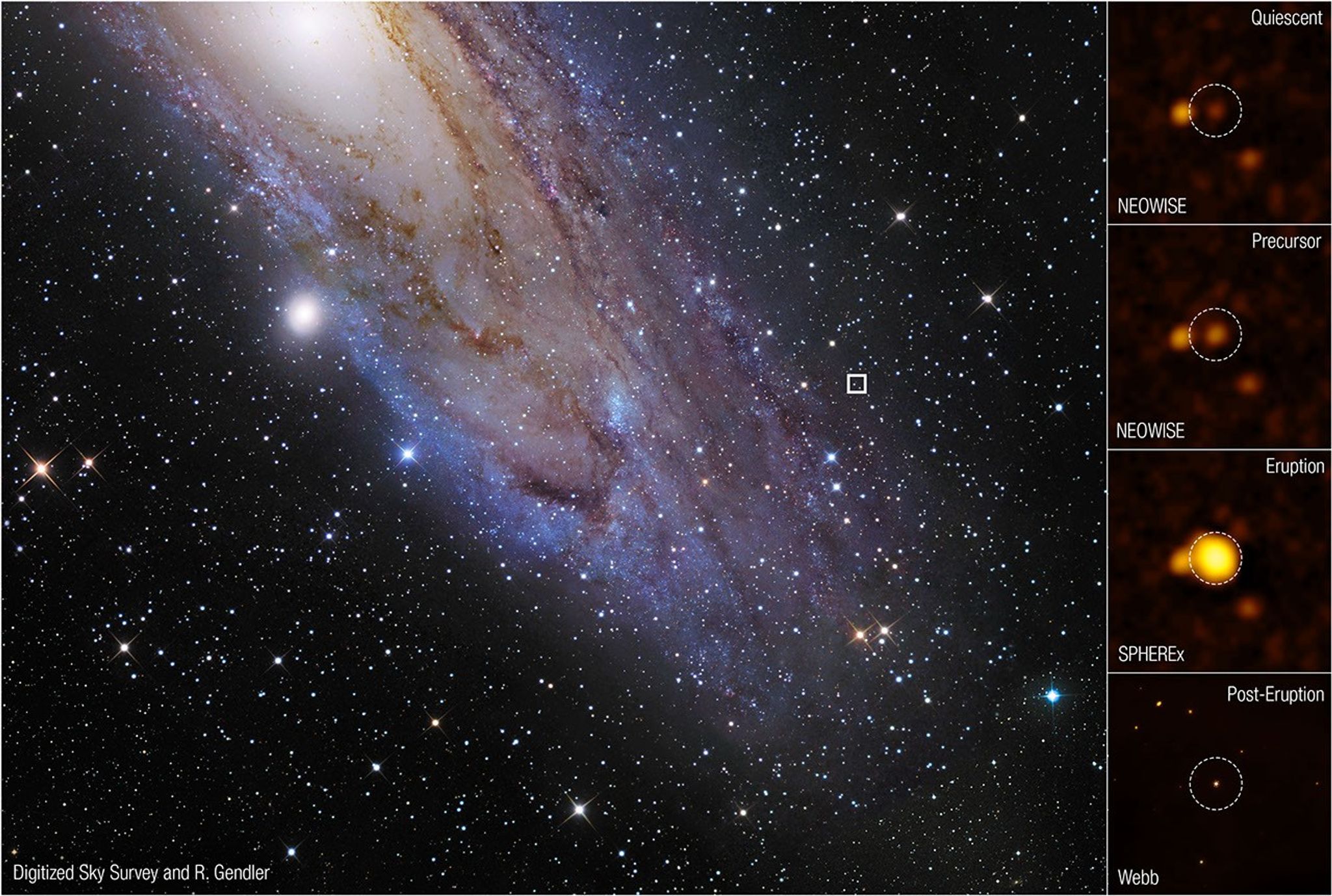
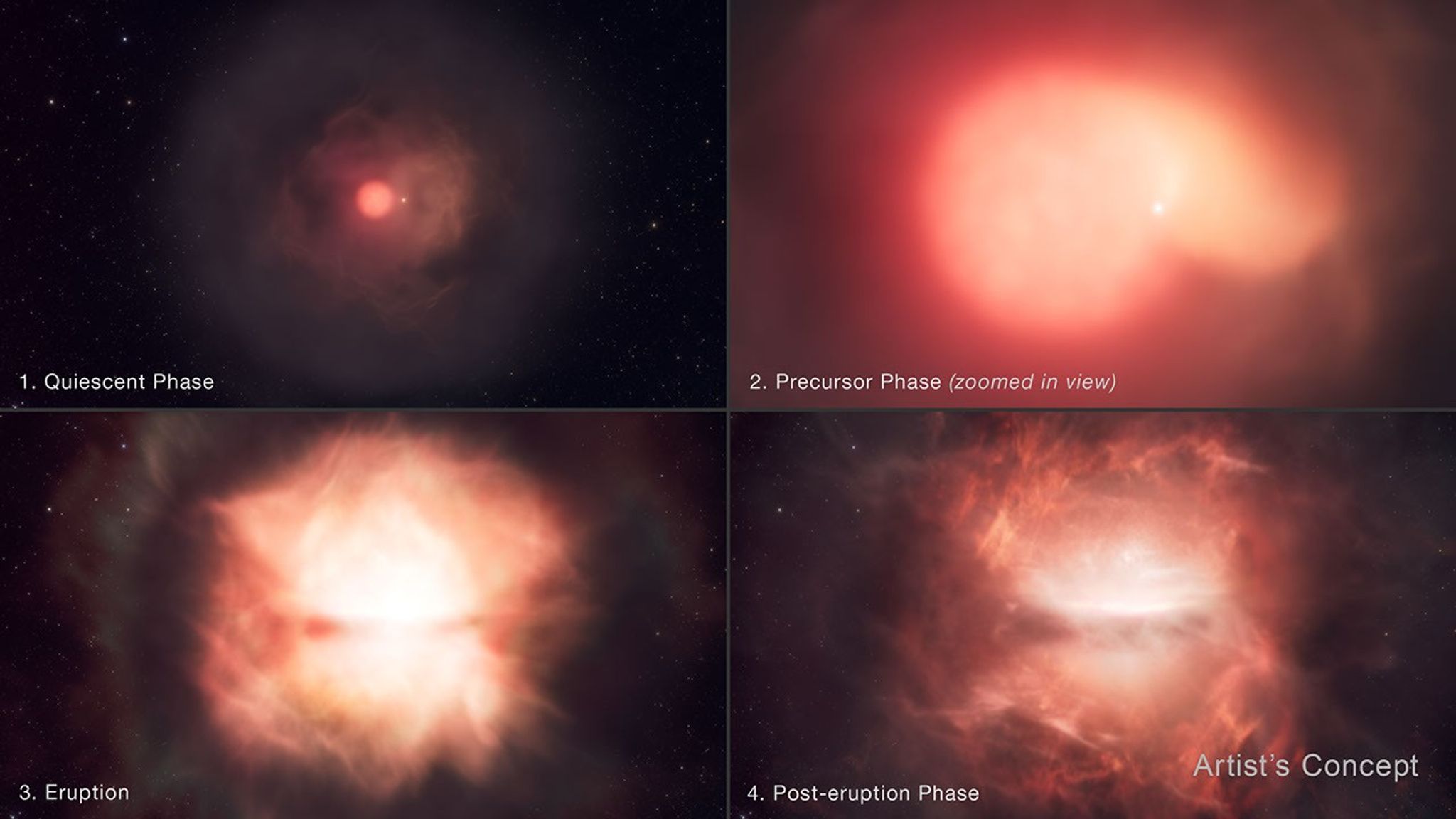
Researchers recently identified a first of its kind: A star slightly less massive than the Sun spiraled into and merged with a puffy supergiant star at the outskirts of our neighboring Andromeda galaxy. Their NASA-funded discovery was then bolstered by quick-turn observations from NASA’s James Webb Space Telescope that were carefully cross-referenced with extensive data from telescopes in space and on the ground.
Stellar mergers are very, very difficult to observe in real time because they are hard to predict,” said Viraj Karambelkar, the first author of a new paper in Nature published Wednesday and a NASA Hubble Fellow at Columbia University in New York. New path for future research The team’s analysis of Bao, formally known as AT 2025abao, offers an approach to reconstructing the events: They conducted their analysis and made observations of the stars’ merger in real time.
Webb observed Bao only 47 days after the stars’ eruption peaked, the earliest ever follow-up of an event like this. Compared to our Sun, they found that “Little Bao” was likely less massive (about 0.7 solar masses), with a slightly smaller radius and fainter.
(In fact, they published their first paper right before the eruption in 2025.) Bao first caught the team’s attention in February 2023, when they saw an unusual variable star in data from NASA’s retired NEOWISE (Near-Earth Object Wide-Field Infrared Survey Explorer) mission. Observations from the Wide-field Infrared Transient Explorer (WINTER) in September 2024 showed that Bao was not only beginning to brighten, but also spew dust.
When NASA’s SPHEREx (Spectro-Photometer for the History of the Universe, Epoch of Reionization and Ices Explorer) serendipitously saw Bao fade rapidly in visible light and brighten in infrared light during a routine survey in July 2025, the researchers knew it was an indicator. In November 2025, the team received fast-turn observations from NASA’s now-retired Neil Gehrels Swift Observatory and NOIRLab’s Gemini North telescope in Hawaii.
The team’s analysis of Bao, formally known as AT 2025abao, offers an approach to reconstructing the events: They conducted their analysis and made observations of the stars’ merger in real time.
Fonte original: NASA News Releases