Microscopic Space Dust Reveals A Hidden Reservoir Of "Heavy Water" Beyond Neptune
Astronomers can find valuable information in even the tiniest objects. That was certainly the case recently when twelve dust grains collected by a high-altitude aircraft helped.
Pontos-chave
- Em foco: Astronomers can find valuable information in even the tiniest objects
- Detalhe: Cobertura jornalística: verificar documentação técnica primária
- Leitura editorial: reportagem científica; quando possível, confira a fonte primária citada.
Astronomers can find valuable information in even the tiniest objects. That was certainly the case recently when twelve dust grains collected by a high-altitude aircraft helped solve a mystery about the birth of our Solar System.
Or at least that is the argument in a new paper published in Science Advances by researchers at NASA’s Johnson Space Center and UCLA. Most of the universe’s oxygen atoms are an isotope called oxygen-16, with eight protons and eight neutrons.
In 2011, NASA’s Genesis mission caught particles in the solar wind that showed the Sun housed an overwhelming amount of regular oxygen-16. Around 4.5 billion years ago, when our Solar System hadn’t fully formed yet, ultraviolet light from the Sun blew apart carbon monoxide molecules at the outer edges of the protoplanetary disk of gas and dust.
And some of those wavelengths were particularly good at breaking apart carbon monoxide molecules that had formed with oxygen-17 and oxygen-18. Some of the grains that result from those collisions are pulled inward by the Sun’s gravity, eventually intersecting the orbits of the inner planets - including Earth.
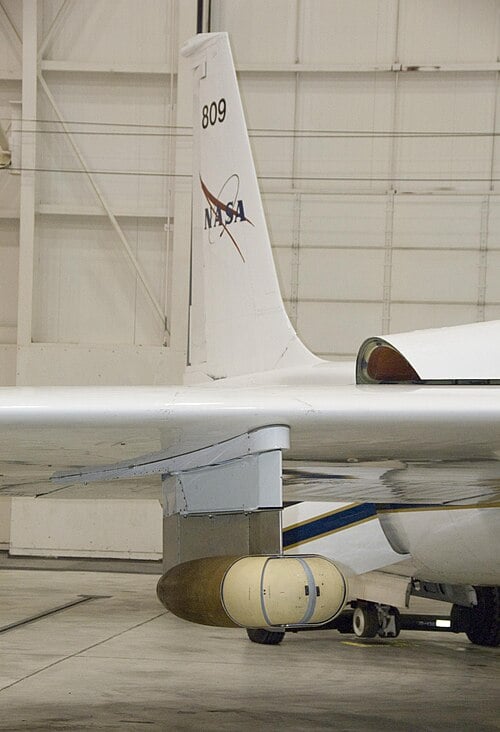
That is exactly what they proved with twelve dust grains collected during NASA’s Cosmic Dust program - an ongoing airborne sampling program running out of Johnson Space Center since 1981. Using a specialized microscope, the researchers measured the exact oxygen isotope ratios in the clays in the samples.
They found that the primordial Kuiper Belt objects these grains came from were extraordinarily enriched with oxygen-17 and oxygen-18 - definitively proving that the reservoir of heavy water does exist out beyond Neptune.



Fonte original: Universe Today