
Gegenschein is the elusive glow of interplanetary dust
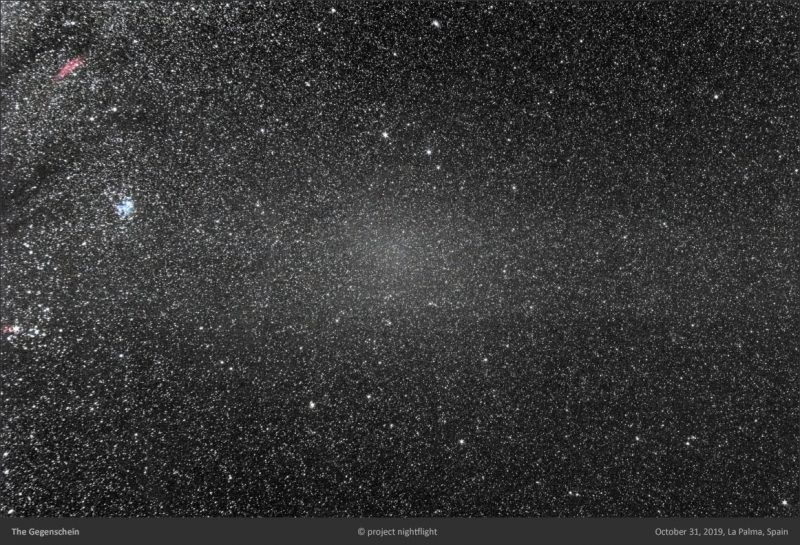
The gegenschein is a faint glow in the night sky, caused by sunlight reflecting off dust particles in space, opposite the sun. Here's how to see it.
Pontos-chave
- Em foco: The gegenschein is a faint glow in the night sky, caused by sunlight reflecting off dust particles in space, opposite the sun
- Detalhe: Cobertura jornalística: verificar documentação técnica primária
- Leitura editorial: reportagem científica; quando possível, confira a fonte primária citada.
The gegenschein is a faint glow in the night sky, caused by sunlight reflecting off dust particles in space, opposite the sun. The post Gegenschein is the elusive glow of interplanetary dust first appeared on EarthSky.
| Paolo Bardelli of Switzerland captured the sun’s counterglow, or gegenschein, on November 2, 2024, and wrote: “The elusive gegenschein phenomenon captured on a clear night from the Simplon Pass in Switzerland. The antisolar point is located in the top right image, barely visible as a very faint and diffuse nebulosity extending over 20 degrees in a sky with green and orange airglow.
The plane of the solar system is filled with an enormous disk of small dust particles with sizes ranging from less than 1/1000 of a millimeter (0.000039 inches) up to 1 millimeter (0.0394 inches). Some might originate from dust storms on Mars.
Zodiacal light and gegenschein For an observer on Earth, this dynamic dust cloud is mainly visible in the form of the zodiacal light. The morning and evening zodiacal light are the two areas of the interplanetary dust disk where sunlight gets forward scattered to Earth, resulting in the bright silvery light cones.
Looking at the interplanetary dust disk from Earth, the section at the antisolar point is illuminated from directly behind our heads. The gegenschein effect on Earth The main reason for this brightening during opposition is shadow hiding, meaning that all particles are fully illuminated.
You can see this opposition effect here on Earth during daylight if you’re outdoors and look at the ground in front of you.

Fonte original: EarthSky