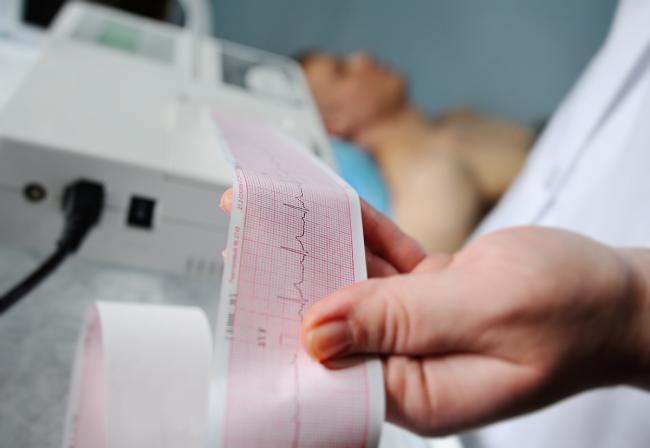
Deep learning model using ECGs during sleep studies can predict cardiovascular outcomes
Integrating ECGs into sleep disorder screening could enhance detection and guide clinical decision-making.
Pontos-chave
- Em foco: Integrating ECGs into sleep disorder screening could enhance detection and guide clinical decision-making
- Detalhe: distinguir anúncio de evidência
- Leitura editorial: release institucional, útil como fonte primária, mas não como validação independente.
Integrating ECGs into sleep disorder screening could enhance detection and guide clinical decision-making. A research team supported by the National Institutes of Health (NIH) has found that electrocardiograms (ECGs) administered during sleep and paired with sleep stage information can be used to determine risk for future adverse cardiac events.
The study, which used a deep learning approach, suggests that using ECGs to predict which patients have a greater risk for poor heart-related outcomes could help guide clinical decision-making. The findings were published in the journal Sleep.
D, acting director of NIH’s National Heart, Lung, and Blood Institute (NHLBI). The research team in this study wanted to see if these recordings could be used to predict 10-year risk of cardiovascular outcomes such as atrial fibrillation, stroke, myocardial infarction, and heart failure, as well as all-cause mortality.
The researchers applied a deep learning system using single-lead ECGs from sleep studies combined with expert-annotated sleep stage data. The model was fine-tuned on a dataset of 15, 809 patients at Massachusetts General Hospital in Boston, and performance was assessed on two datasets that included 9, 810 patients from Emory University Hospital in Atlanta and 12, 576 patients from Beth Israel Deaconess Medical Center.
The team found that the model was able to sort people into groups with different levels of long-term cardiovascular risk, showing that people with higher scores were at higher risk. Overall, they found that predicting cardiovascular outcomes from the ECG channel in sleep studies is a promising approach.
Adding these scores into sleep studies has great potential for improving early detection of cardiovascular disease, determining who is most at risk, and being more proactive in patient care.
Fonte original: NIH News Releases