Astronomers Uncover "Hypersoft" X-ray Sources
X-rays showcase some of the most unique astronomical objects in the universe. Neutron stars and black holes siphoning gas from companion stars stick out like sore thumbs at this.
Pontos-chave
- Em foco: X-rays showcase some of the most unique astronomical objects in the universe
- Detalhe: Cobertura jornalística: verificar documentação técnica primária
- Leitura editorial: reportagem científica; quando possível, confira a fonte primária citada.
X-rays showcase some of the most unique astronomical objects in the universe. Neutron stars and black holes siphoning gas from companion stars stick out like sore thumbs at this level of radiation.
However, according to a new paper by Mustafa Muhibullah and Jimmy Irwin from the University of Alabama and Rosanne Di Stefano from the Center for Astrophysics at Harvard & the Smithsonian, there appears to be another group of ultra-bright X-ray emitters that.
However, according to a new paper by Mustafa Muhibullah and Jimmy Irwin from the University of Alabama and Rosanne Di Stefano from the Center for Astrophysics at Harvard & the Smithsonian, there appears to be another group of ultra-bright X-ray emitters that we’ve completely. Right below them in the energy range are the Extreme Ultra-Violet (EUV) photons, which range between 13.6 eV and 124 eV.
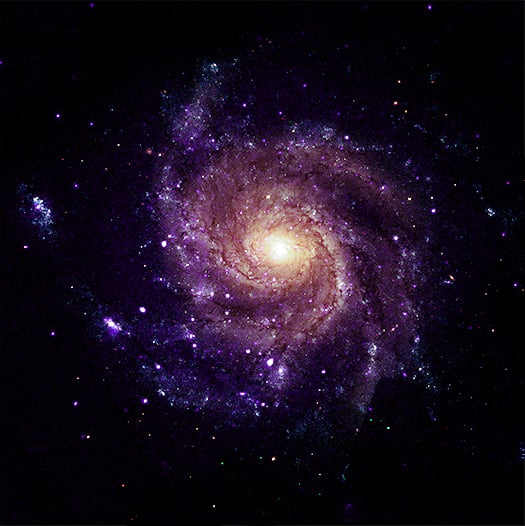
When looking at data from NASA’s Chandra X-Ray Observatory, which has been in operation for more than 20 years, the team set a series of criteria that they define as characteristics of HSSs - they must be observable between 150 and 300 eV, with basically no emission above that. When they looked at six nearby galaxies, including Andromeda and the Pinwheel Galaxy, the team found 84 distinct HSSs - an extremely high number of extremely bright objects.
The answer has to do with a technique most research groups use to make their own data analysis easier. Therefore, most research groups simply filter out energies below 300 eV to make sure the eliminate background noise in their data set.
By using the steady glow from galaxy cluster Abell 1795, the authors showed that Chandra’s sensitivity in that energy band had fallen below 20% of its initial capability by 2017.

Fonte original: Universe Today