Amateur Astronomer? Be a Kilonova Catcher!
Neutron stars are the ultra-dense, city-sized leftovers of dead stars. When they collide, they can release a brief flash of light called a kilonova.
Pontos-chave
- Em foco: Neutron stars are the ultra-dense, city-sized leftovers of dead stars. When they collide, they can release a brief flash of light called a kilonova
- Detalhe: distinguir anúncio de evidência
- Leitura editorial: release institucional, útil como fonte primária, mas não como validação independente.
Neutron stars are the ultra-dense, city-sized leftovers of dead stars. When they collide, they can release a brief flash of light called a kilonova.
Overview Resources Opportunities Citizen Science Highlights About Science Activation Neutron stars are the ultra-dense, city-sized leftovers of dead stars. And more importantly, we need more people to realize they are capable of great feats of science, regardless of their background. ” The Kilonova Catcher project is co-led by Andrade and Principal Investigator Dr.
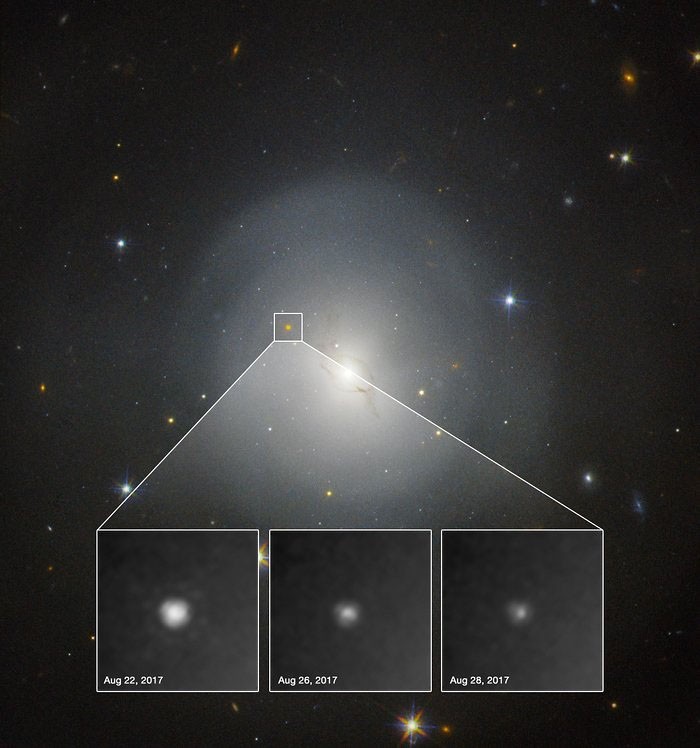
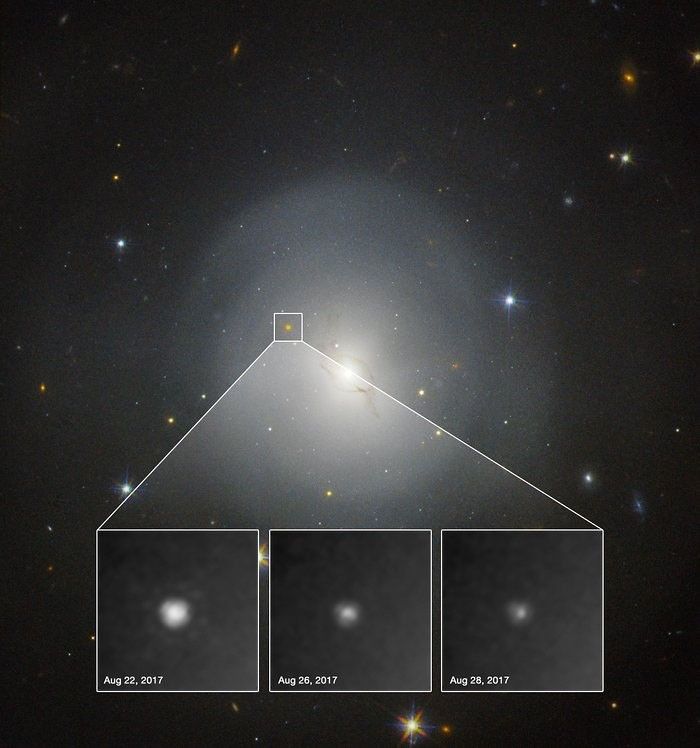
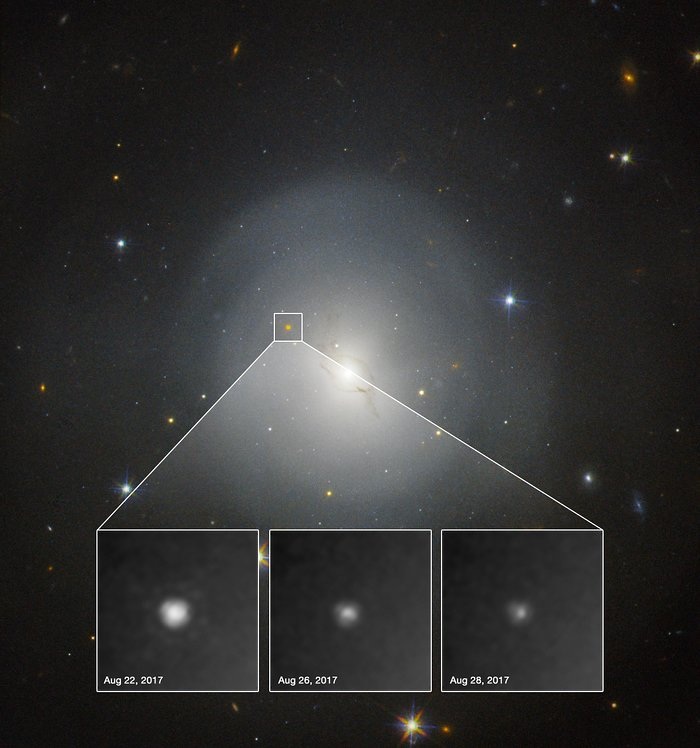
17, 2017, the Laser Interferometer Gravitational-Wave Observatory (LIGO) and the Virgo Interferometer both detected gravitational waves from the collision between two neutron stars. Within 12 hours observatories had identified the source of the event within the lenticular galaxy NGC 4993, shown in this image, which was gathered with NASA’s Hubble Space Telescope.
The associated kilonova is clearly visible in the Hubble observations. Hubble observed the kilonova gradually fading over the course of six days, as illustrated by the three time-stamped inset images made between Aug.
Overview Resources Opportunities Citizen Science Highlights About Science Activation 3 min read Article Neutron stars are the ultra-dense, city-sized leftovers of dead stars. But if you have a telescope with a camera, or access to one, you can help find and follow these cosmic fireworks as a part of NASA’s Kilonova Catcher project! .
The Kilonova Catcher network has more than 150 registered members on several continents.
Fonte original: NASA News Releases