A Stubborn Question Answered: New Research Reveals How the Milky Way's Disk Formed
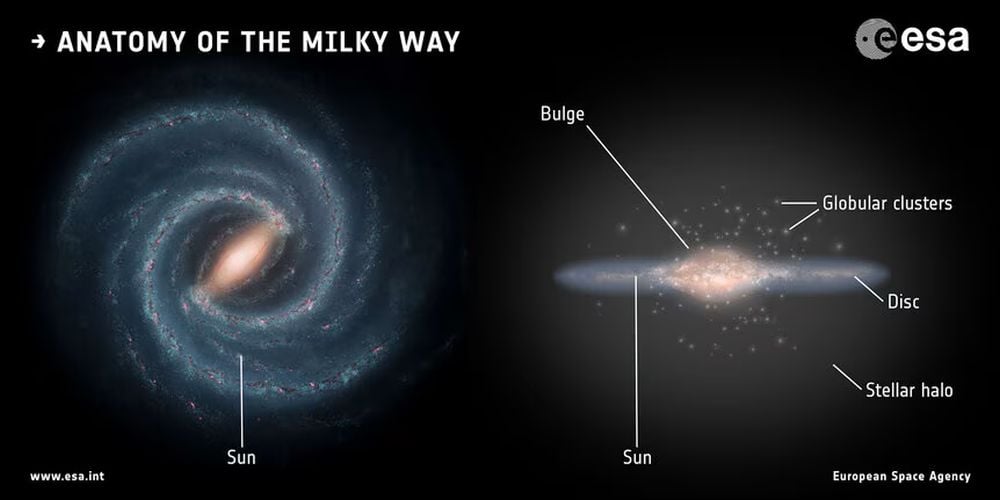
Figuring out how the Milky Way's thin and thick disks formed is a tough question in astronomy. It relies on determining individual stellar ages accurately.
Pontos-chave
- Em foco: Figuring out how the Milky Way's thin and thick disks formed is a tough question in astronomy
- Detalhe: Cobertura jornalística: verificar documentação técnica primária
- Leitura editorial: reportagem científica; quando possível, confira a fonte primária citada.
Figuring out how the Milky Way's thin and thick disks formed is a tough question in astronomy. It relies on determining individual stellar ages accurately.
Gaia was pretty good at that, and new research based on its data may have found the answer. The lack of precise ages for large, representative samples of stars has traditionally been a drawback for securely differentiating among formation scenarios proposed to explain the vertical properties of the Milky Way disk.
There was a significant change about 10.8 billion years ago, a couple of billion years after the Big Bang, as the thin disk formed, with the older stars maintaining their orbits in the thick disk. The existence of a clear break in the process about 10.8 billion years ago is the main argument in this research.
We find evidence that the scale height decrease rate changed drastically (~10.85) Gyr ago: at older ages, the evolution is very steep, with hZ (vertical scale height) dropping from over 1.26 to ∼0.5 kpc in merely 2 Gyr. Subsequently, the thinning is very gradual, with hZ ∼ 0.1 kpc for the youngest populations," the authors write.
So before about 10.85 Gyr ago, the disk flattened rapidly. In only about 2 billion years, it thinned from about 4, 100 light years thick down to only about 1, 600 light years thick.
After that, the thinning was much more gradual, reaching a thickness of only about 400 light years.

Fonte original: Universe Today