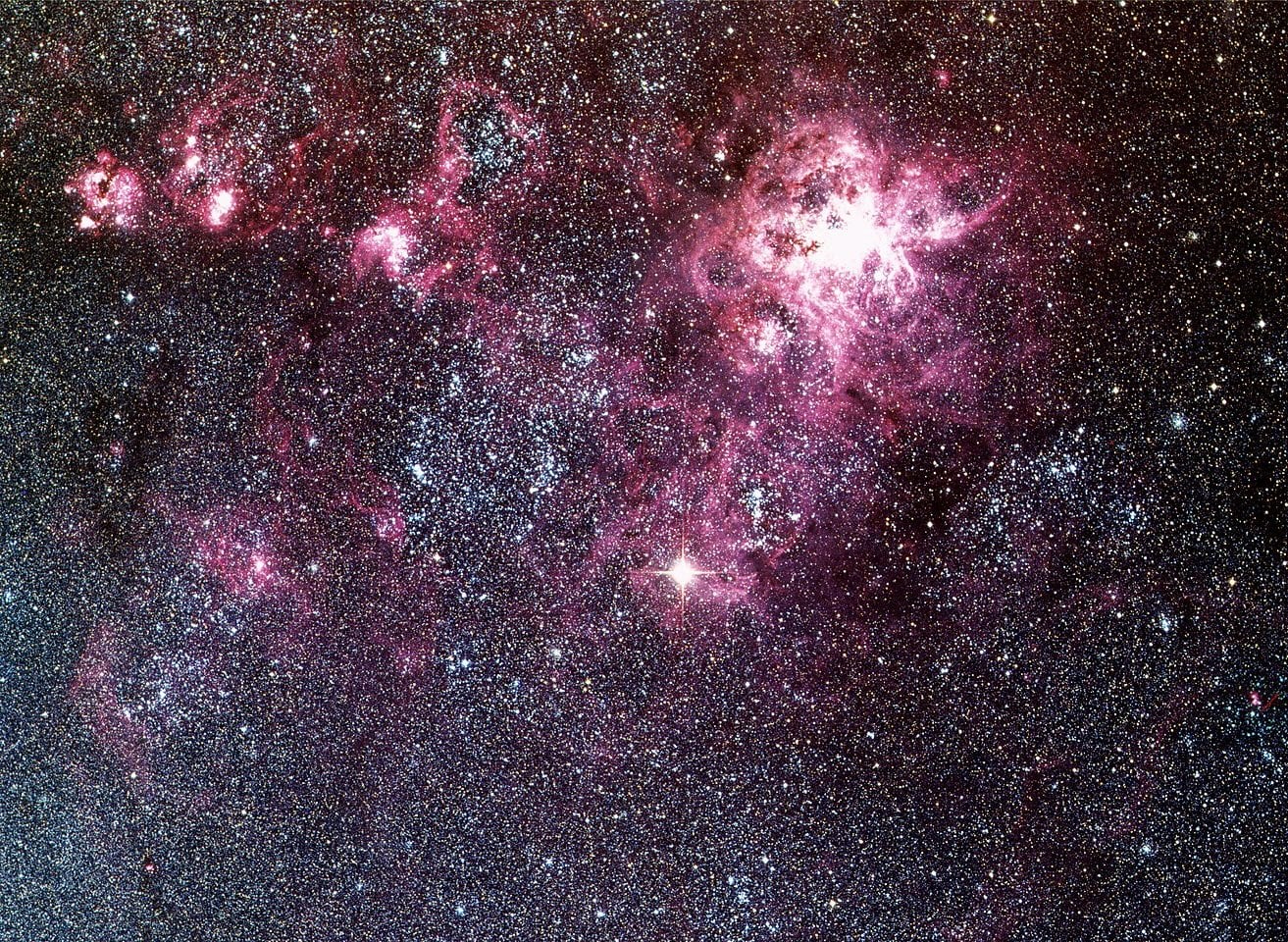
The Universe’s Most Powerful Telescope.
When a massive star explodes on the far side of the universe, the light from that explosion normally fades long before it reaches us.
Key points
- Focus: When a massive star explodes on the far side of the universe, the light from that explosion normally fades long before it reaches us
- Detail: separate announcement from evidence
- Editorial reading: institutional release, useful as a primary source but not independent validation.
When a massive star explodes on the far side of the universe, the light from that explosion normally fades long before it reaches us. But occasionally, the universe conspires to help. The institutional report frames the development in practical terms and ties it to the broader mission or observing effort.
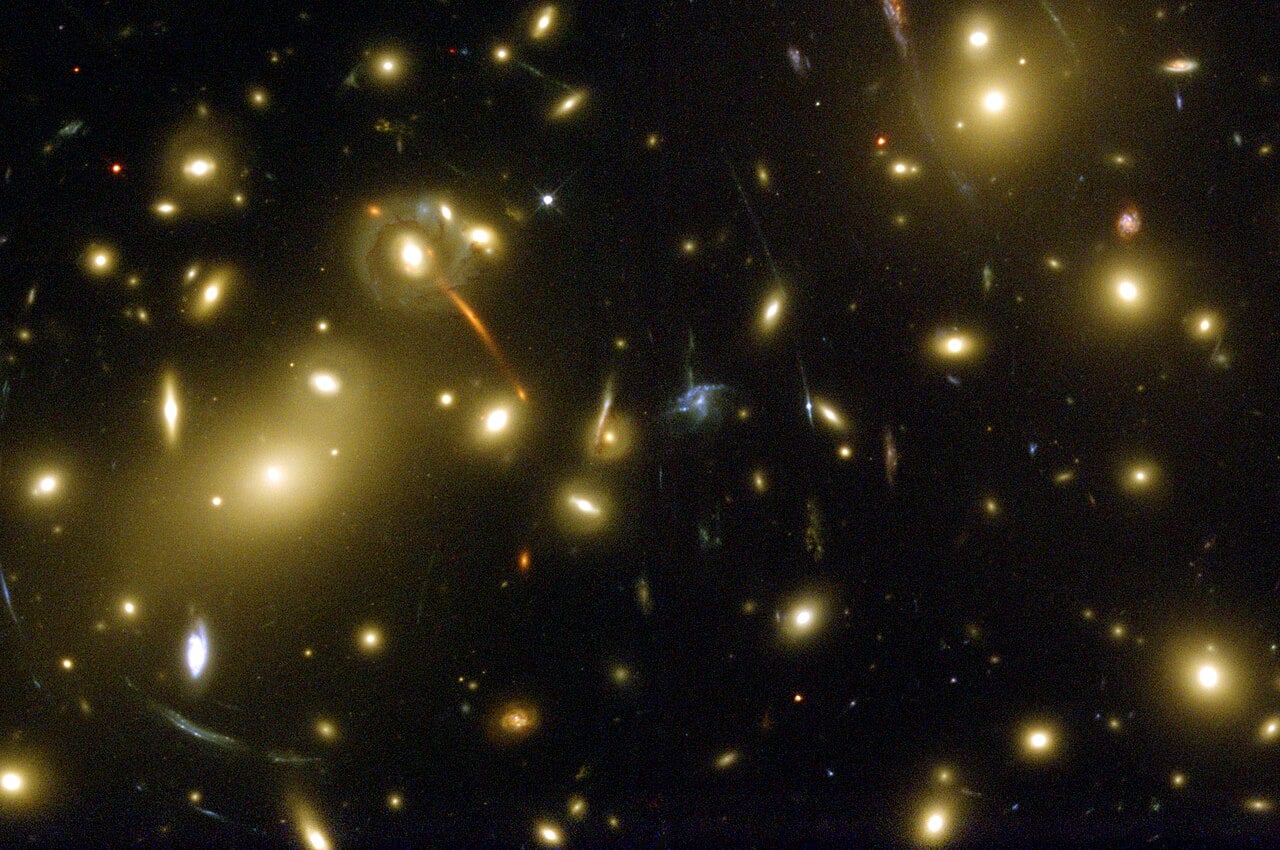
It is relevant because astrophysics becomes persuasive only when an observed signal can be tied to a physically defensible explanation. Compact objects such as neutron stars and black holes are natural laboratories for extreme physics, but the distance and complexity of these systems make interpretation difficult without multi-wavelength coverage and careful modeling. A detection without a mechanism is only half a result. the other half comes from showing that the signal fits quantitatively inside a coherent physical picture rather than merely being consistent with a broad family of models. The violent death of a massive star that had exhausted its nuclear fuel and collapsed under its own gravity sits at a redshift of 1.371. Galaxy cluster Abell 2218 and its gravitational lensing effect on distant galaxies Between us and the explosion lies an elliptical galaxy about five billion light years away.
That galaxy is massive enough to warp the fabric of spacetime around it, bending and concentrating the light from SN 2025mkn toward us like a gigantic lens. The result is a magnification of at least a hundred times and quite possibly closer to 250, based on detailed comparisons with SN 2023ixf, one of the best studied nearby.
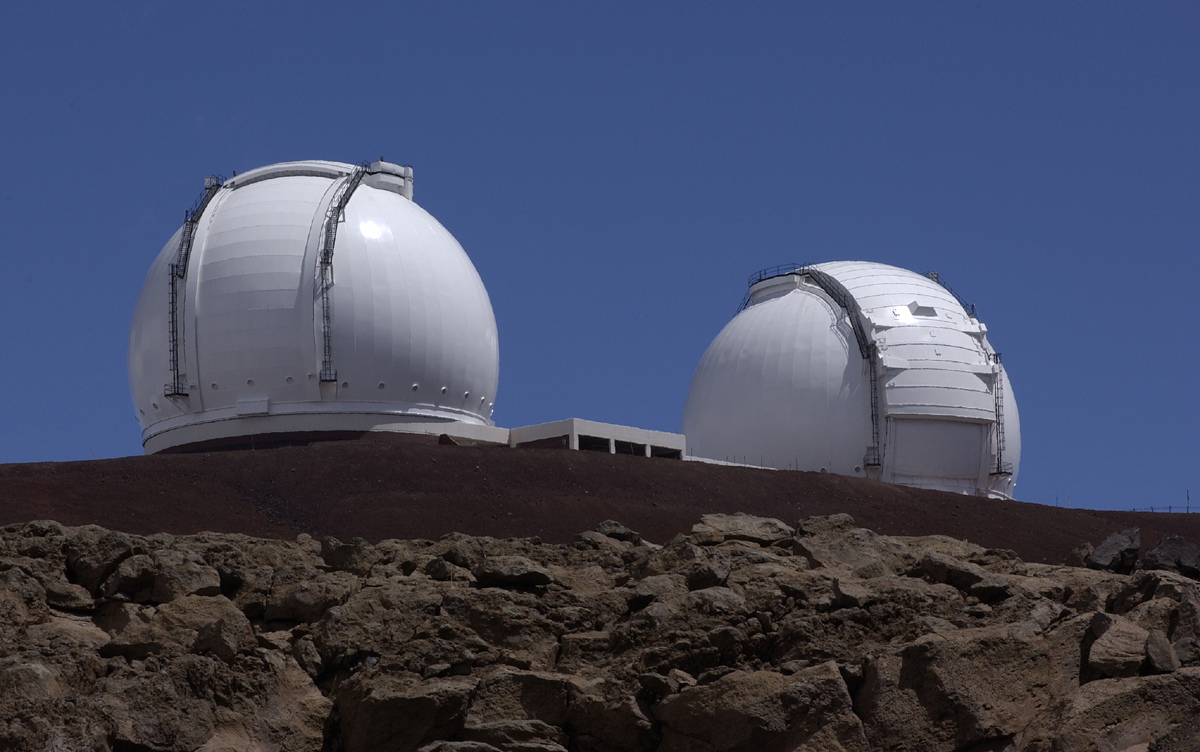
The discovery began with the Zwicky Transient Facility, a wide field survey telescope at Palomar Observatory in California that scans the sky nightly hunting for anything that has. Follow up observations with the Keck telescope in Hawaii confirmed it as a Type II supernova at z=1.
Image A (the bright source) turns out to be two extremely close images of the same explosion, separated by just 0.07 arcseconds, straddling the lensing galaxy's critical curve. A third, much fainter counter image sits on the opposite side of the lens, around 30 times dimmer than the bright pair.
The broader interest lies in turning an observational clue into something that can be weighed against competing models of the underlying physics. Astrophysics does not have the luxury of controlled experiments; everything is inferred from radiation that traveled across cosmic distances under conditions that cannot be reproduced in a terrestrial laboratory. This makes the interpretation chain longer and more uncertain than in bench science, but it also means that a well-constrained measurement of an extreme object carries theoretical information that no earthbound experiment can provide.
One of the most intriguing details is the time ordering with the faint counter image arriving at our telescopes first yet it was too dim to register in ZTF's earlier survey data. An upcoming analysis will attempt to extract a precise time measurement from the resolved JWST spectra and from that, a constraint on the rate of expansion of the universe itself.
Because the account originates with Universe Today, it functions best as a primary institutional report that is close to the data and operations, not as independent scientific validation. Institutional communications are produced by organizations with legitimate interests in presenting their work in a favorable light, which does not make them unreliable but does make them partial. Details that complicate the narrative, including instrument limitations, unexpected failures and results below projections, tend to be minimized relative to progress messages. Technical documentation and peer-reviewed publications, where they exist, provide the complementary layer that institutional releases cannot substitute.
The next step is to see whether independent datasets and physical modeling converge on the same interpretation. Multi-wavelength follow-up, combining X-ray, radio and optical data where possible, is typically what separates a compelling detection from a robust physical characterization. In high-energy astrophysics, results that initially looked definitive have been revised when data from a second messenger arrived; the current result should be read with that history in mind.
Original source: Universe Today